Posts Tagged ‘book marketing’

Better Keep Your Day Job

December 3, 2013

little girl with bubbles

Life Dictates
While my wife and I were in Miami for the Readers Favorite Awards, my father-in-law had to be hospitalized. After three days there, because he couldn’t stand and walk unaided, he was transferred to a nursing home for rehabilitation.

We rushed home to Michigan. At his age, scares like this are never good, and it’s been a rough time for all of us; my mother-in-law, my bride and her siblings in particular.

He’s doing better – thank goodness – and, with any luck at all, may soon be released back into his wife’s care.

But for the past week – after all the many chores involved in rounding up the things he needed had been done – there was little else to do while sitting for hours in that quiet room, watching while he slept, but pray and read.

In one of those moments, ever on the lookout for self-publishing comments, I came across a New York Times opinion piece by Gary Gutting, professor of philosophy at the University of Notre Dame:

“Even highly gifted and relatively successful writers, artists and musicians generally are not able (to) earn a living from their talents. The very few who become superstars are very well rewarded. But almost all the others – poets, novelists, actors, singers, artists – must have either a partner whose income supports them, or a “day job” to pay the bills. Even writers who are regularly published by major houses or win major prizes cannot always live on their earnings.”

Sadly, what he said is true, but not just for indie authors. Many “traditional” authors make very little money from their books. There are superstars, of course, and most people know their names; but most authors, the vast majority in fact, will sell less than 5,000 copies of any given book.

That statistic has become widely known, and it’s awakened a lot of writers and wannabes to the harsh realities of this line of work.

If you’re trying to make a living (fortunately, I don’t have to write to survive) as a novelist, a playwright, a poet, or any kind of writer whose work isn’t considered “essential,” you’ll do well not give up your day job, because you’re going to need it.

Of course, you can always “marry rich” – but that’s not all that easy to do either.

Self-Publishing Today
With all the new tools for self-publishing, indie writers can take a bigger role in their publishing careers than ever before, and the numbers support the boom. With growth of over 400% over the last five years and 58% in the past year, self-publishing isn’t going away any time soon.

Even among authors who’ve already been published by big traditional publishers you can see the excitement generated when this subject comes up. And why not?

It’s a chance to publish what you want, when you want to publish it, in the way you think best. It’s the return of power and influence to the actual creators of the content, and that’s exciting. Earning a massive percentage of net royalties doesn’t hurt either.

With traditional publishing, books have to fit on a particular shelf, cost a specific amount and appeal to a targeted audience. They also have to show a profit. But the business model of an indie is completely different from that of a large corporation.

And marketing your book is hard work.

The Power of Social Media
For indie publishers, it’s been a stroke of good fortune for social media and self-publishing initiatives to develop at the same time. As I’ve said before, the key is earned media.

Social media, including blogs like this one – and the many other social connections available on the Internet – can be a powerful tool. Combined with tools like keyword analysis, trending topics, and others, it allows us to gain insight into readers that’s nothing short of revolutionary.

Authors now have the ability to identify, locate, and engage with their readers, immediately and directly, for the first time in history. I’ve often said that for a solo writer, a blog – if properly used – is the most powerful marketing tool ever invented.

Today’s savvy authors understand that studying social media is, in its own way, just as important to their careers as their writing craft. The ability of an indie to learn to promote his/her books in social media levels the playing field in a very powerful way.

E-books and print-on-demand technologies allow us to escape the need for corporate-level financing, and social media gives us an inside edge in marketing our books. Every book you publish as an indie will create more points of engagement for your readers.

For many indie writers, self-publishing and social media marketing really are the change they’ve been waiting for … but for me it will forever come in a distant second behind the news my father-in-law is well enough to go home.


The Rain, Family and Friends

November 17, 2013

red umbrella
Standing Out in a Crowd

I’ve been sitting here looking at rain, instead of the usual south Florida sunshine, waiting for the clouds to pass … and thinking about heading to Miami later this week, to the Readers Favorite Awards ceremony, where I’m supposed to pick up the Silver Medal for my short-story collection ZEBULON.

It’s kind of fun to be here … with nothing much to do except enjoy the warm weather (it was in the teens up north at home last night) and my grandkids, when they’re home from school.

I’ve already seen dance rehearsals, a basketball game and a Tae Kwon Do practice. I’ve gone shopping with my bride, been the only adult around for an afternoon play-date of six-year-olds and will soon get to travel north to experience Legoland … the dream spot of every sixty-something … right?

In truth, I can do without it.

But it isn’t for me; it’s for my grandson, and watching his eyes will make it a treat … so in a way it is for me. What price can you put on a memory like that?

I’ve been trying to work on ONE WAY STREET, the sequel to my first novel, REICHOLD STREET, but it seems to be genuinely stalled right now at about 42,000 words. If anyone who read the first book has any suggestions to get me jump-started, I’d sure like to hear a few of them in the “Comments” section.

Journey
I also put together select blog postings to offer in book form on Amazon. It talks about some of the things I’ve discovered about indie publishing, and offers what I hope is some practical advice. It’s called “The Journey of an Indie Writer” and you can find it in paperback here.

Journey cover
Journey of an Indie Writer

In the meantime, I’m still trying to figure out how to earn my audience. I’m like most indie writers who have a story to share with the world, but find nobody seems to care. And there’s no big publicity machine behind me to help spread the word.

If you’re like me, you keep writing and publishing anyway, hoping someone will come along and find out you have something readable to say. Perhaps something brilliant. Maybe even award-winning.

You Need to be Different
Unfortunately, sitting and waiting is probably the worst way to find an audience, and I should know better. The way to get the attention of an audience is to earn it, not demand it, because here’s the truth:

People don’t care at all what you have to say until they know who you are.

Earlier this year, J.K. Rowling (who wrote the Harry Potter series, in case there’s anyone on the planet who doesn’t know) published a new novel under a pseudonym, Robert Galbraith.

She wanted to test the market and find out if it was still her writing that sold so well, or her name. She found out in a hurry. The book got very good reviews, but readers didn’t care.

Then, people somehow discovered the book was actually written by Rowling and the book immediately became a bestseller.

Same book. Same story. Same writing. But a different name on the front caused the book to become an instant success.

Why? Because readers are busy.

They pay attention to names they recognize and don’t always take the time to explore new authors. Plus, audiences are notoriously fickle. They quite often don’t care what you have to say, or how you say it; they care who you are. It’s what makes a crappy book by someone like Snooki a best-seller.

snooki
Best-Selling Author?

And if they haven’t heard of you, you might as well be invisible. So how do you become visible? What do you have to do? (see my Earned Media post). You need to discover your unique writing voice and build a platform around it. Sounds tough, I know. But it’s actually simple.

Others have said it. I’m just repeating it … because it’s true. Talk to your friends. Make new ones with social media tools … but make sure they’re Friends, not just marketing targets.

You Need to Find Your Tribe
You want them to become people you actually talk to, share information with and help out when they need it … not just someone to whom you’re trying to sell something.

Then you leverage those relationships to get in front of the right people, the friends of your friends. Word-of-mouth information and recommendation is so powerful that before long readers will come to you, not the other way around.

Like I’ve said before … earned media.

Think of It This Way:
There once was a man who had ten good friends. These friends would do anything for him. But for some reason this wasn’t enough for him … he wanted more.

So he campaigned and lobbied trying become famous. Soon, he had a hundred followers. Then, there were a thousand. He campaigned and lobbied some more. Made lots of noise. Not all of it was very nice, and he spent a lot of money doing it. Pretty soon he felt like a rock star, with millions of followers.

At first, he thought the apparent attention was nice.

But he soon found that there were expectations associated with his new-found status. People constantly asked for favors and handouts, wanting special attention. They made demands he couldn’t meet. But they never helped him with a thing. He felt trapped, overwhelmed and confused.

Isn’t this what he wanted? Why was he so discontent?

Not knowing where to turn, the man went on a search. He weeded through the crowds of countless quasi-admirers and “yes men,” looking for a few, dedicated followers. People he could comfortably do things for … and who would do anything for him.

Finally, he found ten people.

They were his original true friends. Turns out that was really all he ever needed.

You don’t need fans. You need friends.


Do You Make Your Words Sparkle?

October 24, 2013

Green-grass-with-raindropsPhoto/Bigstock Images

To Proof or Not to Proof
I’ve been looking over the last few posts I’ve made, wishing I’d done things a bit differently. They seem a little preach-y and, while I packed as much info into them as I could, they’re short on stuff an indie writer can actually use.

So, to get back in the groove, I thought I’d pass along some notes I made for myself about proofing and editing … that actually work.

Writers rarely like to revise their work (how well I know), but it’s a hard, cold reality of the writing process. It’s the most important thing you can do after the initial draft.

When you write, if you’re anything like me, you heave a big sigh (of accomplishment? relief?) as you put the period on that final sentence, sit back and look at what you’ve done. It actually feels pretty good for a few minutes.

Then the nit-picking begins.

OMG that’s awkward! What was I thinking? Jeez, why did I write it that way? That’s about as interesting as a margarine label!

Relax. It happens to most of us. That’s what editing is for. Here are five self-editing questions to ask as you begin to proofread your work:

1. Have You Applied the Second-Draft Rule?
Stephen King is one hell of a good writer, whether you like his subject matter or not. In his remarkable book On Writing, he shows a before-and-after example of how editing can improve a story.

The book is one of the best lessons on the craft of writing I’ve ever read. I suggest you get a copy and read it (it’s a memoir not a story, so don’t worry about demons or magic or spooky places).

His Second-Draft Rule is:

2nd Draft = 1st Draft – 10%

As writers, we have a tendency to believe every word we write is precious – and have a natural reluctance to cut our material – (you do that too, don’t you?). After all, we remember how hard it was to get it down on paper.

However, editing is about making your prose lean and exciting, compelling the reader to turn the page. Try it, it’s worthwhile … but I warn you, it’s much harder than you think. It makes you weigh and measure every word.

2. Is That Adverb Necessary?
If you’re using a lot of adverbs in your fiction, chances are you’re violating a cardinal rule of good storytelling by simply telling the reader about the action … not showing them.

For instance, imagine one of your characters has just obtained some special, long-sought-after prize. Something anyone would recognize as a thrilling moment.

Instead of telling us he was “yelling joyfully,” why not have him jump up-and-down screaming and yelling, creating so much ruckus the family cat runs under the bed in terror?
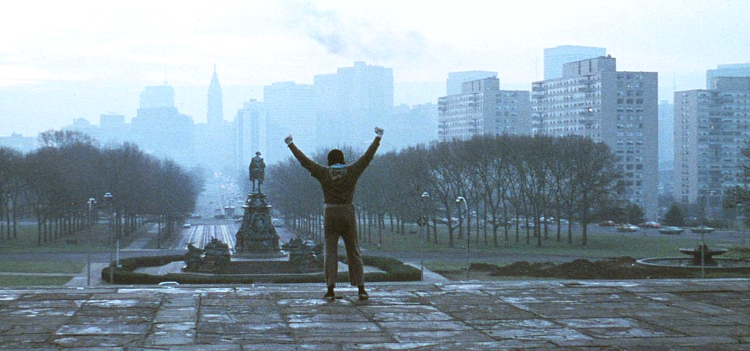
rocky-img18       Photo/United Artists

Or maybe, like Rocky Balboa, he runs through the streets at dawn, climbs the park steps and throws his hands in the air to the rising sun, letting the world know he intends to claim his shot at immortality.

Both of those descriptions show you how the character reacts instead of telling you … and they’re certainly more descriptive and alive than the word “joyfully.”

3. Where Does the Story Really Begin?
Carefully re-read the first few pages of your story. Where does the action start? A major fault with many first drafts (mine included) is too much background material showing up before conflict is introduced and the characters take over the story.

In several first drafts, my stories didn’t really begin until halfway down page two … or later. So, I found I frequently re-wrote or cut significant portions of the draft’s first few pages.

If I thought any of the cut material was somehow essential for the reader, I had to find another way to get it back into the story, perhaps through dialogue.

Occasionally, the edited work was a bit longer than the original, but the action began sooner and the pace of the story actually got better.

4. Are Your Adjectives Doing Their Job?
Get rid of empty adjectives. Instead of relying on “amazing,” “exciting,” “fascinating,” “scary” and other similar boring descriptions, use sensory details that bring to life what you’re describing:

“The wind swirled dirt and debris across the fields, but it was the immense slab of stone, rising on that wind like a feather, that robbed my sight of everything else.”

or …

“Even in the bright midday sun, the shadow exuded the damp, earthy worm-laden smell of the grave and left a bitter taste in my mouth.”

Find ways to get all the readers’ senses to work. When you do, it means you’re making the story real for them.

5. Have You Read Your Story Out Loud?
Believe it or not, one of your best proofreading tools is the sound of your own voice.

Reading your story aloud to someone is a fabulous way to find inconsistencies or clumsy phrasing, because if you stumble and hesitate over something when you’re reading, it’s likely your reader will find it awkward, too.

However, you want your reader to suspend disbelief, stay in the story and not wander off wondering what the hell you were talking about. If you find that happening, that’s a part you need to rewrite.

Consider Revision a Reward
A lot of people look upon editing as a chore (OK, I confess … that’s MY hand up over here in the corner). It’s harder than writing, and as difficult as marketing. Well … almost.

But remember … if you’re revising and editing, it means you’ve finished the first draft of your project.

How exciting is that?

Let me know what you think.