Posts Tagged ‘award-winning writing’

Year of “The Yearling”

December 26, 2013

Cover_of_The_Yearling_1938_Original
Original Book Jacket Cover for The Yearling

The Things You Discover
With the bustle of Christmas preparations behind us for another year (and the sound of tearing wrapping paper still fresh), I began my usual year-end review of the many things I meant to do in 2013, but never got around to.

I also started making an updated list of the things I probably won’t do next year, either.

I’ve been extraordinarily blessed with new acquaintances, good relatives and great friends this past year, but my bride and I also have many pressing family issues to deal with right now (life is always like that, isn’t it?).

I wasn’t doing my usual patient search for literary things to write about, so it took me by surprise to come across a notation about the year 2013 that I had overlooked.

This past year was the seventy-fifth-anniversary celebration of Marjorie Kinnan Rawlings 1938 novel The Yearling.

So, you ask, what’s the big deal?

A Best Seller
Well, for one thing, The Yearling was the best-selling novel of 1938. It held the number one spot that year for twenty-three consecutive weeks, sold millions of copies and has been translated into Spanish, Chinese, French, Japanese, German, Italian, Russian and twenty-two other languages.

It was also awarded the Pulitzer Prize in 1939.

But it’s only vaguely familiar today to young American readers, and in 2012, it only sold about six-thousand copies … in all formats.

Although that’s an annual sales figure that would thrill most indie authors … they’re dismal numbers for a book considered a classic.

Running Out of Steam
It seems The Yearling is slowly sinking into obscurity. Why? How does such a classic novel run out of steam?

It wasn’t as if The Yearling was Rawlings first book. She also wrote the little-remembered South Moon Under (which, remarkably, was also a finalist for the Pulitzer Prize … in 1933).

south-moon-under2
Original Cover for South Moon Under

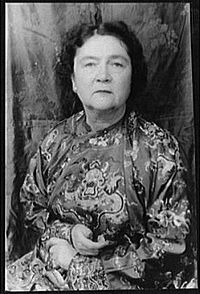
One factor might be Marjorie Rawlings herself. Matronly and angry-looking, she was not a very good public speaker … and she was certainly not a sexy figure. As a woman of independent means, Rawlings could live as she chose, but her abuse of alcohol increasingly ruled her life.

She advanced no politics and didn’t have a spectacular, memorable “rock star” life or death that was covered by all the available news media … just a lonely, broken-hearted alcoholic one (1896–1953).
200px-Marjorie_Kinnan_Rawlings
Majorie Kinnan Rawlings

Despite her apparent successes, some critics considered her writing to lack the depth of great literature, although they praised her skill in reproducing the color, characters, speech, local customs and way of life of backwoods Florida.

“Writing is agony for me,” she once told an interviewer. “I work at it eight hours every day, hoping to get six more pages, but I’m satisfied if I get three.”

Wrong Genre?
Another factor in its apparent demise might be the prevailing view today that The Yearling – despite a few uses of the “n-word” – is a book for young readers. I find that surprising, because Pulitzer’s are not an award for children’s books.

Perhaps, in the final analysis, sales of The Yearling are fading because the story reflects a world view here we’re also losing … a much more simplistic time, where self-sufficient farming and hunting were individual necessities, and families only survived by their daily hard work and wits.

As that world disappears it seems almost inevitable the book, and the stunning landscape it evokes, would continue to lose audience.

Readers today expect their protagonists to come face-to-face with the true meaning of hunger, loneliness and fear in other ways … like road rage, sex, vampires and zombies.
5491372-lyearling poster
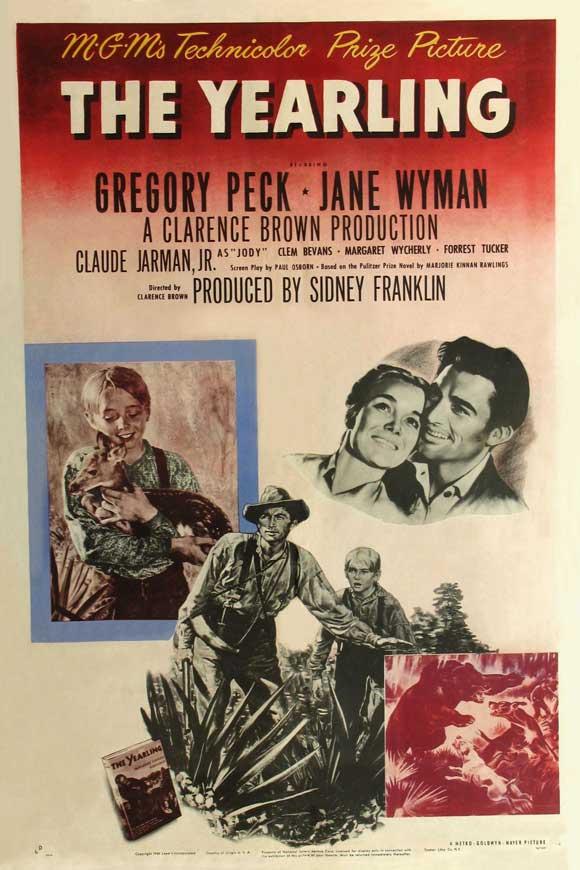
MGM Movie Poster for The Yearling

As someone who read the book at a fairly young age and who also remembers the many early television broadcasts of the old, tear-jerker black & white film based upon it, it seems the world spins now at a different rate. Faster and more unrelenting.

ClaudeJarman_a533_300w375
Click picture for a scene with young actor Claude Jarman from The Yearling

Perhaps … just perhaps … the book, with all its heart-tugging sentimentality and backwoods charisma, is fading away because it can no longer keep up with the pace.

I think that’s sad.

It’s like forgetting that it’s the intention you bring to the simplest gift of time, love, laughter or friendship that is worth far more than anything you could put a bow on, because the best gift you can give your loved ones is you.

Hmmmmm. I think I just made my resolution for 2014.

Happy New Year.


Why Should We Learn to Listen?

December 13, 2013

cute kitten-and-dog
As we start counting down to the Christmas and New Year holidays, I’ve been thinking about when I first began my journey as a writer. I was seventeen and the first short story I wrote and sent to a publisher was full of the eagerness of youth (and, thankfully, it was lost long ago).

Unfortunately, it was also full of clichés and trite plot points … and more than a few outright “groaners” for dialogue. In my eagerness to write stories and send them out into the world I neglected one very important thing: building a credible story.

My eagerness was met with rejections – lots of them.

I needed to become not only a better writer, but a better storyteller to get anyone to want to read what I had written, and that meant revisions on top of revisions. But, in order to know how to revise my writing, I had to learn to listen.

Listen to Your Critique Group
Every author’s got them. Beta readers. These are the folks we always let see our work long before anyone else does. Indie authors may have more than most, because we have such a need for – even though we don’t always want – constructive feedback.

I’ve been fortunate to have some wonderful people in my life who never fail to give me honest criticism. Their comments aren’t meant to soothe my ego. They’re meant to help me write.

For instance, long ago I listened when they told me my character descriptions were either too short, or too detailed, long and boring. They said I either left everything or absolutely nothing to their imaginations and, as a result, they couldn’t relate to any of the characters in my stories.

I also had an early reader tell me “Nobody talks that way” when they were commenting on my dialogue. Listening to their feedback made me dig deeper to make my descriptions, and the conversations of my characters, more succinct and believable.

I also heard them say “you don’t let me see the story … because you’re constantly telling me what I should be seeing.” So I borrowed the advice repeated in Stephen King’s book “On Writing” and got rid of the useless adverbs cluttering the pages.

Last year, one of the Readers Favorite reviewers made this comment about some of my recent work: “Herron is a master of the art of character development.” Another commented that my “characters come to life on the pages.”

I owe those positive comments not only to decades of practice, but to some of that earliest feedback. It keeps me focused and I will always be grateful I paid attention.

Listen to Other Authors
If you want to write a mystery series, it helps to be a fan of mysteries. Most writers know that writing begins with reading, but some don’t actually take it to heart, and many don’t realize you need to do it the proper way.

To learn, you can’t just read it as a general reader would. You have to read it as a writer and really “listen” to the way that particular author tells the story. Listen not only to the words, but the phrasing, the meter and tempo.

If you find it enjoyable to the point of suspending belief in the real world while you’re engrossed in it, then go to your own stories and see if they sound the same way to you. It might help you see if your story is falling short.

Listen to Yourself
As you’re learning and taking advice from many sources, don’t forget to be true to yourself. You don’t always have to take everyone’s suggestions. Sometimes it’s the right thing to do to stand your ground and defend what you’ve written.

But remember, standing your ground about anything you’ve written can only be done properly if you’ve first taken the time to really listen to what people have been saying.

Listen to Reviews
When your book is finally published, whether traditionally or indie, lots of people will have lots of things to say about it. Some may be good. You can usually count on some of your friends for that, even if they’re stretching the truth.

Some may be not so good. Most of your detractors, and a few real friends, will fall into that group. Listen to them all and glean what you can from it. Use every bit of feedback as a learning experience for your next project.

Don’t be overly enthused by good comments, and don’t be distressed by negative ones. The reviews of your present book will teach you things that will make your next book even better.

Finding the Best Beta Readers
Being forced to rewrite what you’ve struggled to write can be painful at times, but it’s the only way your writing will ever improve. If you don’t already have a good supply of beta readers, look to your writer friends. Network with them and offer your help and support.

Making friends with other writers (and readers) is a long-term investment in your writing career.

The best way to approach people is to make genuine friendships. Don’t “check them out” to see if they might make a good beta reader, or help in some other way, before you make friends. People can tell if you’re using them.

The Best Advice I Ever Received
Be patient and generous. Help others if you have the skill and time, even if they might never be able to pay you back. That has value in and of itself.

Trust me … it’s a worthwhile thing to do, it can make you feel good and lift your spirits. And sometimes the most surprising things come back to you, in a good way, well into the future.


——————–


Coming Soon! An interview with indie author M.S. Fowle!


Better Keep Your Day Job

December 3, 2013

little girl with bubbles

Life Dictates
While my wife and I were in Miami for the Readers Favorite Awards, my father-in-law had to be hospitalized. After three days there, because he couldn’t stand and walk unaided, he was transferred to a nursing home for rehabilitation.

We rushed home to Michigan. At his age, scares like this are never good, and it’s been a rough time for all of us; my mother-in-law, my bride and her siblings in particular.

He’s doing better – thank goodness – and, with any luck at all, may soon be released back into his wife’s care.

But for the past week – after all the many chores involved in rounding up the things he needed had been done – there was little else to do while sitting for hours in that quiet room, watching while he slept, but pray and read.

In one of those moments, ever on the lookout for self-publishing comments, I came across a New York Times opinion piece by Gary Gutting, professor of philosophy at the University of Notre Dame:

“Even highly gifted and relatively successful writers, artists and musicians generally are not able (to) earn a living from their talents. The very few who become superstars are very well rewarded. But almost all the others – poets, novelists, actors, singers, artists – must have either a partner whose income supports them, or a “day job” to pay the bills. Even writers who are regularly published by major houses or win major prizes cannot always live on their earnings.”

Sadly, what he said is true, but not just for indie authors. Many “traditional” authors make very little money from their books. There are superstars, of course, and most people know their names; but most authors, the vast majority in fact, will sell less than 5,000 copies of any given book.

That statistic has become widely known, and it’s awakened a lot of writers and wannabes to the harsh realities of this line of work.

If you’re trying to make a living (fortunately, I don’t have to write to survive) as a novelist, a playwright, a poet, or any kind of writer whose work isn’t considered “essential,” you’ll do well not give up your day job, because you’re going to need it.

Of course, you can always “marry rich” – but that’s not all that easy to do either.

Self-Publishing Today
With all the new tools for self-publishing, indie writers can take a bigger role in their publishing careers than ever before, and the numbers support the boom. With growth of over 400% over the last five years and 58% in the past year, self-publishing isn’t going away any time soon.

Even among authors who’ve already been published by big traditional publishers you can see the excitement generated when this subject comes up. And why not?

It’s a chance to publish what you want, when you want to publish it, in the way you think best. It’s the return of power and influence to the actual creators of the content, and that’s exciting. Earning a massive percentage of net royalties doesn’t hurt either.

With traditional publishing, books have to fit on a particular shelf, cost a specific amount and appeal to a targeted audience. They also have to show a profit. But the business model of an indie is completely different from that of a large corporation.

And marketing your book is hard work.

The Power of Social Media
For indie publishers, it’s been a stroke of good fortune for social media and self-publishing initiatives to develop at the same time. As I’ve said before, the key is earned media.

Social media, including blogs like this one – and the many other social connections available on the Internet – can be a powerful tool. Combined with tools like keyword analysis, trending topics, and others, it allows us to gain insight into readers that’s nothing short of revolutionary.

Authors now have the ability to identify, locate, and engage with their readers, immediately and directly, for the first time in history. I’ve often said that for a solo writer, a blog – if properly used – is the most powerful marketing tool ever invented.

Today’s savvy authors understand that studying social media is, in its own way, just as important to their careers as their writing craft. The ability of an indie to learn to promote his/her books in social media levels the playing field in a very powerful way.

E-books and print-on-demand technologies allow us to escape the need for corporate-level financing, and social media gives us an inside edge in marketing our books. Every book you publish as an indie will create more points of engagement for your readers.

For many indie writers, self-publishing and social media marketing really are the change they’ve been waiting for … but for me it will forever come in a distant second behind the news my father-in-law is well enough to go home.