Archive for the ‘Book Promotion’ Category

What Do You Include in Your Book Marketing?

July 3, 2018

Annoying animation courtesy giphy.com

I know I’ve asked you this before. You’re an indie author who’s written a book. Now what?

Most indie authors think writing the book is the hard part … until they discover they also have to take on the job of marketing it.

Oops.

That’s usually when I hear: Where do I begin?

Advanced Review Copies (ARCs)
Advanced Review Copies, or ARCs for short, are bound and/or electronic copies of your completed book. You send them to book reviewers you’d like to have endorse it.

They supposedly help build buzz for your upcoming release and help you gain interesting blurbs to put on the cover.

With seven published books you’d think I would have already tried Advanced Review Copies. However, they are one of the few things with which I haven’t yet experimented.

I intend to start with my next book and, since I currently have three new novels (yes, three) in various stages of preparation, I should get to test the concept fairly soon.

What to Include on Your ARC
On the front cover add the words: “Advance Uncorrected Proof / Not for Sale.” On the back cover, put a brief book description (100-150 words) and author bio. At least half of the back cover should have information on the book’s promotion plan, including:

  • Marketing Campaign: In a bulleted list, detail how the book will be marketed and promoted, both to the industry and to readers.
  • Publication Information: List all the details related to publication, including formats and price points, ISBN numbers and category.
  • Publicity Contact: The email for whoever is the primary contact for media should be listed.
  • Ordering Information: Make it clear where and how the book will be available for sale.
  • Website: Don’t forget to include your author website.

It should go without saying that every author needs a website, even if it is a single page with links to other social media. It is the go-to online space for readers to find out more about you and your work.

Your author website should be the base that links all your other social media accounts, news about your book, tour schedule if relevant, and links to book reviews.

Blog
Don’t just have one; add to it consistently. Adding a blog like this one that talks about your writing, or publishing in general, keeps your readers interested in you and your work.

Facebook, Twitter, Amazon Author Page, and Goodreads
Facebook, Twitter, an Amazon Author Page, and Goodreads are social media outlets where, as an author, you should have a presence. You might even want to upload book trailers to YouTube. The more hits and likes you garner, the more your book will get noticed.

You may be surprised to know you’ll need to build this platform with traditional publishers, too.

Book Publicity
Book publicity can make a big difference. TV, radio, and good-old-fashioned print reviews and interviews are invaluable components of a successful book marketing strategy.

If you have the budget, hire a professional.

If, like me, your budget is small or nonexistent, you can try to develop press releases on your own. Whether you take this step or not, you should also plan to have author events such as signings and/or talks at bookstores, other retailers, book clubs, writing groups, and events hosted by professional organizations.

Take the First Step
The most important thing about a book marketing strategy is to have one. It might seem overwhelming in the beginning, but taking the first step is the hardest part.

Don’t worry about making mistakes. Everyone does. It’s how we learn. What matters most is that you try. If you don’t, people won’t discover, buy or read your book.

So, go on … give your book a chance.

**********

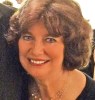
As busy as I make myself sound, I took time out the other day to celebrate a milestone with my lovely bride…our 48th Wedding Anniversary. She’s the best thing to ever happen to me.
**********

Gentle Readers, my books have all garnered some terrific reviews. You can see all of them by using the Amazon link below. Check them out. Better yet, buy one and read it. You just might like it.

buy now;

**********

You’re invited to visit my author’s website, BROKEN GLASS to hear the remarkable radio interview about my novel “Blood Lake” on The Authors Show. You can also like my Book of Face page, find me on Goodreads, or follow my shorter ramblings on The Twitter.

**********

On March 1, 2018, Rochester Media started publishing my articles about writing. The column will update about every three weeks. Take a look, leave a comment and let me know what you think.

On Sunday, July 15, 2018 I am privileged to join other local area writers at the Rochester Writers’ Table at the Detroit Bookfest at Eastern Market in Detroit.

On Tuesday, July 17, 2018 I will be at the Freelance Marketplace Writers’ Group meeting at Barnes & Noble in Rochester Hills.

On Saturday, July 28, 2018 I plan to participate in a book-signing during Sterlingfest, in Sterling Heights, Michigan.

**********

Comments posted below will be read, greatly appreciated and perhaps even answered.

How Well Do You Use Irony?

May 28, 2018

An Example of Verbal Irony Made Visual

Irony is a key element in literature and it can take many forms. Fiction thrives on it, and I use it often, including in this dialogue exchange in my novel “One Way Street”: (to set the scene … the characters are two Marines during the Vietnam War, sitting in a jungle bomb crater following a break in hostilities):

* * * * *

     Blake’s eyes looked up at the jungle without raising his head.
“Was that what you wanted to talk about?”

     I’d almost forgotten the question I’d asked him. “No, I was
just thinking about a guy I used to know,” I said, “a friend…but
you wouldn’t know him…so never mind.”

     “What was his name?” Blake turned to look at me. He had
blacked his face for camouflage and muddy streaks were caked
on top of it. He could have been a clown, if he smiled. Or the
devil himself, if he was angry.

     “Albert Parker,” I said, “He used to live right across the street
from me.”

     “Good guy?”
     I thought about it a moment. “Yeah,” I said, looking over at
Blake, “a really good guy.”

     “You said he used to live across the street. Did he move,
or something?”

     “No,” I said, “he died.”
     “Aw, that’s too bad, man,” Blake said. He adjusted his
bandolier and started to lean back against the mound of dirt
behind us. “What’d he die from?”

     “Coming over here.”

* * * * *

Dramatic Irony
Dramatic irony is a form of irony that is expressed through a work’s structure, and it relates to character. Mark Twain used it often. When we hear Pap in Huckleberry Finn proclaim he would have voted on election day “…if I warn’t too drunk to get there,” we know we’re in the presence of a deluded character.

We know it, but he doesn’t. Every word out of Pap’s mouth seems to condemn him, but he never realizes any of it.

The degree of your character’s delusion depends on the story, of course, but think of ignorance as a sliding scale. It also includes innuendo. “Go ahead. You always do” suggests more than it states.

When a reader’s awareness of the situation differs substantially from that of the characters, their words and actions take on different … frequently contradictory … meanings. It’s often like Blake in the story fragment above, who has no idea where his companion is going with his comments.

The greater the lack of self-knowledge, the greater the dramatic irony. However, if the dramatic irony is ratcheted up too far, you’ll have an unreliable narrator. This may work for humor and satire, but it’s not so good for rendering realistic fiction, which is why I made the reference above subtle … I wanted the dialogue to sound real.

Verbal Irony
In verbal irony, the gap is between what is stated in the dialogue and what is intended. Sometimes it works by overstatement; sometimes by understatement. In either case, the words we hear do not carry the intended image.

It is often close to sarcasm. When a character says “Keep that up, and you’ll win a prize,” he may simply mean “cut it out,” but there is often more of a sting to sarcastic implication.

Situational Irony
The third type of irony, situational, is certainly the most frequently used. You think things are going one way, but the story suddenly makes a 180-degree turn. Actions have an effect opposite from what was intended, so the outcome is contrary to what was expected.

It’s important to note that a sudden reversal isn’t ironic unless there is that gap between expectation and result.

Well-crafted ironic reversals make for realistic plot movement, and character arcs that mirror human existence.

Writers whose vision is extremely ironic we know better as satirists. Satire can be a powerful weapon against conventional views, political ideologies or philosophical views. Dr. Strangelove, a merciless attack on Cold War politics written by Stanley Kubrick and Terry Southern, is a classic example.

However unrealistic, the character of Major Kong, sitting astride a nuclear bomb and riding it to its target, thereby setting-off the story’s Doomsday Machine and assuring the demise of everyone, is an image most are not likely to forget.

Irony is something to be sensitive to in your fiction efforts. When it’s working, readers will surely pay attention.

**********

Remember Memorial Day. I’d like to remind my Gentle Readers that today is a special day, set aside to honor those who made the ultimate sacrifice for our freedom. It’s not ironic at all to tell everyone you know who’s been in the military, “Thanks for your service.”

**********

Gentle Readers, my books have all garnered some terrific reviews. You can see all of them by using the Amazon link below. Check them out. Better yet, buy one and read it. You just might like it.

buy now;

**********

You’re invited to visit my author’s website, BROKEN GLASS to hear the remarkable radio interview about my novel “Blood Lake” on The Authors Show. You can also like my Book of Face page, find me on Goodreads, or follow my shorter ramblings on The Twitter.

**********

On March 1, 2018, Rochester Media started publishing my articles about writing. The column will update twice a month. Come on over, take a look, leave a comment and let me know what you think.

On Tuesday, June 19, 2018 I will join other local area writers at the Freelance Marketplace Writers’ Group meeting at Barnes & Noble in Rochester Hills.

On Saturday, July 28, 2018 I plan to participate in a book-signing during Sterlingfest, in Sterling Heights, Michigan.

**********

Comments posted below will be read, greatly appreciated and perhaps even answered.

Things an Indie Author Should Share

February 12, 2018

Last weekend, my wife and I were wandering around our local Costco. We had a list for that shopping trip, but we got sidetracked by one of the giveaway stations offering free pastry samples.

We went past, tried one, and were very pleased with the tasty little chunks of poppy seed roll. We found an excuse to wander past again, and help ourselves to another sample (at least, I did).

“Didn’t your grandmother make these?” I asked. My wife nodded, and took the second sample away from me.

“Yes, and these are almost as good,” she said, smiling as she ate it herself. Too embarrassed to go back a third time for a freebie, I caved-in and bought a whole roll.

Be Personal
Believe it or not, a good use of social media for the indie-author works in a similar way. The writer gives a small, free sample of their life or, as with this blog, shares some of the things they’ve discovered about the world of independent publishing.

Writing about your discoveries, as well as your likes and dislikes, gives readers an opportunity to meet you, to know a bit of what’s going on in your life, and connect in a friendly way.

Think of your social media posts like the little free chunks of pastry at the Costco giveaway station. The samples you give away help readers become invested in your whole story.

You want them to feel like they know you, after all … and the reason should be obvious. The hope of every indie-author in doing this is always the same … to entice followers into buying a book.

I confess … I’m guilty.

Ratings & Reviews
However, sometimes authors struggle to find the right voice with their social media. If you choose to write a blog, starting one is easy. But please realize I’m not talking about giving away personal secrets, or anything else you feel uncomfortable sharing.

It’s up to you to draw the line at what you feel is appropriate, but your social media will always benefit greatly from posts that talk about your writing process, books that truly inspire you, how you go about crafting your stories, or what you do when you get stuck.

I’ve done that often, and find fellow storytellers relish the chance to read personal thoughts on the creative process.

Since your main goal is to get more readers interested in following you as a person it’s okay to show off a bit. Opening up about your experiences is a great way to help to grow your readership.

Don’t forget to also offer readers a chance to comment on what you say … and be sure to respond to those comments. What readers say is important, because ratings, reviews and comments are things people will look at before deciding to buy.

Don’t Forget the Links
If you’re an indie-author, I’m sure you already know there’s no room full of marketers helping you figure out how to sell what you write. For a newbie, that fact alone can be discouraging.

Once you start on this road, you will soon discover that it’s a whole lot of work trying to promote yourself … far more work than you might have imagined.

But I guarantee it’s worth it.

At the end of the day, staying trustworthy to your customer base is simply about being honest, consistent and, most of all, sharing the love of what you do.

As a final point, be certain to remember the real purpose of an indie-author blog, as I said earlier, is to convince people to buy your books, so make sure readers know where to go if they want one.

Don’t overdo it, of course, but be sure to mention your books, and make sure it’s easy for readers to find where to buy them.

Write regularly, without spamming people, and you’ll also discover folks interested in what you say are coming back often to visit their new-found friend … and the more times they visit, the more likely they are to cave in and buy that whole poppy seed roll.

Just be sure to give them value for their time.

**********

My books have all garnered some terrific reviews, and you can see the ones I have available by using the Amazon link below. Look for them. Better yet, buy one and read it. You just might like it.

buy now;

**********

You’re invited to visit my website, BROKEN GLASS to hear the remarkable radio interview about my novel “Blood Lake” on The Authors Show, or like my Book of Face page.

You can also find me on Goodreads, or follow some of my shorter ramblings on The Twitter.

**********

Comments posted below will be read, greatly appreciated and perhaps even answered.