Posts Tagged ‘using social media’

Better Keep Your Day Job

December 3, 2013

little girl with bubbles

Life Dictates
While my wife and I were in Miami for the Readers Favorite Awards, my father-in-law had to be hospitalized. After three days there, because he couldn’t stand and walk unaided, he was transferred to a nursing home for rehabilitation.

We rushed home to Michigan. At his age, scares like this are never good, and it’s been a rough time for all of us; my mother-in-law, my bride and her siblings in particular.

He’s doing better – thank goodness – and, with any luck at all, may soon be released back into his wife’s care.

But for the past week – after all the many chores involved in rounding up the things he needed had been done – there was little else to do while sitting for hours in that quiet room, watching while he slept, but pray and read.

In one of those moments, ever on the lookout for self-publishing comments, I came across a New York Times opinion piece by Gary Gutting, professor of philosophy at the University of Notre Dame:

“Even highly gifted and relatively successful writers, artists and musicians generally are not able (to) earn a living from their talents. The very few who become superstars are very well rewarded. But almost all the others – poets, novelists, actors, singers, artists – must have either a partner whose income supports them, or a “day job” to pay the bills. Even writers who are regularly published by major houses or win major prizes cannot always live on their earnings.”

Sadly, what he said is true, but not just for indie authors. Many “traditional” authors make very little money from their books. There are superstars, of course, and most people know their names; but most authors, the vast majority in fact, will sell less than 5,000 copies of any given book.

That statistic has become widely known, and it’s awakened a lot of writers and wannabes to the harsh realities of this line of work.

If you’re trying to make a living (fortunately, I don’t have to write to survive) as a novelist, a playwright, a poet, or any kind of writer whose work isn’t considered “essential,” you’ll do well not give up your day job, because you’re going to need it.

Of course, you can always “marry rich” – but that’s not all that easy to do either.

Self-Publishing Today
With all the new tools for self-publishing, indie writers can take a bigger role in their publishing careers than ever before, and the numbers support the boom. With growth of over 400% over the last five years and 58% in the past year, self-publishing isn’t going away any time soon.

Even among authors who’ve already been published by big traditional publishers you can see the excitement generated when this subject comes up. And why not?

It’s a chance to publish what you want, when you want to publish it, in the way you think best. It’s the return of power and influence to the actual creators of the content, and that’s exciting. Earning a massive percentage of net royalties doesn’t hurt either.

With traditional publishing, books have to fit on a particular shelf, cost a specific amount and appeal to a targeted audience. They also have to show a profit. But the business model of an indie is completely different from that of a large corporation.

And marketing your book is hard work.

The Power of Social Media
For indie publishers, it’s been a stroke of good fortune for social media and self-publishing initiatives to develop at the same time. As I’ve said before, the key is earned media.

Social media, including blogs like this one – and the many other social connections available on the Internet – can be a powerful tool. Combined with tools like keyword analysis, trending topics, and others, it allows us to gain insight into readers that’s nothing short of revolutionary.

Authors now have the ability to identify, locate, and engage with their readers, immediately and directly, for the first time in history. I’ve often said that for a solo writer, a blog – if properly used – is the most powerful marketing tool ever invented.

Today’s savvy authors understand that studying social media is, in its own way, just as important to their careers as their writing craft. The ability of an indie to learn to promote his/her books in social media levels the playing field in a very powerful way.

E-books and print-on-demand technologies allow us to escape the need for corporate-level financing, and social media gives us an inside edge in marketing our books. Every book you publish as an indie will create more points of engagement for your readers.

For many indie writers, self-publishing and social media marketing really are the change they’ve been waiting for … but for me it will forever come in a distant second behind the news my father-in-law is well enough to go home.

 

What’s In A Name?

October 19, 2013

Graffiti

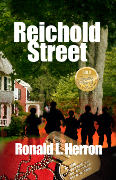
I recently changed the name on the cover of my books.

No, I didn’t start using a graffiti signature … and didn’t create a pen name … I began using initials, instead of my whole name.

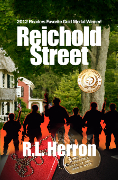
REICHOLD STREET COVER-ronald      REICHOLD STREET COVER_w_rlherron

I actually wanted to do it when I first started to write, but due to a misunderstanding with the support people at my publisher (something about the way in which my name was registered) I wasn’t able to.

(I didn’t understand it, either).

It took a while, but they’re finally convinced any royalties sent using only my initials and surname will arrive correctly … and the IRS will still know where to find me … which I know is what they were really worried about.

The confusion wasn’t a total a waste of time. It led me to discover more things on the web of nets … like six famous authors who actually did use pseudonyms.

——————–

1. Mark Twain
This was the easy one. Most American readers are aware Mark Twain is not the real name of the brilliant author and satirist who grew up in Hannibal, Missouri, and best known for “The Adventures of Tom Sawyer” and “The Adventures of Huckleberry Finn”.

He was born Samuel Langhorne Clemens.

Clemens was very familiar with the steamboat trade, having spent some time as a boat pilot, and he knew “Mark…twain!” was a well-known term shouted by boat crewmen when taking depth measurements on the river.

It meant they were in water deep enough to safely navigate (two fathoms, or 12 feet). A brilliant self-marketer, Clemens used the well-known term as his pen name.

The ‘celebrity in the white suit’ lectured frequently and was fastidious about sustaining his image as America’s most beloved writer. He was charming, popular, witty, and jovial … and a raconteur without peer.

2. O. Henry
In the first decade of the Twentieth Century, it’s safe to say O. Henry was one of the most popular short-story writers in America. His stories were known for their warm characterizations and clever twist endings.

We still celebrate one of his most famous stories: the holiday classic “The Gift of the Magi.”

Born William Sydney Porter, his pen name (which he assumed as his own) hid the truth about the years he’d spent in prison for bank fraud. Porter created the pseudonym as a cover, thinking no one would buy his books if they knew the truth about his history.

He was able to carry the secret of his true identity to his grave. It wasn’t until his biography was published … almost six years after his death … that the truth was exposed.

3. George Eliot
In high school (about thirteen bazillion years ago), I had to read “Silas Marner” for an English class. Actually, the whole class had to read it. We studied it for days.

An outwardly simple tale of a linen weaver, it was notable in its day for its strong realism and sophisticated treatment of issues ranging from religion to industrialization.

I remember it because of all the time we spent with it … and because the teacher told us it was actually written by a woman named Mary Anne Evans. Writing in the 1860s, she used the pen name George Eliot on all her work, so her writing would be taken seriously.

Wait, there’s more!

Earned Media Is All About Generating Free Exposure

September 26, 2013

bigstock-Talk-in-colors-speech-bubbles-A
Get Your Attention Right Here!
Earned media is really just the digital-age term for word-of-mouth advertising. It’s an idea that has grown hand-in-hand with content and social media marketing and the notion that a viral success can cheaply translate to mega-exposure.

Everyone wants earned media.

Marketing agencies know this, and they routinely pitch their ability to generate it. Most businesses, even small ones, are embracing the earned media paradigm to shape their social media strategies. Indie writers are no exception.

However, there are many misconceptions floating around the notion of earned media via the use of social media.

Earned Media Has a Number of Advantages
Many of them are obvious. (1) it’s “free,” in the sense that there’s no direct payment for the exposure provided; (2) it’s transparent, in that brands need not rely on intermediaries to measure it; and (3) it tends to create greater trust than paid or owned messages.

People trust the enthusiasm and recommendations of friends, acquaintances and professional networks more so than ads.

The Disadvantages Are Less Obvious
The real disadvantage has to do with earned media’s hidden cost. It requires investment in internal and external social media content generation. It takes time and effort.

Sometimes a lot of effort.

This week, I spent some time looking over past entries to my blog, because I thought they might make an interesting booklet if compiled and published together. One I could sell.

Looking at them, however, I noticed I keep talking about writing blogs and the Twitter and the Book of Face, as though they’re going to help, all by themselves in some magical way, reach out to fans, create a nice fan base and sell books.

I keep pushing new media as the be-all and end-all of promotion, completely forgetting the many years I spent dealing in old media to sell things.

Old media that worked.

It made me realize I’m not doing justice to readers who are looking for indie writing/publishing advice by pushing so hard on the new media tack without completing the story. Being an indie writer myself and talking about my experiences is not sufficient.

I do mention the need for word-of-mouth publicity, and I’ve written about earned publicity … not paid publicity. I just don’t do it enough.

Evaluate Social Media
When you consider maybe half the people in a social network will actually see a posting (assuming they aren’t following so much stuff they don’t have time to read any of it), and maybe one percent of those who see it will respond, and about five percent of the responders will buy, you’ll understand why marketing types today use this formula to evaluate social media:

(followers) x (50% see it) x (1% pay attention) x (5 % buy it) = sales.

Using this as gospel, you can figure out what the outcome will be for any given social networking post. For the sake of example, I’ve chosen an audience following of 100,000 (I should be so lucky). It works out something like this:

100,000 x 50% x 1% x 5% = 25

You read that right. Assuming you have something to sell, a posting to 100,000 followers on your social media site (your blog, the Twitter, the Book of Face, or whatever else you use) could possibly translate into 25 sales. Maybe.

Twenty-five. That’s it.

Considering all the time I spend on those sites, those numbers made me feel sick, too.

I have almost 2000 follows here. Another 1650 on The Twitter. Only about 53 on the Book of Face (I’m not real active there). I’m not at all sure about Pinterest or Tumblr or LinkedIn or any of the others I’m on and vaguely familiar with, so I won’t count them.

So let’s say it’s about 4000.

Let’s see … 4000 followers x 50% x 1% x 5% = 1.

Seems I’m way ahead of the curve with my actual sales, but it still isn’t promising. Mediocre is more like it. Never mind my first two books are award-winners. They don’t sell as well as I would hope.

So What Are We Supposed To Do?
There are scads of untalented hacks … people who couldn’t write their way out of a wet paper sack with two sharpened pencils and an axe … who sell more books than some great writers.

And I’m not talking about books in some alternative universe. These untalented non-writers sell all kinds of books right here on good ol’ planet Earth: non-fiction and fiction.

What’s the secret? You know their name.

That’s it. Name recognition.

Nothing is more powerful. If you want to reach a mass audience, you must use mass media. Must. Not should.

Must.

You see, it doesn’t matter how good your book is … and why simply telling people how good it is on social media won’t, all by itself, help. It’s why someone like Glenn Beck (or whomever it is who writes his books for him), have books on the best seller list.

People know his name (the same is true of non-talented folks like the Kardashians, too … so I’m not just picking on you, Glenn).

Use the same formula I just gave you, but assume 200 million people around the world know your name. Go ahead, do the math.

(200,000,000 people) x (50% see it) x (1% pay attention) x (5% buy it) = 50,000 sales.

That’s a bestseller right there.

Quality doesn’t necessarily matter when exposure is that high.

But to reach the kind of volume you need to achieve those numbers, your plan has to include ideas for reaching out to every form of mass media: newspapers, magazines, blogs, radio and television.

And since you don’t have an automotive company’s marketing budget, you need earned media.

Earned Media
Earned media refers to favorable publicity gained through promotional efforts other than advertising. In other words, free publicity.

Wait, you say. With social media, you can reach a mass media-type audience. Yes, but will you reach as big an audience? No.

But, you continue, everything you write will at least get out there, and the mass media may decide to cover something after spotting it in the wild, if enough people pick it up and repeat it.

That, Gentle Reader, is true.

Self-Serving Posts Don’t Get Read
But a common mistake is to treat social media as a monologue, and to make it self-centered. That’s why you see a lot of Book of Face pages that are often ‘me’ focused (including mine sometimes, sadly) and feeds on The Twitter that are just links to press releases.

In order for social media to be earned media means it isn’t something you wrote about you. You may start the conversation, but it’s a dialogue to which a lot of people contribute.

The best use of social media to try to achieve this … is to give your audience something. Inform them. Entertain them. Give them news they can use. Ask questions. Figure out why an average person would read what you’re saying. What would they get out of it? Indie authors trying to promote themselves should be no exception.

Give Your Audience the Best Value You Can
Then make it easy. By that, I mean make it simple … and make it easily found. Link things so whatever you post on your blog automatically gets on your Twitter feed, or on Tumblr, or the Book of Face … whatever you use. The more places the better.

Make it easy for other people to write and post content without jumping through a bunch of hoops.

Create a short video, put it on the You of Tubes and learn how easy it is to embed that video on your blog or put it on your Book of Face pages (I already do). Record a podcast and do the same experiment (I’m working on it).

The ideal system lets you write and post with the fewest steps possible, with your posting system linked to your other social media. Most new blogging platforms like WordPress will automatically sync with other social media like Book of Face and the Twitter, so every post you put up on your blog gets put on those other places, too.

Social media isn’t a replacement for earned media, but it’s a growing force for getting there and it’s becoming standard these days for any public figure or public figure wannabe.

If you’re in the public relations business … and, believe me, if you’re an indie writer trying to promote your writing you are … and you aren’t using social media, people today will look at you funny, as if you don’t believe in telephones.

You need to get dialogue going. More importantly, you need to have other people talking about you and your books. You absolutely need it.

Like my sons told me months ago, when they urged me to blog, tweet and Book on Face about my books … get into the 21st century, Pop.

What do you think? Share your thoughts in the comments section.

—————-

New York Review of Books – A Reminder
Look for the mention of my novel REICHOLD STREET in the September 26, 2013 Fall Books issue of The New York Review.

—————-

Creating Believable Characters
Don’t forget to click on the link in the right-hand column to get your copy of “Creating Believable Characters.” It was written specifically to aid writers with their character development and the price shouldn’t be a deterrent … it’s FREE.

—————-