Posts Tagged ‘using social media’

What Makes a Good Bio?

March 25, 2013

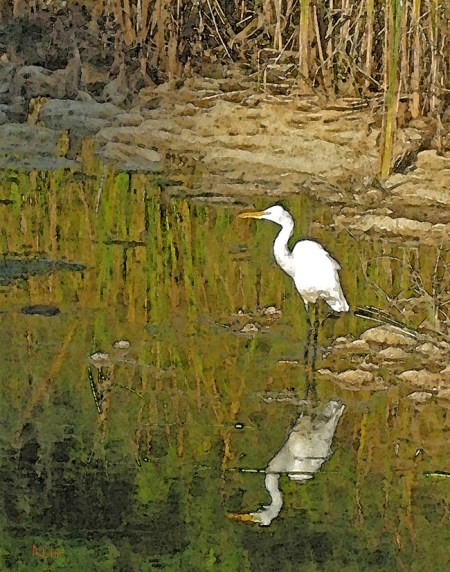
bird watercolorArtwork © R.L. Herron 2011

Ron Herron is a writer who has mastered graphic design, watercolor, photography, speed-reading, publishing, a great variety of computer apps and many other glorious pursuits of diverse ingenuity.

Humility he still needs to work on.

**********

Quite often, when I look at things I’ve written, it occurs to me my bio frequently sounds something like that above. And, in case you’re wondering where I’m going with this, that’s not a good thing.

An awful lot of good people write bad bios for themselves. Every indie author (and a great many other people, too) wants to sound erudite and just this side of awesome … but what they need and what their ego makes them say are generally different things.

I’m guilty of it. Like I said … often.

But by following a few simple rules you can write a good bio for yourself in less time, with less effort and everyone from you, to your mother, to your spouse, to your reader wins.

Impressive People Have Short Bios
Trust me (I have it from the highest authority … my sweet wife), no one is likely to be impressed by a long series of unimpressive things. The shorter your bio, the more people will remember it.

In fact, if you have a great one sentence bio, people may be curious enough to find out more about you. On the other hand, if you have a long, tedious, overly self-aggrandizing one they are almost certain never to want to discover anything more.

They might not even finish reading it.

If you’ve written a New York Times best-seller and are famous enough to appear on TV, your byline will probably only be a few words long: Author. Lecturer. Pulitzer-Prize Winner.

Keep this in mind. I just went through the exercise trying to craft my press release. The goal is to make your bio shorter, not longer.

Invert Your Pyramid
Put the important facts first. Assume with each word fewer and fewer people will be reading. It’s a great assumption because it’s true. It’s something you learn in Public Relations 101.

Don’t try to be clever, unless you’re absolutely sure you are (are you listening, self?). One bad joke can permanently ruin your image.

A sad trend, probably born of Twitter (sorry Twitter), are bios where people self-describe themselves with a multitude of traits (sort of like what I just did above).

Quite frankly, this often backfires and makes you look like either an egomaniac or someone who probably sucks at everything. Just state one or two traits relevant to the audience you’re trying to interest, and let it go at that.

That’s it. You really don’t need any more than that.

Now, if you’ll excuse me one more time, I have to go pass the draft of my latest bio attempt past my most vocal critic, before she gets started making us lunch.
 

What’s the Best Promotion for an Indie Writer?

March 21, 2013

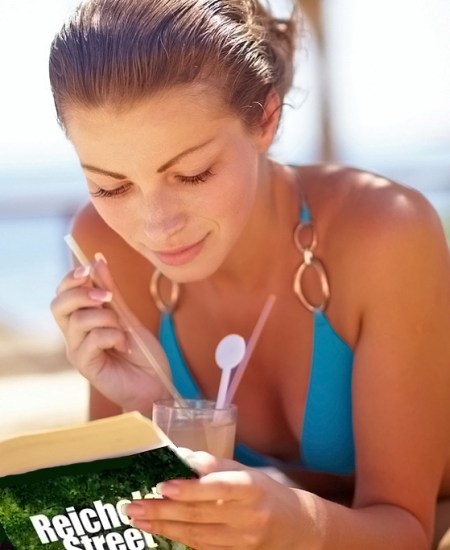
Young Woman REading
You’d like to convince readers to buy your book and take it with them everywhere. You’d also like them to say good things about what you’ve written, so others will try it. The question is how?   Photo/POND.5

Social Media Helps
As an indie writer, you may have written an absolutely stunning book. But without a personal PR staff, how does anyone find out about it?

A website; an active blog; social media like Twitter or Facebook and others (and I don’t mean to slight anyone by not mentioning them all) are good ways for an indie author to become known.

But the importance of personal promotion for a writer can’t be over-emphasized, and certainly not if you’re an indie, with no publishing machine behind you.

Readers want a relationship with their authors, as in “His/her work really speaks to me.”

There are some readers who get a thrill out of purchasing a book the author autographs right in front of them. Still others just want to know the author is really “a regular joe” or, to be politically correct, “a regular jane” … someone not all that different from them.

But in the end, people buy books pretty much like you and I buy books: based on the quality of the author’s work.

So, now that you’ve written that book, how do you become a household name? Or at least one that people who regularly buy books become interested in following?

Personality Sells Books
Think of it this way: people know about cars by the incredible volume of advertising they see and hear, but it’s often the recommendation of a friend that actually seals the deal.

As an indie you are basically an unknown quantity and, like so many other things, people are more likely to be loyal to authors they, or someone they’re acquainted with, know something about.

If you have an unlimited advertising budget for your indie book, you probably don’t even need to finish reading this.

If, however, you’re a lot like me and won’t be buying commercials at any time during the NCAA “March Madness” Basketball Tournament, to sell your book you need to personally talk to people.

Talking to People
I talk about my book everywhere. I talk about it to perfect strangers waiting in line at the grocery store, bring it up at social events, talk to neighbors, share it with members of the congregation after services. I even gave my business card to a local fast-food manager.

My darling bride often cringes when I bring up my books to complete strangers. But I believe the most successful mode of promotion is a personal one. Potential readers who meet, or have met, you in person are more apt to buy your book. If they meet you and like you, so much the better (so try to be friendly).

Any indie author who decides not to pursue the personal approach when promoting their book is an author who probably won’t sell very many.

But you have be careful, just as you do in social media venues. There’s a fine line between promotion and in-person spamming.

So What’s the Promotion Recipe?
Whatever you do, don’t blatantly sell. You just have to let people know you write (if you can work it into the conversation), and answer any questions they may have.

Hone Your Speaking Skills. If your book is fiction, poetry or a children’s book, consider getting involved in a storytelling group.

Create Speaking Opportunities.
Approach organizations, libraries or schools and ask to be placed on their program agenda. Grade schools love to have children’s book authors do a reading for their classes. Many high schools enjoy local authors talking to their senior writing classes. Program directors for many civic organizations are often on the lookout for interesting speakers.

Book Signings Are Not Passé. It’s true the average author doesn’t generally attract many people to a bookstore signing. However, try being creative. Set up a booth at a wine festival or a flea market … places you might not normally find book-sellers. You might get quite an audience if you do a book signing at a busy coffee house.

Speak at Conferences. This might take a little more work since, as a rule, conference organizers do not ordinarily come looking for you, especially at first. So seek out opportunities. If you have a specialty to talk about, or a particularly well-received book, giving a presentation at a local writing conference can give your sales a nice boost.

The common denominator for achieving success in all of these efforts is personal contact. Oh, and there is one other thing. Be sure you first write a good book.

Then go out and meet your readers.

I Need a What?

March 14, 2013

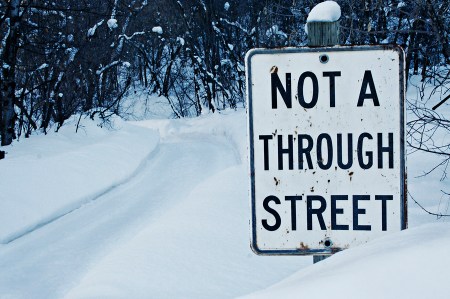
Not a Through StreetGetting the marketing message out about your book is not always easy. In fact, it’s probably the hardest thing an indie author will do.

A Media What?
I’ve been seeing a lot of talk lately about independent writers setting up their own media page. My first reaction was – “What? I’m supposed to have a media page too? Why? Isn’t it enough I have to promote my books by myself?”

Like writing and editing them and trying to get known through social media wasn’t hard enough.

“Aren’t media pages for authors who have already made a name for themselves, not newbies like me?”

WELCOME TO PUBLISHING 101
The importance of a media page finally dawned on me, and I’m right in the middle of constructing my own. I already have all the information for one scattered thoughout my web page.

However, to do it right these days, you apparently need to collect it all in one place … and make it easy for reporters, reviewers and critics (and bloggers) to access and download.

I will soon have that dedicated media page, with all the pertinent information in one spot.

WHY DIDN’T I DO IT RIGHT AWAY?
I was involved with lots of press releases while I was working (I spent 16 years in public relations). Most, if not all, of those releases were picked-up by major papers and national magazines.

But why not? … they were for a major Fortune 10 company whose announcements and decisions could affect tens of thousands.

I procrastinated on creating a media page for myself, and I think part of the reason is my own self-perception. Who would be interested enough in my books to want to do an interview with me? Sales are not exactly through the roof.

The few press releases I’ve created and sent out for myself have generated almost no interest. It took a long time to figure out why.

I was sending them to the wrong places. What I really lacked was a good understanding of what was right in front of me … the growing role of bloggers in publicity.

When bloggers see you’ve posted an interesting article, they re-post it. They do it because it brings followers to their own site, sure. But your ideas, your thoughts and, most importantly, the fact you write fiction at all becomes more widely known at the same time.

I’ve seen it happen often now with blogs I follow and it’s a neat thing. It’s even happened to me several times, and I need to do it for other authors, too (I’ll start soon, I promise).

SO WHAT DO YOU NEED FOR THE REST OF THE WORLD?
If you create a media page, make sure you populate it with all the information folks who just might talk about you will need. By doing so, you’ve just made their life easier … because your material and contact information is available and ready to go.

Things like a good headshot, cover images (high resolution preferred), your author bio, excerpts, book trailers (if you have them) and contact information. Awards, reviews and quotable blurbs you’ve already received are a plus. In fact, the best ones are those that showcase how other readers have already judged your work.

If you can’t host all the images and information on your own site (some host sites don’t allow it), create an account somewhere that will. One of the best sites I’ve stumbled across (and that’s actually how it happened) for free cloud storage is Media Fire. It can host images, documents, audio and video files.

HOW DO I KNOW THIS IS RELEVANT?
I worked in public relations and marketing for over thirty years and I know such updated information helps keep people aware of your products and services (even if the media to accomplish it these days is a bit different than it used to be just five short years ago).

If this is more than a hobby to you, the commitment to promoting your work must rank (almost) as high as creating it. Building a media page and keeping it updated may be the most important part of your marketing strategy.

Just in case the media does come calling…