Posts Tagged ‘self-publishing’

What’s In A Name?

October 19, 2013

Graffiti

I recently changed the name on the cover of my books.

No, I didn’t start using a graffiti signature … and didn’t create a pen name … I began using initials, instead of my whole name.
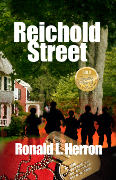
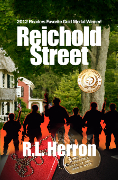
REICHOLD STREET COVER-ronald      REICHOLD STREET COVER_w_rlherron

I actually wanted to do it when I first started to write, but due to a misunderstanding with the support people at my publisher (something about the way in which my name was registered) I wasn’t able to.

(I didn’t understand it, either).

It took a while, but they’re finally convinced any royalties sent using only my initials and surname will arrive correctly … and the IRS will still know where to find me … which I know is what they were really worried about.

The confusion wasn’t a total a waste of time. It led me to discover more things on the web of nets … like six famous authors who actually did use pseudonyms.

——————–

1. Mark Twain
This was the easy one. Most American readers are aware Mark Twain is not the real name of the brilliant author and satirist who grew up in Hannibal, Missouri, and best known for “The Adventures of Tom Sawyer” and “The Adventures of Huckleberry Finn”.

He was born Samuel Langhorne Clemens.

Clemens was very familiar with the steamboat trade, having spent some time as a boat pilot, and he knew “Mark…twain!” was a well-known term shouted by boat crewmen when taking depth measurements on the river.

It meant they were in water deep enough to safely navigate (two fathoms, or 12 feet). A brilliant self-marketer, Clemens used the well-known term as his pen name.

The ‘celebrity in the white suit’ lectured frequently and was fastidious about sustaining his image as America’s most beloved writer. He was charming, popular, witty, and jovial … and a raconteur without peer.

2. O. Henry
In the first decade of the Twentieth Century, it’s safe to say O. Henry was one of the most popular short-story writers in America. His stories were known for their warm characterizations and clever twist endings.

We still celebrate one of his most famous stories: the holiday classic “The Gift of the Magi.”

Born William Sydney Porter, his pen name (which he assumed as his own) hid the truth about the years he’d spent in prison for bank fraud. Porter created the pseudonym as a cover, thinking no one would buy his books if they knew the truth about his history.

He was able to carry the secret of his true identity to his grave. It wasn’t until his biography was published … almost six years after his death … that the truth was exposed.

3. George Eliot
In high school (about thirteen bazillion years ago), I had to read “Silas Marner” for an English class. Actually, the whole class had to read it. We studied it for days.

An outwardly simple tale of a linen weaver, it was notable in its day for its strong realism and sophisticated treatment of issues ranging from religion to industrialization.

I remember it because of all the time we spent with it … and because the teacher told us it was actually written by a woman named Mary Anne Evans. Writing in the 1860s, she used the pen name George Eliot on all her work, so her writing would be taken seriously.
Wait, there’s more!

How Do You Deal With An Uncooperative Muse?

October 13, 2013

Muse

I mentioned last week my writing muse has abandoned me. It’s probably to make me wonder if I’ll ever finish the last half of my REICHOLD STREET sequel so the book will actually see the light of day this year, as I more or less promised.

Or maybe it’s just to make me sweat.

I’m not sure. Those nine Greek muses were notoriously unpredictable. Not to mention there was no muse specifically for fiction.

Don’t believe me? Check the list:

    Calliope was the muse of epic poetry
    Clio was the muse of history
    Erato was the muse of love poetry
    Euterpe was the muse of music
    Melpomene was the muse of tragedy
    Polyhymnia was the muse of sacred poetry
    Terpsichore was the muse of dance
    Thalia was the muse of comedy
    Urania was the muse of astronomy

See? No muse at all for historical fiction, mystery, westerns, sci-fi, fantasy, spy thrillers, horror, young adult or zombie romance.

The tragedy and comedy muses might work, if you’re considering a reprise of Shakespeare’s Romeo and that Capulet girl … or think you have a shot rewriting Joseph Heller’s fabulous “Catch-22” into the latest zombie apocalypse fable, featuring a worried Yossarian and the dispassionate Colonel Cathcart as dancing corpses.

So, since the literary muse I don’t even have has abandoned me for the moment, I’ve been spending time foraging around the Internet … mostly because (1) I don’t have the inclination to visit the library, and (2) the web of nets is faster.

Anyway, I was surfing again on the web of nets and came across another remarkable comment by reformed journalist Guy Bergstrom, this time from a post on his blog back on October 11, 2011. I have to mention it, because this particular entry almost had me sitting down to write my stalled novel again.

He said it doesn’t matter what you’re writing: “spy thrillers, speeches, newspaper stories or romances about men in kilts” … the only thing readers truly care about is the journey you take them on.

Here I’ve been struggling to paint with words, and he says the roller coaster ride you take a reader on is more important than how pretty you’ve painted things.

In other words, story structure beats pretty words.

Wow … what a concept! All you other indie writers out there, are you listening? Readers want a thrilling ride.

Wait, there’s more!

Finding the Key to Success

October 2, 2013

Key-to-Success

I’m tired of writing about writing for the moment. I’m bogged down at something short of 40,000 words on my REICHOLD STREET sequel.

I’m also having trouble with the other novel I’m working on. My thousand-words-a-day plan is at least three weeks behind, and I just don’t have the oomph to get started. My brain is fried.

It isn’t something new. I know, as every author knows, the writing business isn’t easy.

Indie authors may know it better than most, since they’re usually doing everything: writing, editing, formatting, cover and page design, print preparation, digital versions … and virtually everything else, including marketing and promotion.

I’m still trying different things to market the three books I’ve already produced. It’s a thankless, never-ending effort, but we still do it.

Why?

Every author, including the poor wannabe who’s still trying to deal with one publisher rejection after another, remembers what Frank Sinatra once said (even if they don’t know he said it):

“The best revenge is massive success.”

You’ll never find truer words, particularly when it comes to aspiring authors. Many suffer awful, degrading turndowns from traditional publishers, yet they still persevere. It’s happened to some of the biggest names in the business.

I took the time to look up some of those publisher rejections (like I said, it’s been a slow writing week, and my search for the muse often makes me wander to strange places).

Take a look at the following list of six well-known authors (and some of the nasty little notes publishers sent to them) and savor the taste of their sweet revenge.

Continue reading…