Today I’m not posting about my own books, or talking about any of the ins-and-outs of indie publishing. I’m returning a favor by interviewing another Michigan author who was kind enough to tell her own blog followers about my writing adventures.
Today’s author, Laura Lee, not only plans to publish her next book as an indie, but already has quite a few traditionally published books to her credit.
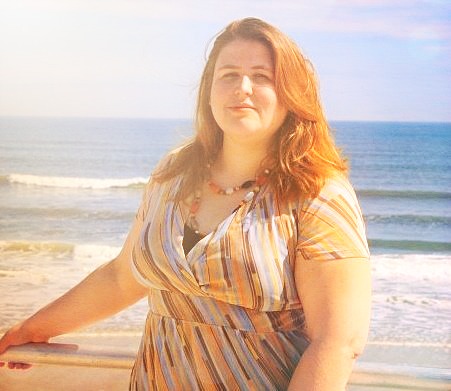
Laura Lee, Traditional and Indie Author
Welcome to “Painting With Light,” Laura.
Thank you, Ron.
Laura, I’m embarrassed to admit I haven’t read any of your work. Can you tell us a little about yourself?
I’m mostly known for non-fiction in the humorous reference category. My best seller was “The Pocket Encyclopedia of Aggravation.” Last year I did a book with Reader’s Digest called “Don’t Screw It Up.”
Lately, I’m more focused on fiction and other projects. My first novel “Angel” was published in 2011 and was released in audio format for the first time a couple of weeks ago. (I’ve found it is hard to find reviewers for audiobooks.)
I’ve decided to try the indie route for my next novel, “Identity Theft.” This is a new experience for me. I raised the initial funds on Pubslush, the literary crowd-funding site.
My campaign was both more successful and exciting than I had expected and also a little bit disappointing because I think I might have had more success reaching people outside my normal circle of friends on another, more popular, crowd-funding site. Live and learn.
Where do your ideas come from?
My non-fiction books have been a combination of ideas I generated and some generated by publishers. I like having books assigned to me and just writing them because I enjoy the process of writing much more than I like the process of marketing and selling the concept of a book.
I can’t say that I have a source of ideas for fiction. My novel “Angel” was initially sparked by a trip to Washington. I took a bus tour of Mt. Rainier and the entertaining tour guide kept talking about burning out on his old job. At some point someone asked him what his old job had been and he said “a minister.”
I kept coming back to the question of what would attract someone to both the mountain and the ministry and what kind of conflict might put him out of step with his congregation. When the idea that the character might become attracted to another man hit me the rest of the story followed naturally.
Early on, I wrote terrible fiction that was highly autobiographical. I’ve found I get much better results when I put some distance between myself and my story. I need some overarching concept to guide the story.
With “Angel” it was the metaphor of the mountain. With “Identity Theft” it’s the notion of personal identity.
I think it is a common misconception that a big problem for writers is coming up with ideas. For me, the more pressing problem is finding the time and energy to develop the ideas I have into finished products.
Do you work to an outline or plot, or do you prefer to just see where an idea takes you?
I’ve never been able to write from an outline. When I was in school, when you had to turn in an outline first, I always had to write the whole paper then go back and create an outline from what I had written.
For me the natural progression of writing comes from the writing itself. Of course, with non-fiction book proposals you have to create an outline. Then you write the book and it is always different from the proposal.
In terms of fiction, I generally do not start with a plot and write from beginning to end. I have ideas, I write scenes, bits of dialogue. At some point I have enough critical mass that I see how they fit together and I finish the whole book. I write in layers and the novels I have written have all taken shape over a period of years.
When do you do most of your writing?
Writing for me is a multi-stage process. So there is a period when you are writing down concepts and ideas. Then you realize that you have hit a roadblock and you go and do something else.
I will often pose the question to myself: What is missing here? Then I will go and take a shower or watch TV or read a book. At some point my subconscious will come back with the answer to the question and then I will go and write it down as quickly as I can before it escapes.
So I am constantly writing little things in notebooks and on scrap paper. A lot of times I will write down the rough notes and then polish it in the morning. I am a full time writer, so I write fairly constantly. I don’t find that a “morning pages” or “time for writing now” approach works for me.
Who (or what) inspires your writing?
My novels tend to be made up of various attempts at writing other novels. I will write something and put it aside and later get a new idea and suddenly something from the past will seem to fit in with it.
A number of years ago I worked in the office of the folk singer Arlo Guthrie, sitting under a gold record with a spider caught under the glass, and I was handed a stack of fan letters to answer. I tend to file away details like a framed gold record with a spider caught under the glass.
I thought that the idea of someone who was tasked with answering fan correspondence online, who decided to take on the rock star’s identity was an interesting concept for fiction.
The idea languished for a while, but I recently saw Adam Ant in concert. He was the iconic rock star for me … my junior high school idol … and the experience of seeing him years later got me thinking about the story again. This time I had the momentum to finish it. “Identity Theft” deals with a lot of the things I have been thinking about and reading about in the past few years.
Do you have any funny or peculiar writing habits?
Ideas seem to come to me like magic in the shower. I don’t know why that is.
What’s your favorite quote?
I like this quote by Philip Schultz, the Pulitzer Prize-winning poet:
-
“To pay for my father’s funeral I borrowed money from people he already owed money to. One called him a nobody. No, I said, he was a failure. You can’t remember a nobody’s name, that’s why they’re called nobodies. Failures are unforgettable.”
What would you change about yourself, if you could?
I would have been born with a small fortune.
What do you find the hardest thing about writing?
I enjoy writing. What I find hardest is maintaining a career as a writer.
What are your plans for future projects?
My novel “Angel” just came out in audio and “Identity Theft” is coming soon. Beyond that, it will depend on what I am able to sell. I have a proposal for a biography that I am quite invested in circulating. I’ve written a stage play, a comedy, which has gotten some good feedback, but it has a relatively large cast which is a challenge in terms of getting it staged.
I have another novel, which is complete and has come close to being sold a couple of times, which I may put out after “Identity Theft.” I’ve also been having some conversations about more non-fiction. So, whatever someone will pay me to do next will be the next thing.
Thank you for talking with us, Laura.
You can find out more about Laura Lee on her web site, check her out on Goodreads or follow her on Twitter.
====================
My readers know there is a lot of realistic Vietnam War reference in my novels “Reichold Street” and “One Way Street.” I think today is the perfect day to express my gratitude to all my friends who served or perished over there.
In fact, I’d like to thank all our military personnel, everywhere, including my father-in-law and my late father, for their service and sacrifice. We’re extremely proud of you.
As always, you can find my books as eBooks or paperback on Amazon, or at Barnes & Noble. You’re also invited to visit my web site, BROKEN GLASS, or like my Book of Face page. You can also follow my shorter ramblings on The Twitter.
====================
Comments posted below will be read, greatly appreciated and perhaps even answered.







 Painting With Light