Posts Tagged ‘book marketing’

Are You a Storyteller?

April 30, 2013

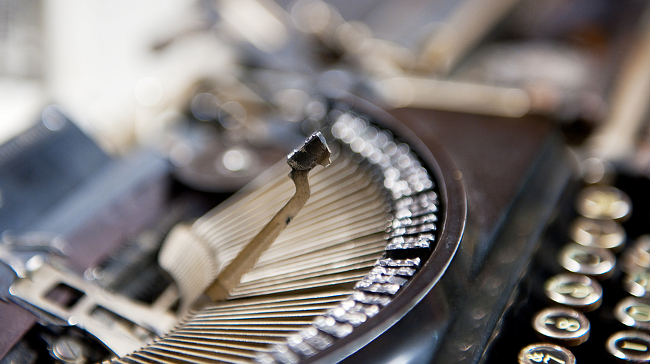
typewriter one key up
I’ve Been Putting My Work On Hold

Since I retired from the nine-to-five and started what some of my friends call that writing thing, I have a hard time trying to figure out what to tell people it is that I really do. Oh, I know some folks call me a writer or an author … but what does that mean?

After all, I’m independent … an indie writer … which means neither Random House or Simon & Schuster, or anyone else with the words major publisher associated with their name, has signed me to a contract. There’s a good reason for that: I haven’t tried. At my age, I decided not to play that waiting game.

I have a good friend, himself a published author (although his fiction books are long out of print), who looks down on self-publishing as if it was an eleventh biblical plague of terrible proportions, and a portent to the end of the world.

But all my books have official ISBN numbers and are available in print; they’re listed on Baker & Taylor and are available to libraries; and they are carried by virtually all e-Book retailers. All have good reviews. One of them was even a 2012 Readers Favorite Gold Medal Winner.

So what, exactly, do those “major house” pieces have that I don’t?

Well, royalties that come in dribbles and drabs at only 10% of the retail price for one thing, and warehouses full of books yet to be sold, for another. The only thing I think I actually miss is a big publicity machine to get the word out. As an indie, I have to do that, too.

It’s part of why I’ve been blogging about indie publishing for months now, trying to help other indie wannabes either get started, or get a leg up to where they should be … and trying to get followers who might want to read one of my books.

I like to think it’s helpful to everyone that way, but I have to admit it sometimes feels a little like that picture above, with a stuck key holding up the work. What all my promotion and brand-building effort really means is that what I’m not doing … is writing.

I need to get back to that for a while. I more or less promised a sequel to my award-winning “Reichold Street” by the end of summer … this summer … and I’m many thousands of words behind the pace I need to maintain in order to honor that pledge.

On top of it all, I’ve got several other story ideas bouncing around in that great vacuum between my ears I need to get busy with, too.

I was reminded of that just the other night while out to dinner with friends. Their seven-year-old grandson was with them, and at the end of the evening he wanted to know what I did. I said I was a writer, and he wanted to know what I wrote about.

When I said I wrote fiction he thought about it a few seconds and then his face brightened. “Oh,” he said, “are you a storyteller?”

Yeah, I guess I am.
Six Indie Author Online Mistakes

April 24, 2013

lake erie lighthousePromoting Your Own Work Is Tough Duty.

I did some informal research about the way fellow indie-authors use their websites and blogs, and the results weren’t encouraging.

While there are many nicely done sites, like that of Joanna Penn, Thomas Rydder or M.S. Fowle, many indie authors seem to have a website or blog simply because they’ve been told they should.

Mistake #1: Not Building a Good Web Site or Blog
Not investing a little time and effort is a mistake, because an indie-author’s website or blog should be the base of their online effort. Unlike most social media, it’s the one place where they are in full control of the content, image and brand they project.

However, the sad truth is many indies don’t seem to consider the why of what they’re doing. If you build a site without really knowing why it’s necessary, your site might not be much good for anything but collecting virtual dust.

In fact, having a bad site can be worse than no site at all.

Mistake #2: Not Showcasing as a Professional
Looking professional with your website or blog doesn’t mean spending a lot of money on design (sorry, designer folks) because there are good templates on blog or web site hosts like WordPress or iPage that will take care of that for you.

The hard part comes when you add content. You’re free to put in whatever you want, of course, and I would never presume to tell you what to say, but for your own sake please, please, please try to avoid the blatantly unprofessional shouting of “buy my book”!

As an indie writer a simple, easy to navigate, professional-looking site with helpful information shows you take your writing seriously.

Mistake #3: Not Providing Media Info
I’ve mentioned this before, but it deserves repeating. Provide images of your book covers, your author bio and picture (a good one, not something cropped from your last family beach outing). Perhaps the best idea is one I’ve also talked about before … creating a dedicated page on your site just for media.

Bloggers, reviewers, and any other media folks who happen to stop by will love having your information already there for them to use; meaning they’ll be more likely to mention you.

Mistake #4: Not Building a Mailing List
Many indie-authors avoid collecting e-mail addresses because they think having readers and followers on their social media is enough, but not collecting e-mail addresses is one of the biggest mistakes an indie author can make. I confess to being guilty of avoiding this myself.

However, an email newsletter speaks directly to your readers, letting you announce a new title, or poll them about new cover ideas, without depending on the rather haphazard contact of social media.

Earlier, I mentioned e-mail newsletter management systems I’ve been considering. Well, I’m still looking at both Mailchimp and Constant Contact and I’m almost ready to let you know my decision.

Mistake #5: Failing to Engage and Interact
“Engagement” has already become a cliché in online marketing, and there are so many varying opinions on what works, it’s mind-boggling. But I’ve noticed people online I feel familiar with, even though I’ve never met them, are those who respond to my blogs and use social media to help me.

They’re very much like virtual friends.

Some folks are just like that, bless ’em, and I try to reciprocate. I appreciate people who do that for me. How do you get others to do it? It’s easier than you might think.

Try doing it for them first.

Be a friend, not a salesman. Mention them on social media. Use your blog or website or Twitter account to help promote them. Some critics call it schmoozing, but so what? Let ’em. If you want to know if it works, read up on indie author John Locke.

Mistake #6: Not Persuading Potential Readers
I’ve mentioned this before, too. When you describe your books, use powerful, action verbs and make the descriptions exciting. This is just as true for romance as for adventure, horror, mystery or sci-fi (who wants to read dull and boring?)

Showcase the best of any good reviews you have, add any awards you may have won and include a blog link (your own or someone else’s) your readers might enjoy.

Then, still without blatantly screaming “buy!” be sure to include links to your books in several visible places, and make it as easy as possible for readers to purchase them if they want to.

Is that enough? I really don’t know yet. My own efforts are still a work in progress. But I promise anyone who follows this blog I’ll let you know what happens.


Know the Secret of a Great Book Interview?

April 18, 2013

Give an InterviewSecuring a Media Interview Can Be Promotional Gold.

Successful Interviewing for Successful Book Promotion
As a self-published author, the chance to give a personal interview to the media has to be the pinnacle of book marketing opportunities. You can explain your creative process while building interest for your book with potential readers.

Alas, while I wish I was writing this from a more personal perspective, telling you how well my own interview went, I’m not. I have yet to secure a media interview for my own books, although it’s not for a lack of trying, just a lack of trying hard enough.

However, what I can address … from my many years of working in public relations … is the whole issue of media interviews.

While the particulars of each interview may vary widely, here are some tips that can help you deliver effective promotion for your book when that fabulous opportunity does come along:

Practice Makes Perfect
Recruit a family member or friend to ask questions about your book, and practice crafting answers that are direct, meaningful and brief. When you finally do secure an interview opportunity you probably won’t be asked exactly the same questions … but you will have some sense of how you want to answer.

Be Reader-Specific
In an interview don’t just tell the audience about your book; use your way with words to help them see the excitement in it. Show, don’t tell. Build an urgency to purchase in potential readers. The point of the interview is to create a fascination for your work. It’s the meaning of the adage “Facts tell; stories sell.”

Keep It Simple
In fiction, particularly for an indie author, the interview audience is likely to be unfamiliar with your name, your book title, and the genre in which you create. So try to answer questions to properly position your work. The same is true for any social media you decide to use. During your interview, avoid jargon or terminology your audience may not understand.

Watch What You Say
In today’s media, anything you say is fair game. While you want your interview to be printed, quoted, reported, or possibly a “viral” Internet item … that’s only a good thing if it’s something you really want everyone to know. Choose your words carefully. A good rule of thumb is to avoid saying anything you don’t want to see as the headline of the article.

Look For Opportunities
Just because you’ve self-published a book, it isn’t a given that media types will be ringing your phone and flooding your email with requests to talk to you. Bowker estimated they would issue 15,000,000 ISBN numbers in 2012, up from just a bit over a million in 2009. Fifteen million. There’s just too much out there anymore for anyone to come looking specifically for you.

Take your story to them. Build a media page on your website or blog, and make sure people know it’s there (I’m still working on mine, even though it’s been over a month since I wrote my blog post “I Need a What?”)

Contact your local paper, local cable channel, local radio (consider even school radio stations) and flat-out ask them if they’d like to interview a local author. All they can say is no.

But, be prepared, they just might surprise you.