Posts Tagged ‘award-winning writing’

The Indie Journey

November 4, 2013

Buddhist monks chant at Pongour Falls, the largest waterfall in Dalat, Vietnam.
Monks at Pongour Falls, Vietnam – Photo by Dang Ngo (used with attribution)

Tricky Footing
The journey of an indie writer can be a perilous one. It’s really not a trip for the faint of heart … at least not if you expect to make a living at it. The number of indie writers who’ve made it big can be counted on one hand.

Several predictions during 2011 said the year 2012 would be “The Year of the Indie Author.” After all, 2011 saw some awfully big indie moments all by itself:

John Locke became the first indie author to break the Amazon Kindle million-seller mark.

Amanda Hocking, the new Queen of indie vampire/zombie romance books (and already a multi-millionaire indie writer), signed a contract with St. Martins Press (who obviously wanted to ride on the coattails of her hundreds of thousands of independent sales).

And The New York Times deigned to include indies on their best seller list. Every week at least one title – often more – are listed.

From all indications, you’d expect readers and traditional media would both be rushing to wrap their arms around indie authors and their books.

Except … it didn’t happen.

Circadian Rhythm
So why do I bring this up? Well, I was thinking about it again, but not because I’m an indie author. It was because I couldn’t sleep.

The time change last weekend (damn that Daylight Saving Time nonsense) has my circadian rhythm all messed up again, so I got up and wondered what to do with myself.

Sitting alone in the dark, I contemplated the reasons it’s so hard for an indie author to make an impression on the literary world (yes, there are certainly some strange things that flit cross my mind, alone in the dark).

Then the reason many indie titles are such poor sellers hit me….

Big Reason #1: Bad Editing
I think there are several big reasons people complain about indie book quality and one of the biggest ones is the lack of editing.

This has changed in the past couple of years due in part to better, more diligent authors and the growth of inexpensive proofreading services. But the lack is still evident … and here’s a scary thought about why: there are independent authors who don’t believe their work needs to be edited.

Yet every writer can benefit from a good editor (even the most prolific of best-sellers). Writers are often too close to their work to make critical structural and grammatical changes that might make the story better.

Big Reason #2 – No Gatekeepers
The problem is compounded by the sheer number of badly written and hardly-edited indie books that taint the category, making it more difficult for good authors to get recognized.

Having a trusted place to find credible reviews would certainly help separate the good from the terrible.

There are a growing number of outlets which will review indie titles (like Readers Favorite or Kirkus Reviews). Readers Favorite will do it for free but Kirkus, probably the most respected indie review site at the moment, has a $495 basic fee … more than most indies can afford to pay.

Big Reason #3: Quantity Over Quality
The rise of self-publishing has caused a huge surge in the number of books available each year. Indeed, some indie authors seem to toss off multiple titles with ease.

Many so-called indie “reference” sources … and I use the term lightly … recommend having several books available for sale, claiming “If a reader likes one, they will look for another.”

That’s undoubtedly true. But writing a book shouldn’t be a race.

The model of pumping out several books a year might be fine for someone with available editors, but for indies the idea of putting out multiple books in a short time often means skipping important steps … such as editing … trying to go straight to the payoff.

Big Reason #4 – Crappy Covers
As with many things in life, first impressions are 90% or more of the game. You won’t sell a thing if no one will pick it up.

For indie authors to be taken seriously, they need to present themselves in a professional manner. Strong cover art, exciting blurbs and a professional author photo, are all must have items.

The decision to skip these important steps can hinder current and future sales. While there are many incredible indie authors out there, in order for them to be taken seriously by readers and the traditional media, they have to first take their own work seriously.

Just as every writer deserves the chance to write and publish, every reader deserves to receive an edited – and polished – book.

The Journey Will Continue
You may have reached the end of this blog entry … but it isn’t the end of the indie journey. I have another novel in the works, a sequel to my award-winning Reichold Street, tentatively titled One Way Street. I hope to have it done before the end of the year.

In the meantime, I’m off to Miami this month to receive the Readers Favorite Silver Medal in the Young Adult Fantasy genre for my collection Zebulon.

Blogging about the indie journey, however, will most likely never be done. Every day brings a new challenge and a new discovery. I hope you’ll continue to share it with me.

I’ll look for you on my next sleepless night …

—————

The marvelous photography of Dang Ngo can be found here.
Do You Make Your Words Sparkle?

October 24, 2013

Green-grass-with-raindropsPhoto/Bigstock Images

To Proof or Not to Proof
I’ve been looking over the last few posts I’ve made, wishing I’d done things a bit differently. They seem a little preach-y and, while I packed as much info into them as I could, they’re short on stuff an indie writer can actually use.

So, to get back in the groove, I thought I’d pass along some notes I made for myself about proofing and editing … that actually work.

Writers rarely like to revise their work (how well I know), but it’s a hard, cold reality of the writing process. It’s the most important thing you can do after the initial draft.

When you write, if you’re anything like me, you heave a big sigh (of accomplishment? relief?) as you put the period on that final sentence, sit back and look at what you’ve done. It actually feels pretty good for a few minutes.

Then the nit-picking begins.

OMG that’s awkward! What was I thinking? Jeez, why did I write it that way? That’s about as interesting as a margarine label!

Relax. It happens to most of us. That’s what editing is for. Here are five self-editing questions to ask as you begin to proofread your work:

1. Have You Applied the Second-Draft Rule?
Stephen King is one hell of a good writer, whether you like his subject matter or not. In his remarkable book On Writing, he shows a before-and-after example of how editing can improve a story.

The book is one of the best lessons on the craft of writing I’ve ever read. I suggest you get a copy and read it (it’s a memoir not a story, so don’t worry about demons or magic or spooky places).

His Second-Draft Rule is:

2nd Draft = 1st Draft – 10%

As writers, we have a tendency to believe every word we write is precious – and have a natural reluctance to cut our material – (you do that too, don’t you?). After all, we remember how hard it was to get it down on paper.

However, editing is about making your prose lean and exciting, compelling the reader to turn the page. Try it, it’s worthwhile … but I warn you, it’s much harder than you think. It makes you weigh and measure every word.

2. Is That Adverb Necessary?
If you’re using a lot of adverbs in your fiction, chances are you’re violating a cardinal rule of good storytelling by simply telling the reader about the action … not showing them.

For instance, imagine one of your characters has just obtained some special, long-sought-after prize. Something anyone would recognize as a thrilling moment.

Instead of telling us he was “yelling joyfully,” why not have him jump up-and-down screaming and yelling, creating so much ruckus the family cat runs under the bed in terror?
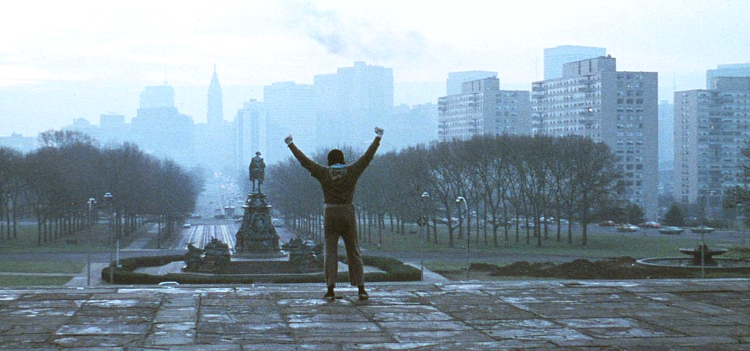
rocky-img18       Photo/United Artists

Or maybe, like Rocky Balboa, he runs through the streets at dawn, climbs the park steps and throws his hands in the air to the rising sun, letting the world know he intends to claim his shot at immortality.

Both of those descriptions show you how the character reacts instead of telling you … and they’re certainly more descriptive and alive than the word “joyfully.”

3. Where Does the Story Really Begin?
Carefully re-read the first few pages of your story. Where does the action start? A major fault with many first drafts (mine included) is too much background material showing up before conflict is introduced and the characters take over the story.

In several first drafts, my stories didn’t really begin until halfway down page two … or later. So, I found I frequently re-wrote or cut significant portions of the draft’s first few pages.

If I thought any of the cut material was somehow essential for the reader, I had to find another way to get it back into the story, perhaps through dialogue.

Occasionally, the edited work was a bit longer than the original, but the action began sooner and the pace of the story actually got better.

4. Are Your Adjectives Doing Their Job?
Get rid of empty adjectives. Instead of relying on “amazing,” “exciting,” “fascinating,” “scary” and other similar boring descriptions, use sensory details that bring to life what you’re describing:

“The wind swirled dirt and debris across the fields, but it was the immense slab of stone, rising on that wind like a feather, that robbed my sight of everything else.”

or …

“Even in the bright midday sun, the shadow exuded the damp, earthy worm-laden smell of the grave and left a bitter taste in my mouth.”

Find ways to get all the readers’ senses to work. When you do, it means you’re making the story real for them.

5. Have You Read Your Story Out Loud?
Believe it or not, one of your best proofreading tools is the sound of your own voice.

Reading your story aloud to someone is a fabulous way to find inconsistencies or clumsy phrasing, because if you stumble and hesitate over something when you’re reading, it’s likely your reader will find it awkward, too.

However, you want your reader to suspend disbelief, stay in the story and not wander off wondering what the hell you were talking about. If you find that happening, that’s a part you need to rewrite.

Consider Revision a Reward
A lot of people look upon editing as a chore (OK, I confess … that’s MY hand up over here in the corner). It’s harder than writing, and as difficult as marketing. Well … almost.

But remember … if you’re revising and editing, it means you’ve finished the first draft of your project.

How exciting is that?

Let me know what you think.


What’s In A Name?

October 19, 2013

Graffiti

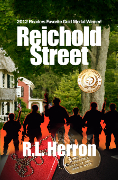
I recently changed the name on the cover of my books.

No, I didn’t start using a graffiti signature … and didn’t create a pen name … I began using initials, instead of my whole name.

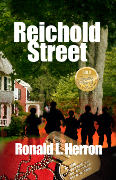
REICHOLD STREET COVER-ronald      REICHOLD STREET COVER_w_rlherron

I actually wanted to do it when I first started to write, but due to a misunderstanding with the support people at my publisher (something about the way in which my name was registered) I wasn’t able to.

(I didn’t understand it, either).

It took a while, but they’re finally convinced any royalties sent using only my initials and surname will arrive correctly … and the IRS will still know where to find me … which I know is what they were really worried about.

The confusion wasn’t a total a waste of time. It led me to discover more things on the web of nets … like six famous authors who actually did use pseudonyms.

——————–

1. Mark Twain
This was the easy one. Most American readers are aware Mark Twain is not the real name of the brilliant author and satirist who grew up in Hannibal, Missouri, and best known for “The Adventures of Tom Sawyer” and “The Adventures of Huckleberry Finn”.

He was born Samuel Langhorne Clemens.

Clemens was very familiar with the steamboat trade, having spent some time as a boat pilot, and he knew “Mark…twain!” was a well-known term shouted by boat crewmen when taking depth measurements on the river.

It meant they were in water deep enough to safely navigate (two fathoms, or 12 feet). A brilliant self-marketer, Clemens used the well-known term as his pen name.

The ‘celebrity in the white suit’ lectured frequently and was fastidious about sustaining his image as America’s most beloved writer. He was charming, popular, witty, and jovial … and a raconteur without peer.

2. O. Henry
In the first decade of the Twentieth Century, it’s safe to say O. Henry was one of the most popular short-story writers in America. His stories were known for their warm characterizations and clever twist endings.

We still celebrate one of his most famous stories: the holiday classic “The Gift of the Magi.”

Born William Sydney Porter, his pen name (which he assumed as his own) hid the truth about the years he’d spent in prison for bank fraud. Porter created the pseudonym as a cover, thinking no one would buy his books if they knew the truth about his history.

He was able to carry the secret of his true identity to his grave. It wasn’t until his biography was published … almost six years after his death … that the truth was exposed.

3. George Eliot
In high school (about thirteen bazillion years ago), I had to read “Silas Marner” for an English class. Actually, the whole class had to read it. We studied it for days.

An outwardly simple tale of a linen weaver, it was notable in its day for its strong realism and sophisticated treatment of issues ranging from religion to industrialization.

I remember it because of all the time we spent with it … and because the teacher told us it was actually written by a woman named Mary Anne Evans. Writing in the 1860s, she used the pen name George Eliot on all her work, so her writing would be taken seriously.

Wait, there’s more!