Archive for the ‘Storytelling’ Category

Remarkable Isaac …

January 5, 2014

isaac-asimov painting
Isaac Yudovich Asimov (1920-1992)

While I was researching something to post about indie publishing, I came across several articles about one of my favorite authors, who was traditionally published … a lot.

The Good Doctor
There were an abundance of articles because Thursday, January 2, in addition to being my little sister’s birthday, was also the birthday of one of the most prolific authors of all time … Isaac Asimov, and a lot of people remembered.

Asimov wrote more than 500 books, and is arguably the author most responsible for taking science fiction from the pulp magazines and making it a respectable genre.

That might have been enough for some writers, but Asimov was equally at home writing mysteries, fantasy and scholarly non-fiction; excellent books explaining physics, chemistry, biology, astronomy and ancient history to the layman.

He also published well-researched volumes on themes ranging from the Bible to Shakespeare. He even wrote humorous books of limericks. His books were published in an amazing nine-out-of-ten major categories of the Dewey Decimal Classification System.

Asimov’s best known work includes the story “Nightfall,” acclaimed as the best science fiction short story ever written, and the various installments of his Foundation and Robot series.

Awards and Acclamations
During his lifetime Asimov was the recipient of at least eight Hugo awards and two Nebulas for his fiction. For his non-fiction he was also awarded at least five major awards, including the Howard W. Blakeslee Award from the American Heart Association.

A remarkable intellect, Asimov taught biochemistry at Boston University’s School of Medicine, before he turned to writing full-time, but not many people realize just how precocious he was.

He graduated from high school at fifteen … and earned a Bachelor of Science degree from Columbia University by nineteen, where he also earned a Ph.D. in chemistry.

Asimov’s personal papers, archived at Boston University’s Mugar Memorial Library, consume 464 boxes on 232 feet of shelf space.
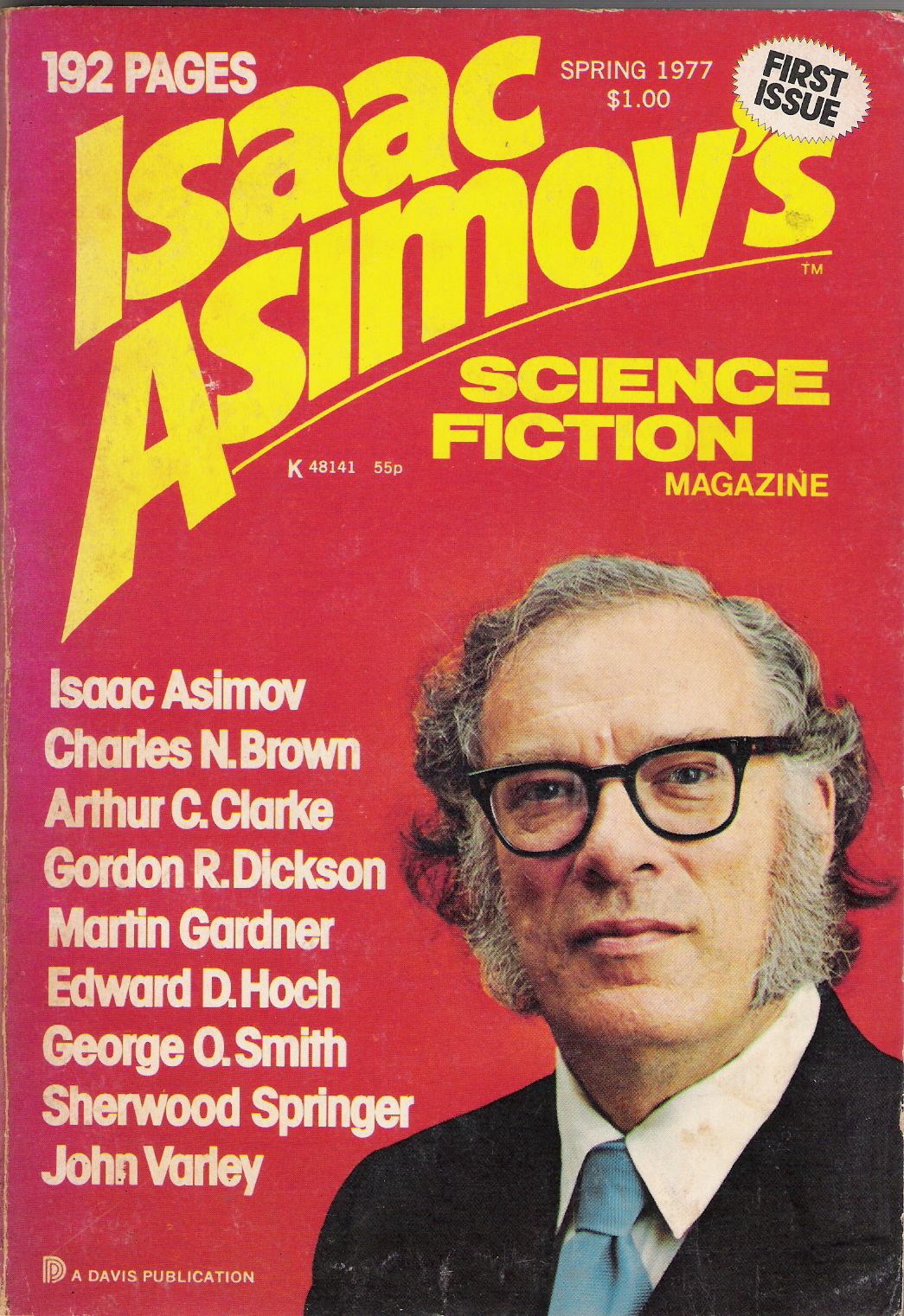
first issue ia science fiction

Special Connection
I’ve always felt  a special connection to the Good Doctor. While he was the editorial director of a publication named after him … Isaac Asimov’s Science Fiction Magazine … he penned a hand-written index card to accompany the form-letter rejection I received from editor George H. Scithers for a story submission.

The note said simply “Too much talk-talk in the ending.” It was signed “I.A.”

The Scithers rejection letter was soon lost, but that card became one of my most treasured objects (but that’s another story).

Correct Predictions
Fifty years ago, Asimov published a story called “Visit to the World’s Fair of 2014” in The New York Times. It listed his predictions for what the world would be like in 2014. Now that 2014 has arrived, several of those eerily correct predictions are worth talking about.

1.) Asimov predicted, by 2014, electroluminescent panels would be in common use.

Rogers Shine billboard manufactured by FlashTech Canada.
First Electroluminescent Billboard – Canada 2005

Electroluminescent panels are those thin, bright panels we see everywhere today in retail displays, billboards, signs, lighting and flat panel TVs. Score one for the Good Doctor.

2.) Communications will become sight-sound and you will see as well as hear the person you telephone.

apple_face_time-464x500

The first commercial cell phone call was still almost twenty years away when Asimov made that prediction. Think about how quickly communication devices have changed since then. Even my seven-year-old grandson can use FaceTime on the i-Phone.

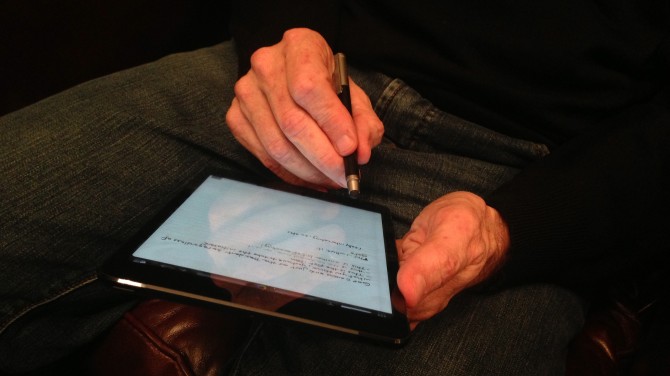
3.) The luminescent screen can also be used for studying documents and photographs, and reading passages from books.
holding-his-ipad-mini

With computers, tablets, iPads and smartphones, all of this is true.

4.) Robots will neither be common, nor very good in 2014, but they will be in existence.

robot image   arc-welding-robot-162232

If you define “robot” as a computer that looks and acts like a human, then this prediction is definitely true. We don’t have robot servants, robot friends, or robots that we absolutely cannot tell from human, but we do have robots.

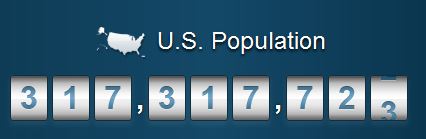
5.) In 2014, there is every likelihood the world population will be 6.5 billion and the U.S. population will hit 350 million.

us pop    world pop

Asimov slightly overestimated the U.S. population (317 million) and underestimated the world population (7.1 billion) but, considering the vast majority of the year 2014 is still in front of us, his guesses surrounding population are mighty close.

6.) Mankind will have become largely a race of machine tenders. Schools will have to be oriented in this direction.

123775556_iPads_398926c

We’ve hardly become “a race of machine tenders” … unless you consider how a lot of us are never far from a machine (i-Pads and Smartphones) that we “tend” pretty much constantly.

Hmmm … maybe this is what the Good Doctor saw.

7.) All high-school students will be taught the fundamentals of computer technology, become proficient in binary arithmetic and be trained to perfection in the use of the computer languages that will have developed.

This is one I wish was true. Asimov was correct insofar as high school kids, and younger, can certainly use computer technology, but American education lags far behind some countries in the world when it comes to computer science.

Unfortunately, coding classes are still relatively uncommon in American high schools, and just 1.4 percent of our high school students took the computer science exam in 2012.

Perhaps the problem doesn’t lie in what the Good Doctor realized we need to do, as much as it does in what we, as a society, don’t want to do.

8.) We will live in a “society of enforced leisure.”
Not yet, Dr. Asimov, not yet … and unless we get busy and catch up to the world’s countries that are so far ahead of us in educational matters … we may never get there.

Right now, I have to interrupt my “enforced leisure” to get dressed, go out and tackle the beginning of the 10-12 inches of snow we’re expecting today.

Sigh.

What are your predictions for the things we’ll be doing fifty years from now?

Year of “The Yearling”

December 26, 2013

Cover_of_The_Yearling_1938_Original
Original Book Jacket Cover for The Yearling

The Things You Discover
With the bustle of Christmas preparations behind us for another year (and the sound of tearing wrapping paper still fresh), I began my usual year-end review of the many things I meant to do in 2013, but never got around to.

I also started making an updated list of the things I probably won’t do next year, either.

I’ve been extraordinarily blessed with new acquaintances, good relatives and great friends this past year, but my bride and I also have many pressing family issues to deal with right now (life is always like that, isn’t it?).

I wasn’t doing my usual patient search for literary things to write about, so it took me by surprise to come across a notation about the year 2013 that I had overlooked.

This past year was the seventy-fifth-anniversary celebration of Marjorie Kinnan Rawlings 1938 novel The Yearling.

So, you ask, what’s the big deal?

A Best Seller
Well, for one thing, The Yearling was the best-selling novel of 1938. It held the number one spot that year for twenty-three consecutive weeks, sold millions of copies and has been translated into Spanish, Chinese, French, Japanese, German, Italian, Russian and twenty-two other languages.

It was also awarded the Pulitzer Prize in 1939.

But it’s only vaguely familiar today to young American readers, and in 2012, it only sold about six-thousand copies … in all formats.

Although that’s an annual sales figure that would thrill most indie authors … they’re dismal numbers for a book considered a classic.

Running Out of Steam
It seems The Yearling is slowly sinking into obscurity. Why? How does such a classic novel run out of steam?

It wasn’t as if The Yearling was Rawlings first book. She also wrote the little-remembered South Moon Under (which, remarkably, was also a finalist for the Pulitzer Prize … in 1933).

south-moon-under2
Original Cover for South Moon Under

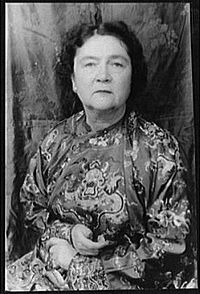
One factor might be Marjorie Rawlings herself. Matronly and angry-looking, she was not a very good public speaker … and she was certainly not a sexy figure. As a woman of independent means, Rawlings could live as she chose, but her abuse of alcohol increasingly ruled her life.

She advanced no politics and didn’t have a spectacular, memorable “rock star” life or death that was covered by all the available news media … just a lonely, broken-hearted alcoholic one (1896–1953).

200px-Marjorie_Kinnan_Rawlings
Majorie Kinnan Rawlings

Despite her apparent successes, some critics considered her writing to lack the depth of great literature, although they praised her skill in reproducing the color, characters, speech, local customs and way of life of backwoods Florida.

“Writing is agony for me,” she once told an interviewer. “I work at it eight hours every day, hoping to get six more pages, but I’m satisfied if I get three.”

Wrong Genre?
Another factor in its apparent demise might be the prevailing view today that The Yearling – despite a few uses of the “n-word” – is a book for young readers. I find that surprising, because Pulitzer’s are not an award for children’s books.

Perhaps, in the final analysis, sales of The Yearling are fading because the story reflects a world view here we’re also losing … a much more simplistic time, where self-sufficient farming and hunting were individual necessities, and families only survived by their daily hard work and wits.

As that world disappears it seems almost inevitable the book, and the stunning landscape it evokes, would continue to lose audience.

Readers today expect their protagonists to come face-to-face with the true meaning of hunger, loneliness and fear in other ways … like road rage, sex, vampires and zombies.

5491372-lyearling poster
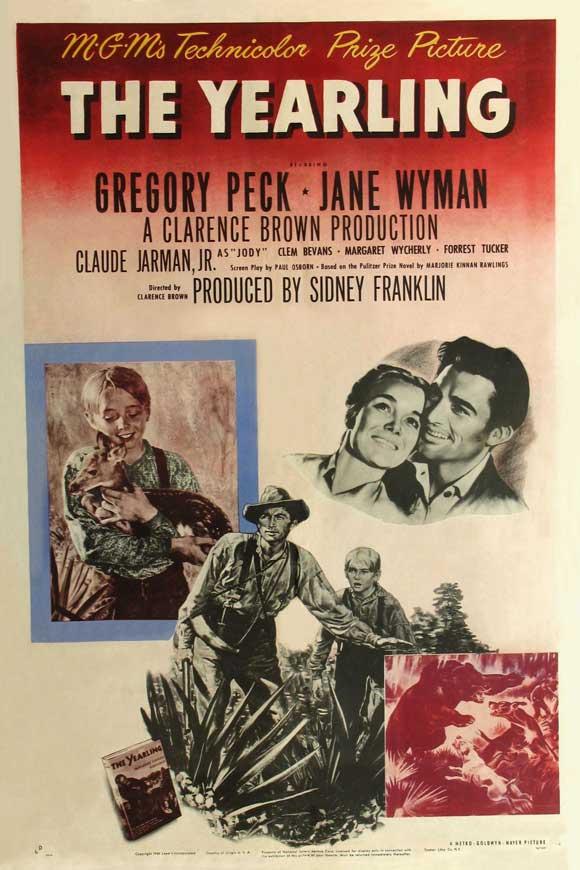
MGM Movie Poster for The Yearling

As someone who read the book at a fairly young age and who also remembers the many early television broadcasts of the old, tear-jerker black & white film based upon it, it seems the world spins now at a different rate. Faster and more unrelenting.

ClaudeJarman_a533_300w375
Click picture for a scene with young actor Claude Jarman from The Yearling

Perhaps … just perhaps … the book, with all its heart-tugging sentimentality and backwoods charisma, is fading away because it can no longer keep up with the pace.

I think that’s sad.

It’s like forgetting that it’s the intention you bring to the simplest gift of time, love, laughter or friendship that is worth far more than anything you could put a bow on, because the best gift you can give your loved ones is you.

Hmmmmm. I think I just made my resolution for 2014.

Happy New Year.


Why Should We Learn to Listen?

December 13, 2013

cute kitten-and-dog
As we start counting down to the Christmas and New Year holidays, I’ve been thinking about when I first began my journey as a writer. I was seventeen and the first short story I wrote and sent to a publisher was full of the eagerness of youth (and, thankfully, it was lost long ago).

Unfortunately, it was also full of clichés and trite plot points … and more than a few outright “groaners” for dialogue. In my eagerness to write stories and send them out into the world I neglected one very important thing: building a credible story.

My eagerness was met with rejections – lots of them.

I needed to become not only a better writer, but a better storyteller to get anyone to want to read what I had written, and that meant revisions on top of revisions. But, in order to know how to revise my writing, I had to learn to listen.

Listen to Your Critique Group
Every author’s got them. Beta readers. These are the folks we always let see our work long before anyone else does. Indie authors may have more than most, because we have such a need for – even though we don’t always want – constructive feedback.

I’ve been fortunate to have some wonderful people in my life who never fail to give me honest criticism. Their comments aren’t meant to soothe my ego. They’re meant to help me write.

For instance, long ago I listened when they told me my character descriptions were either too short, or too detailed, long and boring. They said I either left everything or absolutely nothing to their imaginations and, as a result, they couldn’t relate to any of the characters in my stories.

I also had an early reader tell me “Nobody talks that way” when they were commenting on my dialogue. Listening to their feedback made me dig deeper to make my descriptions, and the conversations of my characters, more succinct and believable.

I also heard them say “you don’t let me see the story … because you’re constantly telling me what I should be seeing.” So I borrowed the advice repeated in Stephen King’s book “On Writing” and got rid of the useless adverbs cluttering the pages.

Last year, one of the Readers Favorite reviewers made this comment about some of my recent work: “Herron is a master of the art of character development.” Another commented that my “characters come to life on the pages.”

I owe those positive comments not only to decades of practice, but to some of that earliest feedback. It keeps me focused and I will always be grateful I paid attention.

Listen to Other Authors
If you want to write a mystery series, it helps to be a fan of mysteries. Most writers know that writing begins with reading, but some don’t actually take it to heart, and many don’t realize you need to do it the proper way.

To learn, you can’t just read it as a general reader would. You have to read it as a writer and really “listen” to the way that particular author tells the story. Listen not only to the words, but the phrasing, the meter and tempo.

If you find it enjoyable to the point of suspending belief in the real world while you’re engrossed in it, then go to your own stories and see if they sound the same way to you. It might help you see if your story is falling short.

Listen to Yourself
As you’re learning and taking advice from many sources, don’t forget to be true to yourself. You don’t always have to take everyone’s suggestions. Sometimes it’s the right thing to do to stand your ground and defend what you’ve written.

But remember, standing your ground about anything you’ve written can only be done properly if you’ve first taken the time to really listen to what people have been saying.

Listen to Reviews
When your book is finally published, whether traditionally or indie, lots of people will have lots of things to say about it. Some may be good. You can usually count on some of your friends for that, even if they’re stretching the truth.

Some may be not so good. Most of your detractors, and a few real friends, will fall into that group. Listen to them all and glean what you can from it. Use every bit of feedback as a learning experience for your next project.

Don’t be overly enthused by good comments, and don’t be distressed by negative ones. The reviews of your present book will teach you things that will make your next book even better.

Finding the Best Beta Readers
Being forced to rewrite what you’ve struggled to write can be painful at times, but it’s the only way your writing will ever improve. If you don’t already have a good supply of beta readers, look to your writer friends. Network with them and offer your help and support.

Making friends with other writers (and readers) is a long-term investment in your writing career.

The best way to approach people is to make genuine friendships. Don’t “check them out” to see if they might make a good beta reader, or help in some other way, before you make friends. People can tell if you’re using them.

The Best Advice I Ever Received
Be patient and generous. Help others if you have the skill and time, even if they might never be able to pay you back. That has value in and of itself.

Trust me … it’s a worthwhile thing to do, it can make you feel good and lift your spirits. And sometimes the most surprising things come back to you, in a good way, well into the future.


——————–


Coming Soon! An interview with indie author M.S. Fowle!