Archive for the ‘Market Your Book’ Category

Are You Doing Book Signings?

November 25, 2015

book-signing

The holiday season is here again, and it’s a very family time of year. I’m extremely grateful to have good people with whom to share it. I hope you, Gentle Reader, are just as fortunate.

**********
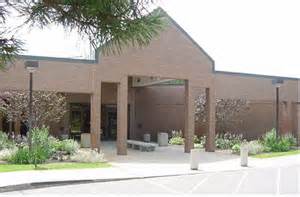
orion twp libraryOrion Township Public Library

I’ve been invited to participate again in “The Giving Season” – a local author book-signing at the Orion Township Public Library. It will take place from 1:00p-400p on Saturday, December 5, 2015.

Big deal, you might say (and probably rightly so), but around my house it is big. Book signings are part of the ‘earned media’ I’ve talked about before on this blog.

Sort of.

They aren’t free, which is truly the best definition of earned media … publicity you don’t have to pay for.

Alas, I have to buy the books I sign.

Plus, I have to prepare for the event, which means buying things like posters and handouts (bookmarks, this year), which aren’t free, either. I also have to spend the better part of a day getting to, setting up, participating, and re-packing things afterward to go home.

Poor thing, I can hear you say (a bit sarcastically, right?)

Don’t get me wrong. I’m not complaining. Not at all. Book signings are great way to meet your readers … or, better yet, your potential readers … and this year the library has agreed to accept the donation of my latest book “Street Light” into their permanent collection.

SOME ADVICE
If you’re also an indie author, you might benefit from a few of the things I’ve learned.

Advertise. Don’t depend on the venue to promote you. Many do a bad job of it. Put up your own flyers in the area advertising the event (I print my own at home).

Make sure you have correct change, if you’re doing your own selling. For example, if your book is selling for $15.00, make sure you have enough $5.00 bills to make change.

Print business cards, handouts, bookmarks, fliers as appropriate. If you accept credit cards, make sure the card-reading device is ready … and working … before you start selling.

Make a good impression. For many of your readers, this is the first time they’ll meet you, so be well-groomed. Some authors dress in character, like my friend Eddie Price. If you decide to, make sure the outfit is appropriate for both the books you write and the event.

Bring a supply of good pens. You only have to forget to do this once (… lesson learned).

Decide ahead of time where to sign. I like to sign my books on the title page, which is where most books are autographed, though you can also sign the inside cover.

Personalize your message. In most cases people want the book inscribed to them personally, though sometimes it’s intended as a gift, so be sure to ask. Use their first name and always ask for the spelling, since even common names can have unusual spellings.

Choose a signature phrase. Ideally you should have a phrase that you write each time you sign a book. Keep it simple. I usually write “Best wishes…”

Consider a giveaway. Each time I go to a book-signing, I have a sign-up sheet where someone can win a free copy of one of my books. All I ask for in return is an email address (so I can publicize future events to an interested audience).

Smile. This is probably the best advice I can give you. Potential readers will remember two kinds of authors. Those who are obviously outgoing and happy to meet you, and those who sit back and scowl like a reclusive sourpuss.

Guess which one leaves a better memory?

So be friendly. Stand up. Talk to people. Say hello to everyone who passes by your table. Enjoy yourself.

Optional. Candy and a candy jar. What better way to get people to stop than to have a candy jar on the table? I usually bring Tootsie Rolls. I discovered they are both gluten-free and kosher, so everyone can indulge!

**********

My books have all garnered some terrific reviews. If you can’t make it to the book-signing, you can see the stories I have available by using the Amazon link below.

buy now amazon

You’re invited to visit my web site, BROKEN GLASS, or like my Book of Face page. You can also follow my shorter ramblings on The Twitter.

**********

Comments posted below will be read, greatly appreciated and perhaps even answered.

What the Heck is a Tetrology?

November 12, 2015

slide_208667_680364_hugeMaking a Splash

Now that I’ve written and published three books that are considered a trilogy: (Reichold Street, One Way Street and Street Light) what do I call a fourth book in the series?

This recently became an issue, when I mentioned on social media that I’m writing another book featuring some of the characters originally found in the first three books.

Now, technically, four books in a series is called a tetrology.

Does that mean I have to change the covers for the three books that comprise the original trilogy? Particularly any of them that make reference to a trilogy (like Street Light)?

Well … in a word … probably not.

OK … that’s two words, but authors and publishers have done things like this before. Publish multiple books in a series, I mean.

Some authors have their characters go through changes, and make references to past events (like my series). Typically such series are published in the order of their internal chronology, so that the next book published follows the previous book.

The changes may be minor – characters might get engaged, change jobs, etc. – but it does not affect the main story line.

Besides my books, examples of this type include Tony Hillerman’s award-winning Navajo Tribal Police books.

In other series, the changes are major and the books need to be read in order to be fully enjoyed. Examples of this type include J.K. Rowling’s Harry Potter series.

There are some book series that are not really a proper series at all, but more of a single work so large that it must be published over two or more books.

Examples of this type include The Lord of the Rings volumes (including the prequel, The Hobbit) or the Dark Tower series by Stephen King.

Some authors, like C.S. Lewis, make it difficult to list their books in a numerical order. In his Chronicles of Narnia series, he jumps back in time to early adventures of the characters, writing works that must be placed before or between previously published works.

This was likely done intentionally, as C.S. Lewis was a medieval literature scholar, and knew medieval literature does not always tell a story chronologically.

Now, I’m not using any of this information to make light of those who might question my announcement that I’m working on a fourth book in what they’ve come to know as “a trilogy.”

It’s not something I planned … but neither was the trilogy in the first place. It just happened.

Now, I’ve discovered the characters have more to say … months after I thought they were done.

I’ll find some way to account for it with the title of the new book, which is still up in the air. Hopefully, you’ll just enjoy the read.

Either way, I hope you’ll take a moment to take a short survey about the whole issue.

**********

My books have all garnered some terrific reviews. You can see the stories I have available by using the Amazon link below.

buy now amazon

You’re invited to visit my web site, BROKEN GLASS, or like my Book of Face page. You can also follow my shorter ramblings on The Twitter.

**********

Comments posted below will be read, greatly appreciated and perhaps even answered.

What is the Story Within?

October 19, 2015

Oakland University Campus

I spent the day Saturday at the Eighth Annual Rochester Writers’ Conference at Oakland University. It’s one of the best one-day conferences going, and a tribute to its organizer, Michael Dwyer.

I find Michael’s conference a veritable treasure chest, and have attended every fall session since its inception. I’ve never failed to come away without some new, useful information.

Rochester Writers The theme this year was “The Story Within” and it featured Michigan authors, speakers & educators discussing fiction, non-fiction and business topics, through lectures, workshops and panel discussions.

The keynote address by best-selling author Bonnie Jo Campbell, a 2011 Guggenheim Fellow, who was also a finalist for both the National Book Award and the National Book Critic’s Circle Award (as well as being awarded a Pushcart Prize) was fun and informative … and worth the day, all by itself.

Speaking skills, poetry, history, author branding, children’s books, flash fiction and writing productivity were all session topics. There was also a publishing panel moderated by Lisa Howard that answered questions relating to publishing today.

There were also two small-group agent pitch sessions with literary agent Alice Speilburg. I attended one and found it very informative (although I don’t think I convinced her to represent my books).

I attend this conference every year trying to find ways to market my work. Some folks wonder why, and I’m not ashamed to tell them.

I spent 40 years in advertising, public relations and marketing, but in the past four years I’ve found trying to market my books … particularly on a short (read almost non-existent) budget … one of the hardest things I’ve ever done.

The funny thing is, today’s writers have never had a more global reach. Of course, the potential of a global readership only matters if an author knows how to access it.

To Answer Who, You Need What
To get the most out of your marketing efforts, you want to attract a specific type of reader … the one suited to your book. This means you need to know who they are and where they hang out.

When it comes to understanding which readers are most likely to enjoy your book, you first need to look at what makes your book special. This means you must answer the crucial question: What makes your novel stand out from all others like it?

Authors tend to suffer book blindness when it comes to their own work. I know I’m guilty-of-it-as-charged.

It can be difficult to see what sets your novel apart. I keep going to conferences hoping someone has a real clue.

Here are a few ideas on what form this unique element might take:

    ~ A theme or cause that commands attention: bullying or family dysfunction (see Reichold Street)

    ~ Life during the Vietnam conflict and its PTSD effect among war veterans (see One Way Street)

    ~ Intriguing character talents or skills: even terrible, illegal ones, like drug use or murder (see Street Light)

The Next Question Is Where
Once you know the types of people suited to your book, you need to figure out how to find them and which people are influential with this particular audience (bloggers, other authors and organizations).

Also, find books like yours and investigate how they connect with their audience. Chances are their readers are a good fit for your novel. If you need help finding those books, try Yasiv, which provides an image web of books Amazon users typically buy together.

If your book is quite new and doesn’t have a lot of connections yet, find one like it and use that title as the reference point.

When looking for an audience, try also thinking beyond books. Whatever your standout element (like the Vietnam-era in my Reichold Street series), brainstorm what other businesses, artists, and organizations do to cater to this interest group.

Cross-promotion can open up new audiences. Try running an advanced search on The Twitter to show people, hashtags and groups that are actively talking about it.

Now Comes the Hard Part
Once you find potential audiences and influencers, you have to do something to reach them. And to be honest, this is the part where 80 percent of authors drop the ball.

The reason is simple: connection takes time.

As we all know from the barrage of “buy my book!” promotions online, the direct sell doesn’t work. It’s white noise; we see so much of it in our Twitter and Book of Face feeds, we just skip past it.

And yet authors still do this kind of promotion day-in-and-day-out because they’re looking for a shortcut solution to sales.

All they’re really doing is wasting time … time that could be put into building a community.

Connection is Simple
Find like-minded people and start conversations. Ask questions. Comment, add value, entertain, discuss your common interest, share relevant links and be authentic. It’s the main reason I write this blog (not to hear myself talk, as my bride sometimes suggests).

Choose the social media platforms (like Goodreads), blogs, forums, and other communities where your audience hangs out … and make your conversations about them, not you.

In other words, don’t treat them like your meal ticket. Get to know them. Show you care. Add to the community. Then, when a natural opportunity arises, share that you are an author, and when it sparks an interest, share your book.

With Influencers, Give First
Leave comments and start conversations on social media that show you are interested in helping them grow. Usually reciprocation happens naturally. Brad Meltzer has mentioned my books in a Twitter post, because I praised his in several of mine.

It really is that simple … and hard. It takes time, and you have to be genuine. But ask anyone who is successful and she will tell you building a community that cares and invests in one another far outweighs other tactics.

Be yourself, enjoy the people you get to know, and trust the rest will follow. Now, if you’ll excuse me, I’m going to try some of the ideas I gathered at the conference Saturday … right after I tell Michael again what a good day it was.

**********

Click on the red-arrow link below to hear my recent podcast answering your questions about indie writing (duration approx 15 minutes):

**********

My books have all garnered some terrific reviews. You can see the stories I have available by using the Amazon link below.

buy now amazon

You’re invited to visit my web site, BROKEN GLASS, or like my Book of Face page. You can also follow my shorter ramblings on The Twitter.

**********

Comments posted below will be read, greatly appreciated and perhaps even answered.