Archive for the ‘Branding’ Category

Indie Author Interview – M.S. Fowle

December 18, 2013

Today marks a first for my blog. I’m not posting about my own books, or any of the ins-and-outs of indie publishing. Instead, I’m interviewing another indie author who was recently kind enough to tell all her own blog followers about my novel, REICHOLD STREET.

I think this is a wonderful opportunity to return the favor. So let me introduce M.S. Fowle, known to her friends as Mel, who has already written five books of fantasy.

MS Fowle
M.S. Fowle, Indie Author

Welcome to “Painting With Light,” Mel.
It’s such a pleasure, Ron! Thank you so much for having me! If there’s one thing I love about being an author, it’s meeting all these amazing people.

Even though we all have our own projects we’re working so hard on, we always find the time to help one another. Whether it’s offering advice in a short article on our blogs or hosting an author interview, it’s really a wonderful community of genuine people from various walks of life, all sharing a love of words.

We’d all like to know – where do your ideas come from?
For me, it’s usually some really strange dream I had. It’s probably only one little scene out of the whole story, but then that snowballs into this enormous thing. I’ve always had really weird dreams.
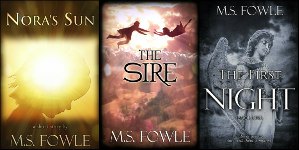
ms fowle books

Do you work to an outline or plot or do you prefer just to see where an idea takes you?
I always start with a basic outline, but I hardly ever write that out to the end of the story. Once I start really writing it, then I just see where it takes me.

When do you do most of your writing?
At this point, it’s whenever I can. But usually, it’s at night, after everyone else is asleep. I used to be such a night owl, but not so much these days.

Who (or what) inspires your writing?
People-watching is a great way to inspire characters and their back story. Or a minor character from a book I’ve read or a film I’ve watched. Then, I mold and shape them into what I want, adding or taking things away here and there. But it always seems to be the second my head hits my pillow at night when my brain starts to really work.

Do you have any funny or peculiar writing habits?
I’m not sure you’d call them “funny or peculiar” but I always start my stories in my notebook, usually as vague bits and pieces of the story lurking in my head. Then, I don’t do anything with it for a while, sometimes for months.

I sort of let it “ferment” in there, working out various details. And when I end up with writer’s block once I start the full-on writing process, I work on digital art inspired by my story. That usually motivates me.

What’s your favorite quote?
A quote that puts a smile on my face would be from Mark Twain: “Go to Heaven for the climate, Hell for the company.”

But as far as inspiration and strength go, I believe Maya Angelou put it best: “I got my own back.” It’s a beautiful thing to have the love and support of others, but it can’t be the only thing holding us up. We need to be accountable for ourselves. Depending solely on others will only lead to our own downfall. I need to be able to stand on my own two feet.

If you could change something about yourself, what do you think it would it be?
Personality wise, I wish I could turn off my brain. I over-think the most mundane things, stuff no one can change at this point. I could turn-in for the night completely exhausted and still spend hours awake in bed just thinking. But in terms of writing, I wish I had flawless editing skills so I could save myself a lot of hassle.

What do you like to read in your free time?
In the off chance I actually get free time to read, I love just about any science fiction or fantasy. I love being swept away to some other world, either futuristic or magical or both.

It’s the ultimate escape for me. But even with that kind of favoritism, my favorite book of all time is “The Color Purple.” I can’t even count how many times I’ve read it and it still makes me ball my eyes out every single time.

What are your plans for future projects?
I have an urban fantasy series that I’m right in love with. I want nothing more than for that to be successful. I think it means so much to me because I based the main character on my lovely niece. I’m still debating whether to try and get it traditionally published or take the indie route, but I’ll need an editor either way. I just want readers to love it as much as I do.

What do you find to be the hardest thing about writing?
That’s easy – finishing my story! I don’t know what it is, but I feel like I’ve slammed face-first into a brick wall when it comes to bringing my books to an end.

Maybe I don’t want to say goodbye. Or maybe I’m just so worried about doing it “right” that I over-think it and get stuck. I can’t even count how many unfinished books I have still waiting for me to figure everything out.

OK – So what’s the easiest thing?
The opposite of the hardest thing, actually: starting my story. I love writing out that first chapter to get things rolling.

I know you design your own covers, and will do that for others. How do they contact you?
There are plenty of ways to find me! They can go directly through the website Melchelle Designs where they’ll find a contact form on almost every page.

melchelledesigns_logo_2013.jpg

Or they can email us at melchelledesigns@gmail.com to talk about their needs. We’ve got plenty of premade covers to choose from, and I occasionally do custom artwork as well. One of the greatest compliments I get from authors is how easy I am to work with. I think it helps that I’m an author too, so I know what it’s like from their end of things.

And I love creating visual art just as much as we all love to write. That’s key – loving what you do.

Do you think the book cover plays an important part in the buying process?
Absolutely! And still, I wish it didn’t. There are plenty of amazing books out there that are ignored or take longer to get off the ground just because their cover art is “boring” or “hard to look at.”

That was one of the reasons why I started making and selling book covers. Every author deserves to have the right artwork to complement their hard work. They put their heart and soul into writing their stories – it’s only right that their book look its best when they send it out into the great, big world.

SONY DSC
“First Night” by M.S. Fowle

Reviews for your book “The First Night” have been very positive. Most readers absolutely loved it, but I noticed one reader panned it. What’s your reaction to negative reviews?
I think my initial reaction is the same as anyone else’s: dread. But every author needs to remember that every book has bad reviews, even the best-sellers and classics.

The main thing is to make it a learning experience. Maybe that negative review points out some faults you could actually fix. Or maybe the reviewer is just trolling and trying to get a rise out of you. Don’t let it! Learn what you can from it and move on. Negativity just comes with the territory, no matter what profession you’re in.

Mel, thank you for taking the time out of your schedule to take part in this interview!
Thank you so much for having me, Ron!

Good luck and have a Happy Holiday!


====================

CONNECT WITH MEL ONLINE

Author Site: http://msfowle.wordpress.com/
Book Cover Site: http://melchelledesigns.com/
Facebook (msfowle): https://www.facebook.com/msfowle
Facebook (melchelledesigns): https://www.facebook.com/MelchelleDesigns Twitter (msfowle): https://twitter.com/ms_fowle
Twitter (melchelledesign) https://twitter.com/MelchelleDesign Goodreads: https://www.goodreads.com/author/show/5804837.M_S_Fowle Linkedin: http://www.linkedin.com/pub/m-s-fowle/58/140/36
Amazon Author Page: http://www.amazon.com/-/e/B007MOAU0W Smashwords: https://www.smashwords.com/profile/view/msfowle

BOOK LINKS – The First Night (Book One)

Amazon US: http://www.amazon.com/dp/B007MCT4GU
Amazon UK: http://www.amazon.co.uk/dp/B007MCT4GU
Smashwords: http://www.smashwords.com/books/view/296787
Barnes & Noble: http://bit.ly/1dbIGwN

Better Keep Your Day Job

December 3, 2013

little girl with bubbles

Life Dictates
While my wife and I were in Miami for the Readers Favorite Awards, my father-in-law had to be hospitalized. After three days there, because he couldn’t stand and walk unaided, he was transferred to a nursing home for rehabilitation.

We rushed home to Michigan. At his age, scares like this are never good, and it’s been a rough time for all of us; my mother-in-law, my bride and her siblings in particular.

He’s doing better – thank goodness – and, with any luck at all, may soon be released back into his wife’s care.

But for the past week – after all the many chores involved in rounding up the things he needed had been done – there was little else to do while sitting for hours in that quiet room, watching while he slept, but pray and read.

In one of those moments, ever on the lookout for self-publishing comments, I came across a New York Times opinion piece by Gary Gutting, professor of philosophy at the University of Notre Dame:

“Even highly gifted and relatively successful writers, artists and musicians generally are not able (to) earn a living from their talents. The very few who become superstars are very well rewarded. But almost all the others – poets, novelists, actors, singers, artists – must have either a partner whose income supports them, or a “day job” to pay the bills. Even writers who are regularly published by major houses or win major prizes cannot always live on their earnings.”

Sadly, what he said is true, but not just for indie authors. Many “traditional” authors make very little money from their books. There are superstars, of course, and most people know their names; but most authors, the vast majority in fact, will sell less than 5,000 copies of any given book.

That statistic has become widely known, and it’s awakened a lot of writers and wannabes to the harsh realities of this line of work.

If you’re trying to make a living (fortunately, I don’t have to write to survive) as a novelist, a playwright, a poet, or any kind of writer whose work isn’t considered “essential,” you’ll do well not give up your day job, because you’re going to need it.

Of course, you can always “marry rich” – but that’s not all that easy to do either.

Self-Publishing Today
With all the new tools for self-publishing, indie writers can take a bigger role in their publishing careers than ever before, and the numbers support the boom. With growth of over 400% over the last five years and 58% in the past year, self-publishing isn’t going away any time soon.

Even among authors who’ve already been published by big traditional publishers you can see the excitement generated when this subject comes up. And why not?

It’s a chance to publish what you want, when you want to publish it, in the way you think best. It’s the return of power and influence to the actual creators of the content, and that’s exciting. Earning a massive percentage of net royalties doesn’t hurt either.

With traditional publishing, books have to fit on a particular shelf, cost a specific amount and appeal to a targeted audience. They also have to show a profit. But the business model of an indie is completely different from that of a large corporation.

And marketing your book is hard work.

The Power of Social Media
For indie publishers, it’s been a stroke of good fortune for social media and self-publishing initiatives to develop at the same time. As I’ve said before, the key is earned media.

Social media, including blogs like this one – and the many other social connections available on the Internet – can be a powerful tool. Combined with tools like keyword analysis, trending topics, and others, it allows us to gain insight into readers that’s nothing short of revolutionary.

Authors now have the ability to identify, locate, and engage with their readers, immediately and directly, for the first time in history. I’ve often said that for a solo writer, a blog – if properly used – is the most powerful marketing tool ever invented.

Today’s savvy authors understand that studying social media is, in its own way, just as important to their careers as their writing craft. The ability of an indie to learn to promote his/her books in social media levels the playing field in a very powerful way.

E-books and print-on-demand technologies allow us to escape the need for corporate-level financing, and social media gives us an inside edge in marketing our books. Every book you publish as an indie will create more points of engagement for your readers.

For many indie writers, self-publishing and social media marketing really are the change they’ve been waiting for … but for me it will forever come in a distant second behind the news my father-in-law is well enough to go home.


What’s In A Name?

October 19, 2013

Graffiti

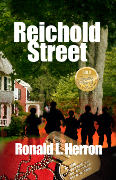
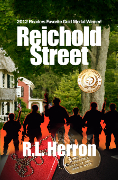
I recently changed the name on the cover of my books.

No, I didn’t start using a graffiti signature … and didn’t create a pen name … I began using initials, instead of my whole name.

REICHOLD STREET COVER-ronald      REICHOLD STREET COVER_w_rlherron

I actually wanted to do it when I first started to write, but due to a misunderstanding with the support people at my publisher (something about the way in which my name was registered) I wasn’t able to.

(I didn’t understand it, either).

It took a while, but they’re finally convinced any royalties sent using only my initials and surname will arrive correctly … and the IRS will still know where to find me … which I know is what they were really worried about.

The confusion wasn’t a total a waste of time. It led me to discover more things on the web of nets … like six famous authors who actually did use pseudonyms.

——————–

1. Mark Twain
This was the easy one. Most American readers are aware Mark Twain is not the real name of the brilliant author and satirist who grew up in Hannibal, Missouri, and best known for “The Adventures of Tom Sawyer” and “The Adventures of Huckleberry Finn”.

He was born Samuel Langhorne Clemens.

Clemens was very familiar with the steamboat trade, having spent some time as a boat pilot, and he knew “Mark…twain!” was a well-known term shouted by boat crewmen when taking depth measurements on the river.

It meant they were in water deep enough to safely navigate (two fathoms, or 12 feet). A brilliant self-marketer, Clemens used the well-known term as his pen name.

The ‘celebrity in the white suit’ lectured frequently and was fastidious about sustaining his image as America’s most beloved writer. He was charming, popular, witty, and jovial … and a raconteur without peer.

2. O. Henry
In the first decade of the Twentieth Century, it’s safe to say O. Henry was one of the most popular short-story writers in America. His stories were known for their warm characterizations and clever twist endings.

We still celebrate one of his most famous stories: the holiday classic “The Gift of the Magi.”

Born William Sydney Porter, his pen name (which he assumed as his own) hid the truth about the years he’d spent in prison for bank fraud. Porter created the pseudonym as a cover, thinking no one would buy his books if they knew the truth about his history.

He was able to carry the secret of his true identity to his grave. It wasn’t until his biography was published … almost six years after his death … that the truth was exposed.

3. George Eliot
In high school (about thirteen bazillion years ago), I had to read “Silas Marner” for an English class. Actually, the whole class had to read it. We studied it for days.

An outwardly simple tale of a linen weaver, it was notable in its day for its strong realism and sophisticated treatment of issues ranging from religion to industrialization.

I remember it because of all the time we spent with it … and because the teacher told us it was actually written by a woman named Mary Anne Evans. Writing in the 1860s, she used the pen name George Eliot on all her work, so her writing would be taken seriously.

Wait, there’s more!