Archive for the ‘Award-Winning Fiction’ Category

Market Sense

February 24, 2013

Statue in Fog
Marketing your own work is often compared to trying to sail in thick fog. It’s hard to know where you’re going. / AP photo

How Do You Market a Book by Yourself?
I went to the monthly meeting of The Freelance Marketplace Writers’ Group last Tuesday.

It’s a local group that meets the third Tuesday of every month (except December) to discuss the business of writing.

I look forward to it, because I learn something about the business every time I go … even if it’s something eye-opening about myself.

This month we talked quite a bit about self-publishing, and I mentioned the difficulty of marketing your own work.

I truly believe the best marketing is still word-of-mouth … but how do you get people started talking? It often feels like sailing around in a dense fog.

When I had finished my novel, Reichold Street, I thought it was good, but then, why wouldn’t I? It was my creation, after all. Sort of like having a literary child.

And, although it’s not really her kind of book, my wife thought it was pretty good, too. While that did wonders for my ego, it doesn’t sell books.

The Traditional or Indie Way?
I knew most traditional publishers today won’t accept unsolicited manuscripts, so an agent is a requirement for entry; but I think most new writers have heard the tales about finding a reputable agent. It’s a chore unto itself.

It can take months or years and, even if you’re fortunate enough to find one willing to take a chance on you, there’s no guarantee of finding a publisher equally willing.

I’m not a total newbie. I’ve written articles for a major international company (although I’m not sure a literary agent would care). I even had a few fiction credits over the years. But the bylines for my fiction were dated and few … and not exactly awe-inspiring.

Then there’s my age. I’m no spring chicken. Not even a late summer one. I’m fast becoming a gristled old rooster. I had retired from the nine-to-five routine and was writing because … well, because I had to.

I’ve been writing since I was a kid because there’s something in me that demands it. I sent my first story off to collect a rejection letter when I was a teenager and I still have stories in my head that I need to write.

Need to.

So, I took the indie leap.

Ernest Hemingway’s famous quote about writing a book tells it pretty much like it is: There’s nothing to it. All you do is sit down at a typewriter and bleed.

But I discovered going indie is a mini MBA program unto itself. You’ll never learn more about the publishing business than doing it yourself.

Writing can be difficult, but being your own editor is chore I don’t recommend to the faint of heart. Neither is converting it to the proper electronic formats. It’s boring and tedious … and you miss a lot when you try to polish your own work.

It took me several iterations to get it right.

The Really Hard Part
But as hard as all of that seemed, it (pardon the cliche) pales in comparison to trying to market your own book.

I had very little social media experience before publishing my own novel. I had built a web site for collecting old cameras, and started a little-used blog about photography that has morphed into the one you’re reading now.

I’ve discovered trying to build a presence on Facebook, Twitter (you can follow me there @ronherron) and Goodreads has a steep learning curve. I often feel like a hamster on a wheel, running to keep up with things that don’t always seem to be taking me anywhere.

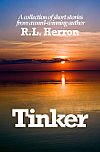
I put a couple of books … my short-story collections Zebulon and Tinker … into Kindle Select the other day. They’re exclusive to Amazon for 90 days. I also used the Amazon free promotion program for each of them.

Zebulon had 125 free downloads in three days, and I’m waiting to find out if the Select program helps with sales (I’ll let you know what happens).

One of the new visitors to the writing group suggested I try to schedule school and library visits; perhaps even do a reading. It makes sense. I’d have to do it even if I wasn’t an indie author.

It will take some effort on my part to get the word out. I already know I can’t depend on social media to do it for me, but I need something to stimulate sales or I’ll be turning out more blogs than books.

So I’ve decided to get off my duff and do the legwork (although I may wait for Spring, when there isn’t so much snow).

I’d welcome any comments you have.

Oh, I did manage to write six-thousand more words on my next novel since my last post. That’s why I feel OK about blogging again so soon. I’m an indie author … and proud of it.

All things considered, it’s a great time to be a writer.

The Official Book Trailer for the Award-Winning “Reichold Street” –
 

Now, Back to Business …

November 30, 2012

Lots of Questions
One of the things I’ve noticed since I won that pesky Gold Medal for my debut novel, Reichold Street: I’m now asked (usually by other writers, when they find out about the award) how I went about creating the book.

Did you do anything unique or special when you wrote? How, exactly, did you go about it? Did you create extensive review notes for all your characters? Did you make an outline? Did you follow any particular plot style?

The answer to all these questions is … no.

Oh, for a long time I tried to follow all the language rigors most teachers (who, by the way, were quite often not writers themselves) tried so hard to drum into me while I was in school all those years ago. Start with notes. Decide on a plot line. Make an outline.

The trouble is, it didn’t work (sorry, Mrs. Bliss).

My prose was always stilted and quite unbelievable. For a while, I tried making extensive Excel spreadsheets for each character. I would make detailed lists of their traits, physical descriptions, even notes about siblings and significant others.

I was doing this for every character in every story. It was far too tedious and the result was awful.

I finally found a Word-compatible piece of software called Scrivener – which, as recently as a few months ago I touted at the meeting of a local writers group I attend.

In truth, it was just another form of boring spreadsheet.

In Miami a few weeks ago I was asked once again by other writers: “Your characters are very well-developed … how do you go about writing?” and it occurred to me I had actually employed none of those approaches in crafting Reichold Street.

Oh, I admit I toyed with them … sort of. I plugged information into spreadsheets and also tried to coax software to help develop my storyline, instead of just letting the story happen.

But it was (as it has always seemed to be) a tedious, cumbersome and unwieldy process – one that always left me with, as you might imagine, predictably shitty results.

I realized it wasn’t until I let all that go and started relying on my intuition to tell me what was working in the story that Reichold Street started to come together.

Creative Spontaneity
Stephen King mentions in his fabulous book “On Writing” that “plotting and the spontaneity of real creation aren’t compatible.” I’ve come to believe that’s true.

My writing style is really quite simple. I start with what I think is an intriguing (at least to me) what-if? question. Then I try to visualize what begins to happen.

Rather than going to the story, I let the story come to me. I see the surroundings; I hear the characters.

Then I try to translate what I see and hear in my mind into words on the page, and go forward from there.

Does it work? Some people seem to think so, but I guess reviews are one thing and people making purchases are quite another. From the proceeds so far I can afford lunch out once in a while. Not exactly world changing.

The months spent writing the book have started to seem like a breeze. Even the hard part of editing now seems easier in hindsight. I’ve discovered getting the word out is the hard part.

If you have the time, please check out the book trailer for “Reichold Street”

Don’t Let Readers Walk Off the Pier …

November 14, 2012


Lake Worth, Florida Pier © 2012 R.L. Herron

I’m sitting in Lake Worth, Florida tonight, getting ready to attend the Readers Favorite Awards in Miami this weekend. At the risk of sounding like I’m tooting my own horn (I am), I’m here because I won a Gold Medal for my novel Reichold Street.

I’m a little nervous, so I thought I’d try to calm my nerves by updating my blog … but I wasn’t sure what to write about. I was thinking about it late this afternoon when I took the picture above. Then it hit me.

I’ll blog about blogging.

Every writer seems to be blogging these days, from unknown authors to literary legends. If you’re a writer or want to be, you should be, too. But since blogging has become ubiquitous as a book-promotion tool, it’s important to do things right.

Here are ways to make sure your blog has a positive impact on your writing career.

1. Look Professional
The design of your blog is really important. It’s how you lure visitors and direct them to the places you’d like them to go, no matter how good your content. Remember business-speak about an elevator pitch? Consider your blog the same way.

If you’re not certain about that term, think of it this way: Does your site pass the “Three-Second Test”? We constantly pass judgment on people and things; often, in less time than it takes to take a deep breath. It’s how most human beings are wired.

The elevator door opens, a stranger enters and your brain instantly starts gathering data: Age: 50-ish. Build: Athletic. Tan: Real. Clothes: Expensive. Demeanor: Confident. Briefcase: Leather. Occupation: Trial Lawyer?

Of course, first impressions are sometimes wrong. Perhaps this fellow isn’t a lawyer at all, but a rich tennis player who also sits on the Board of a large sports equipment conglomerate. Regardless, your first impression of him was formed in those first seconds.

The same is true for websites and blogs. It’s important your site makes the right impression, because within those crucial seconds your visitors will know whether they’re going to dive deeper into your content, or hit the back button and forget about you.

Don’t let readers fall off the pier. At a glance, your website should instill confidence.

How many followers do you already have? What are your credentials? If you’re blogging about writing, why should the visitor trust you? Is your content well written, believable and relevant?

Visitors will often judge your quality and trustworthiness based on that first brief visual impression, so make sure your site sings in perfect pitch right from the start.

2. Convey an Emotion
Beyond simple quality and trust, visitors are looking for something more … something they might not even be able to put their fingers on, but will know immediately when it’s there. It’s an emotion; a feeling; an intangible resonance that gives them faith in their connection with you. Make sure your website conveys your personality, your aesthetic and your reason for writing.

3. Imagine the Whole World is Reading
Before you post anything on your blog, ask yourself two questions: (1) would I be embarrassed if anyone I know reads this, and (2) is this content WORTH sharing? In other words, you should be sure that your blog posts will interest your readers, that they’re share-worthy and, most importantly, that you won’t regret them later.

4. Keep It Simple, Stupid
There’s a lot out there in the blogosphere competing for those few moments of your readers’ time. People have short attention spans. Feed them tiny meals. The shorter and punchier your posts, the better they’ll perform in terms of engagement and sharing. Plus, shorter posts are easier to create.

5. Let Your Personality Shine
If someone is visiting your site, they’re there for YOU – so give them what they want. Make sure your personality is on display. You don’t have to be an authority all the time, and you certainly don’t want to come across as pompous or arrogant, but be sure readers can tell from the content you post why you’re unique, or at least worth listening to.

6. Post Photos and Videos
Social media thrives on the sharing of photos and videos. So post your own. Post others, if you need to. Create a book trailer for your books, or link to one for a book you like. The three most important rules are: Post, post and post. You can even try an on-camera interview.

When Stephen King released Full Dark, No Stars he also did a live UStream video interview. King sat in front of the camera for 25 minutes and answered questions as they popped up in real-time. If you’re so inclined you can watch it here.

But you don’t have to do it live. Put it on Facebook and Twitter you’re going to be recording a video interview and you’re soliciting questions. Then, when people have responded to you in those places, compile your favorites and tape yourself responding. Record your answers off-the-cuff so they don’t sound stiff and contrived.

Once you like what you see and what you hear, upload the video to YouTube, embed it on your blog and link to your blog from Twitter and Facebook. Your readers will be excited to get a glimpse into your creative mind. The good thing about this kind of interview is you can always do it over, if it doesn’t come out great the first time.

7. Be Part of a Blogging Community
Be sure to network with other authors through their blogs and social media profiles. Share content and introduce your readers to other peoples’ works that you admire. Let other writers introduce your work to their fans. Remember, there is strength in numbers.

8. Tag, Tag, Tag
Finally, tag every post with relevant names and keywords that people might use in a search engine (think Google) to find your post. Tagging posts is one way to ensure that search engines (and more importantly, readers) find the content they’re looking for.

—————
If you have a moment to spare, please check out the book trailer below for my novel, “Reichold Street.” It’s the book for which I’ll be accepting the award on Saturday.