Posts Tagged ‘indie writers’

Self-Publishers: Concentrate on Content

January 19, 2013

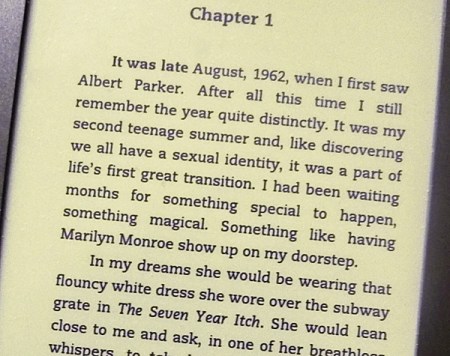
newest kindle pic“Reichold Street” on the Kindle  © R.L. Herron

A Good Time for Publishing
According to Jon Fine, the Director of Author and Publisher Relations at Amazon, the sky is not falling for traditional print books. Yes, sales of e-Books are going up … but so are sales of printed books. The digital revolution is causing everyone to read more – and that’s good news for everyone involved in publishing.

But little has changed, regardless of format, when it comes to getting your self-published book discovered.

There are many more ways now to accomplish self-publishing a book, but it still means you, as both the author and publisher, need to answer the reader’s ultimate question: “What’s in it for me?”

If you fail to answer that question you probably miss making a sale and, worse, you’ll have lost even the potential for word-of-mouth conversations about it … at least any good ones. There’s just too much good competition out there.

Why is That Important?
A recent Bowker.com survey of book buyers found that most readers discover new books in this order:

    A. An In-Person Friend Referral

    B. A Retail Store Display

    C. A Visit to an Author Web Site or Blog

    D. A Review of Bestseller Lists

The statistics tell the story. All things considered, word-of-mouth is the number one book-discovery source.

Let’s face it. the chances of getting your local bookseller to put up a retail display for your self-published book are pretty small.

It took a lot of convincing (and a signed copy of my book) to get the manager of a local bookstore just to agree to put some of my rack cards on his customer service counter.

A personal web site or a well-written blog may ultimately be the best ways for people to find you. But, you still need to get more than just your friends, neighbors, siblings and a few friendly cousins to visit.

And even if you do, once they’ve been there, you need to give them a reason to come back.

Of course, if you should make the best-seller lists that issue becomes moot. But in order to break into that list both you and your book need to be discovered.

Nuts. Back to ground zero.

How Do I Assure MY Book Gets Discovered?
Ah, that’s the real question, isn’t it?

Obviously, you need to make it easy for people to want to tell their friends about you. That’s the ticket.

And how do you do that? By writing something informative, or funny, or just plain interesting. Just as in writing your book in the first place, content is the king in this discussion. You have to be interesting to convince people your book might be.

I thought about offering a video-chat as a way to speak directly to potential readers and get their ideas, like Stephen King did to promote his book “Full Dark No Stars.”

If you’re woefully behind, like me, on how to actually do something like that, it becomes a problem. Of course, as you might imagine, if you’re not already famous the problem multiplies.

You still need to have something interesting to say once you’re “live.”

Then there’s the publicity effort it must take to interest thousands of people on the idea of vying for the opportunity to participate in the first place. Stephen King probably had no problem. Me? … it just ain’t gonna happen.

That’s despite all you wonderful folks who already follow this blog.

Getting Known
So, there’s still the problem of getting enough people to know and care enough about what you have to say to visit regularly … and then spread the word.

I recently read “experts” from other self-publishing blogs suggest that if you have a WordPress blog, like this one, you should go to places like Yoast.com and get the plug-ins they provide for enhanced search engine optimization to make yourself a known commodity.

That may be a good thing. In fact, I’m sure it is. Search engines do find what you search for. Sort of.

But something tells me the best search engines are only going to find you and your book, if both you and your book are worth finding.

Your metadata may be optimized … but every one of those “experts” I read failed to mention that people will only bookmark and return to sites that inform or entertain them.

Remember: Content
I recently had a decision to make. The growth of followers for my blog has leveled off. So have sales of my books.

I could figure out what was wrong, or continue doing what one of my sons accused me of doing with some of my earlier social media efforts: Stand on the corner and shout “Buy my book!”

I’ve already discovered that kind of marketing doesn’t work. Thank you, son. Message received. You were right on. Content is everything.

People don’t buy what you do. They buy why you do it.

So the best option is to write a good book and then have something sincere and interesting to say.

I wrote an award-winning book. Now I have to prove I have something to say that’s worth reading, and it really doesn’t have to be about my books. In fact, it shouldn’t be.

It has to be about me, and who I am.

I’m working on it.

If you have one more minute, please check out my “Reichold Street” book trailer:


What Constitutes Self-Publishing Success?

January 17, 2013

soccer herdKeeping Pace With the Competition

I’ve been blogging lately about establishing writing platforms, fighting writer’s block, writing book descriptions, selling my books, and winning awards.

I even wrote about an award-winning indie book by Paul Michael Glaser. Remember Starsky & Hutch? If so, you’re as old as I am. If not, you really don’t care (sorry Paul).

I went over those blogs again when I sat down with the notes I’d made as preparation to write this one, and you know what happened? I almost went to sleep. Admittedly, it was late … but I think the problem was deeper than that. It was the subject matter. It was me.

Who wants to read this shit?

That was the first thought I had. Along with my friends and family there are other self-published authors and author wannabe’s who follow this blog … and I sincerely thank them all for that devotion.

But I sat here last night asking myself who else would want to read it?

If you haven’t known me for years or aren’t trying to figure out the mysteries of the self-publishing world, why would you stop here long enough to see what this blog was about?

Worse, I thought, if I really can’t interest you in reading this small sample, why would you ever want to read my novels?

That was a scary thought. I imagine it would be to any author, self-published or not. Why would anyone want to read my books?

I was reminded of an incident a couple of (or was it three?) decades ago. God, I’m getting old.

Soccer had finally become a decently followed sport in this country, and all three of my sons were involved in it. I got involved too. Along with several other Dads, I became a coach. I coached soccer for very young house teams in the area, and for older travel teams.

I told myself, my wife and my sons that I wanted to be supportive (and I did), but I really just wanted to be around them when they were having fun. I thought by doing it they might always remember having fun with me, too.

I helped my youngest learn the game, and coached with my two oldest boys on an U-19 State Champion team. I really enjoyed it.

When I went over the whole blog-writing thing again, and who I could get to read my books, I remembered a friend of mine (I won’t mention names) who was also coaching a young house team back in “the day.”

The kids were still young enough we called their brand of play “herd” soccer. There was no such thing as “offense” or “defense.” Wherever the ball was, that was where the herd of legs would be found. It was cute and the kids were having fun.

My friend, however, was diligently trying to teach those six-year-olds the fundamentals of positional play.

He had them sitting on the ground all around him and they looked like they might be listening. He went on-and-on about it, even to the point of drawing diagrams in the dirt for them to study. When he had finished his lengthy explanations, he asked the kids, “Does anyone have any questions?”

Most of the kids just had blank looks, but one little boy timidly raised his hand. “Yes, Timmy, what is it?”

“Coach … how many gopher holes do you think there are in this field?”

When I think about it now, I laugh pretty much as hard as I did when I heard it back then. My friend had been talking to them for over an hour and not one bit of it had mattered to his audience.

It certainly hadn’t made them eager to come back for more. They were bored, and thinking about holes.

And it made me wonder … how many readers of my blog are more concerned about gopher holes than what I was saying?

Worse … how many readers, after perusing my blog, would assume my stories might be as boring as my blog had seemed to me last night? I didn’t want to think that could be true. “Reichold Street” was a Readers Favorite Gold Medal Winner, after all.

But then it occurred to me … my blog wasn’t.

If I was really confident I’d put up a poll, and find out. But maybe I’ll just promise instead to make it more interesting around here from now on, and wait for some comments.


Dealing With Writers Block

January 14, 2013

The Dreaded Blank Page

Have you ever sat down to write one of those excellent story ideas you have in your head, only to have them somehow disappear the moment you pick up your pen/pencil or sit at the keyboard?

Writer’s Block
Every author’s been there. So have people who only wanted to send a holiday greeting to Aunt Bea. I can’t begin tell you how much time I’ve personally wasted, staring at a blank page.

There have been moments I couldn’t find enough energy to kick my muse into gear, no matter how many cups of coffee I put into my system.

But I’ve discovered a few ways that help me rediscover my creativity and build story ideas that will keep me writing for hours.

Junk Mail Inspiration
Sounds silly, I know; but take the next two pieces of junk mail you receive and use them to build a story. Everyone gets this kind of mail; I call it crap (sorry, but that’s what most of it is) from politicians, credit card and insurance companies. Spam e-mail works just as well. Pick any two and combine them.

No matter what your life situation or political leaning, they can lead your thoughts to many unusual situations. Plenty of writing fodder. Once your brain’s thinking again, shift to the work you really want to do.

Invent a History
We’ve all had friends, from grade school to college, that we knew quite well in that “once-upon-a-time” but haven’t seen since. The truth of their lives is quite often a mystery.

Well, pick one (change their names, of course) … and write about the life you imagine they could have been leading since you lost touch. The possibilities are endless.

Eavesdrop on a Conversation
OK, I admit it … I do this all the time, but not just for story ideas. I love to write dialogue; but to do it well takes practice.

I try to train my ear to the way people actually talk (sorry, Mrs. Bliss, all the grammar you tried to shove into my head all those years ago is worthless when it comes to catching the nuances of real conversation).

Try it sometime. When you’re in a writing funk, sit down (in a park, the mall, a restaurant) and observe the people around you. Listen to every conversation within earshot (try not to be obvious). Make a mental note of all the snippets you hear and imagine the stories they represent.

Pay close attention to the myriad ways people actually speak … then give one of the comments you overhear a twist to make it your own.

Request a Writing Prompt and Run With It
Sometimes the best cure for writer’s block is to let someone else start your story for you. You can search the web and find a number of sites that offer writing prompts, but I find it works just as well to simply ask someone to mention an idea to write about.

I belong to an online writer’s group that often has writing challenges. They create them for poetry, short stories or even flash fiction. My favorites are usually the ones for flash fiction, and they prompt you to use some object or group of objects (or even specific words) in a brief snippet of 500 words or less.

I find those challenges to be a great way to get started. For instance, consider this challenge:

In exactly 500 words (no more; no less), write a story about birth. Any style or genre and any loose interpretation of the word ‘birth’ is acceptable, but you must also include the words fire, coffee and javelin.

Admit it, as strange as the prompt might have seemed, you already have some rudimentary ideas. The neat thing about this kind of writing prompt is you can do it for yourself.

The idea you get from such an exercise may be just the inspiration you need to spark the next part of the story that has you stymied. It might even lead you to create a whole new story.

And there’s certainly nothing wrong with that.

If You’ve Got a Moment, Please Check Out My “Master Storyteller” Book Trailer