Posts Tagged ‘award-winning writing’

The Final 1,000 Words

January 21, 2014

The-End-501627

It’s no surprise to anyone – author or not – that every good story needs a beginning with an interesting premise, a middle that’s full of conflict, and an ending that more-or-less resolves it all.

I know a lot of indie authors who have a gazillion good ideas that would make fabulously great story starts, and many who know that spectacular events are not what conflict is about … good conflict is about emotions.

But I’ve seen some stories that just … end … and leave you wondering if the printer forgot to include some pages, or the digital cloud decided to swallow a few. Some end so abruptly it’s as if the author failed to understand that, when crafting a story, you need to give substantial thought to the conclusion.

Resolve the Central Conflict
By that, I don’t mean merely tacking on the-good-guy-gets-the-girl, or the-bad-guys-lose. If you think about it, life seldom resolves anything like that. When it does, we usually call the outcome cute.

When I say give thought to your ending I mean, in terms of your plot, what do you need to put into the final 1,000 words, if cute isn’t your target?

It seems to me this should be a no-brainer … but in the new indie-publishing world, how many weak story resolutions have you read? It doesn’t have to be a happily-ever-after ending, but you do need to tie-up any loose ends.

Also, keep in mind readers generally look for something uplifting, regardless of genre. I always try to leave something to feel positive about, even in disheartening scenes, because whether they admit it or not, it’s what readers really want.

As an author trying to please your audience, so should you.

Surprise Your Reader
No, I’m not suggesting you write O. Henry-ish twists or Twilight Zone endings into your stories. But you don’t have to establish a picture-perfect moment either, where every minor contentious issue is neatly solved.

Yes, every question you planted earlier in a reader’s mind should be addressed, but the answer could be to suggest that a known character … or another one yet to come … might address that minor issue later, after the book ends.

And the resolution doesn’t have to be one that seems expected. In fact, it’s sometimes a stronger story if it isn’t … as long as what happens is consistent with the facts that have already been presented … and avoids those pesky contrived twists.

Tie Your Final Words to Early Events
When you begin the journey of writing your novel, you should also try to have an established destination. I’m not suggesting writing to an outline. I can’t work like that and I wouldn’t ask you to do it, either … although I know a lot of authors prefer to work that way.

But even though I don’t create an outline, I have to admit it doesn’t hurt to have some idea where the characters … the main ones, anyway … are likely to be headed.

How they actually get there is the “something” I leave up to the characters to discover as I write.

I find it much easier to make detours, twists and turns in my storytelling by using such tactics, because I’m often surprised by where a character takes me … so my reader is going to be surprised, too. And that’s generally a good thing.

But it’s always a good idea to create a feeling that the final words somehow hearken to an earlier moment in the story.

Offer Redemption to Your Heroic Characters
No matter how many mistakes your main character has made along the way, allow the reader — and the character — to realize in the end, regardless of the outcome, he/she has done the right thing.

Don’t Change Voice, Tone or Attitude
Your ending will feel tacked on if the voice of the narrator suddenly sounds alien to the voice that’s been consistent for the rest of the book. The last impression you want to create is a positive one, at least as far as the story is concerned.

So, even if your ending is not the most positive outcome possible for your characters, don’t leave your readers feeling tricked or cheated … or they won’t have nice things to say about your book, and they won’t be looking for your next one, either.

The Making of a Winner
I’ve said it before: Writing is vastly overrated. As hard as it may seem when you’re writing your story, it’s after you’ve written your last word that you really go to work.

You actually begin to craft your work into a readable story in the editing, and you elevate yourself as a writer if you can polish your story until it dazzles. Your intent should be to leave your reader spent when he/she closes your book.

Don’t use obscure words or elaborately complex sentences and, for heaven’s sake, don’t suddenly write complicated scenes with vague references or hidden meanings. The ending, more than anywhere else in your story, is the place to be direct and assertive.

So edit, edit and then edit some more, until you’re certain what you’ve done is the best you’re capable of doing. This is where you should put your best work, making sure everything that remains is essential. It’s hard to do … but your story (and your readers) will love you for it.

As I’ve said in other posts, when I do this I sometimes wind up making changes that leave me with a manuscript that’s actually longer than when I started (good writing is often like that).

But whether your climax is 1,000 words long or 10,000, your reader must feel as if they’re racing through it … and that they cannot possibly put your story down until it’s done.

When that happens, you’ve got a winner … and nothing, my friend, feels better.

—————
R.L. Herron Book Signing, January 25, 2014



Never Let Anyone Steal Your Dream

January 12, 2014

bigstock-Molecular-Thoughts-28624526-B
Keep On Dreaming

What Are You Going To Be?
My road to indie author has been a convoluted one. When I was a little kid, it seemed all grownups loved to ask, “What are you going to be when you grow up?”

For a long time I gave the answer all little boys around here did back then: “I’m gonna play baseball for the Tigers, and I’m gonna be the next Al Kaline.”

I would get a smile, a pat on the head, and a “Good luck, kid.”

I thought it was funny, because it was the same response I heard grownups give to kids who said they wanted to be Superman, and he wasn’t even real.

When I got a little older I realized my batting and fielding skills weren’t going to get me a major league tryout, much less entrée into the Baseball Hall of Fame. It wasn’t likely I’d even get a chance to be a batboy. I probably had a better shot at being Batman.

Changing Priorities
So, I switched my response to “teacher” whenever I was asked, even though I hated the idea.

To me, being a teacher wasn’t a choice at all (sorry to you teachers out there, but I just couldn’t picture myself dealing with a whole classroom full of me every day … although it probably would’ve put me on a fast track to sainthood).

But that simple answer kept adults from nagging me. They’d nod and smile again, like I’d just said the magic word or handed them candy, and the conversation would be over.

A precocious reader, I’d discovered all the classic writers before I was a teenager. I loved all those stories … from Charles Dickens’ “Tale of Two Cities,” to Joseph Conrad’s “Lord Jim” — and the two monumental works of Homer, the “Iliad” and the “Odyssey.”

And then I discovered sci-fi. Somehow, for me, Greek gods and aliens went hand-in-hand.

An Early Author
I’d been writing stories for quite a while before I finally got up the gumption to make my first submission. It was to the Magazine of Fantasy & Science Fiction. I was seventeen. It was rejected.

But after that first submission, I would send another new story to a magazine … somewhere … every few months.

I collected rejection slips for most, but I actually did sell a few of them (all general fiction to publications that no longer exist). The payments were small, but the feeling was tremendous.

But when I told friends I wanted to be a writer, they told me, “You’ll never make any money at that” — and I thought perhaps they might be right.

By the time I was ready for college, I had no real idea what I wanted to do. Choosing a major was difficult … but necessary. The war in Vietnam was raging, my draft lottery number was low, but I had a scholarship — and college gave me a four-year deferment.

College Choices
I’d already convinced myself teaching was out, but I was good at math, so I looked at options like accounting and statistics.

I wasn’t exactly sure what a statistician did all day, but it had to do with manipulating numbers and it sounded much more exotic than being an accountant.

I was wrong. I found it tedious and boring. I didn’t want to play with numbers at all.

So I studied other things in school … art and design subjects I found I had a knack for doing. I earned a BA in design … and looked for work. Anything creative, I told myself.

Everyone then told me, “All you can do with a degree like that is teach.” I would shudder when they said it.

However, I was fortunate and found creative work in ad agencies. I was even luckier to discover I was reasonably good at it. I got to design ads and write copy.

I got married, started a family, went back to school to earn an MBA and then secured a nice position on the public relations staff of a Fortune 10 company, where I got to write standard PR press releases, as well as proofread and print the things others had written … whoopee.

But the fiction writing bug had already infected me … big time. I kept on writing and submitting short stories while I worked to earn the money that paid the bills.

A Voracious Reader
I also read in almost every spare moment. I read everything. I read both for the stories themselves, and to discover how other writers created worlds so believable with their words, and drew readers into them so thoroughly, they couldn’t put the book down.

I even read in precious lulls when I was supposed to be doing other things, teaching myself to speed-read so I had time for it all.

And I wrote. Constantly. During tedious work meetings. At lunch. When I was supposed to be paying bills in the evening. I’d dig-in my heels and write when bed was calling and I hadn’t slept for twenty hours.

I kept writing … and reading, and getting up the next morning to do it all over again.

Then, in early 2008, I was forced into early retirement from the nine-to-whenever routine I’d followed for my entire working life. I didn’t want to, but I didn’t have any option. Most of the people around me lost their jobs too, less than eight months later.

I looked briefly for other creative work that wasn’t there, cursed the financial institutions that had caused the new recession and started writing again, full-time.

That’s when I discovered traditional publishers wouldn’t even talk to you without an agent. I also discovered how difficult securing one could be … and how long it could take.

Lucky Again
I didn’t feel like I had that much time to search and wait, so I decided to self-publish and join the rapidly growing indie-author movement. Then, just as I’d done when I discovered the beautiful woman who became my wife, I got lucky again.

My Bride, Lucy
My Beautiful Bride

Four short years after my “retirement” my first novel, REICHOLD STREET, became a 2012 Readers Favorite Gold Medal Winner.

In 2013, my collection of short stories ZEBULON, was selected as the Readers Favorite Silver Medal Winner in Young Adult Fantasy.

I’ve also published another collection of general fiction short stories called TINKER … and I’m hard at work on a sequel to my award-winning novel.

I’ve spoken at a writing conference, had a write-up in two local papers, been mentioned in Publishers Weekly, and even have a high school in Florida where the creative writing teacher is trying to get REICHOLD STREET designated as required reading.

On January 25, 2014, I will be at the Michigan Book Boutique, in Waterford, Michigan, doing a book signing.

Not too bad, for an “old guy.”

All this is why I can confidently say to every indie author out there you should never let anyone steal your dream. Work at it … work hard. It doesn’t matter how long it takes.

Dreams are meant to be lived.


Remarkable Isaac …

January 5, 2014

isaac-asimov painting
Isaac Yudovich Asimov (1920-1992)

While I was researching something to post about indie publishing, I came across several articles about one of my favorite authors, who was traditionally published … a lot.

The Good Doctor
There were an abundance of articles because Thursday, January 2, in addition to being my little sister’s birthday, was also the birthday of one of the most prolific authors of all time … Isaac Asimov, and a lot of people remembered.

Asimov wrote more than 500 books, and is arguably the author most responsible for taking science fiction from the pulp magazines and making it a respectable genre.

That might have been enough for some writers, but Asimov was equally at home writing mysteries, fantasy and scholarly non-fiction; excellent books explaining physics, chemistry, biology, astronomy and ancient history to the layman.

He also published well-researched volumes on themes ranging from the Bible to Shakespeare. He even wrote humorous books of limericks. His books were published in an amazing nine-out-of-ten major categories of the Dewey Decimal Classification System.

Asimov’s best known work includes the story “Nightfall,” acclaimed as the best science fiction short story ever written, and the various installments of his Foundation and Robot series.

Awards and Acclamations
During his lifetime Asimov was the recipient of at least eight Hugo awards and two Nebulas for his fiction. For his non-fiction he was also awarded at least five major awards, including the Howard W. Blakeslee Award from the American Heart Association.

A remarkable intellect, Asimov taught biochemistry at Boston University’s School of Medicine, before he turned to writing full-time, but not many people realize just how precocious he was.

He graduated from high school at fifteen … and earned a Bachelor of Science degree from Columbia University by nineteen, where he also earned a Ph.D. in chemistry.

Asimov’s personal papers, archived at Boston University’s Mugar Memorial Library, consume 464 boxes on 232 feet of shelf space.

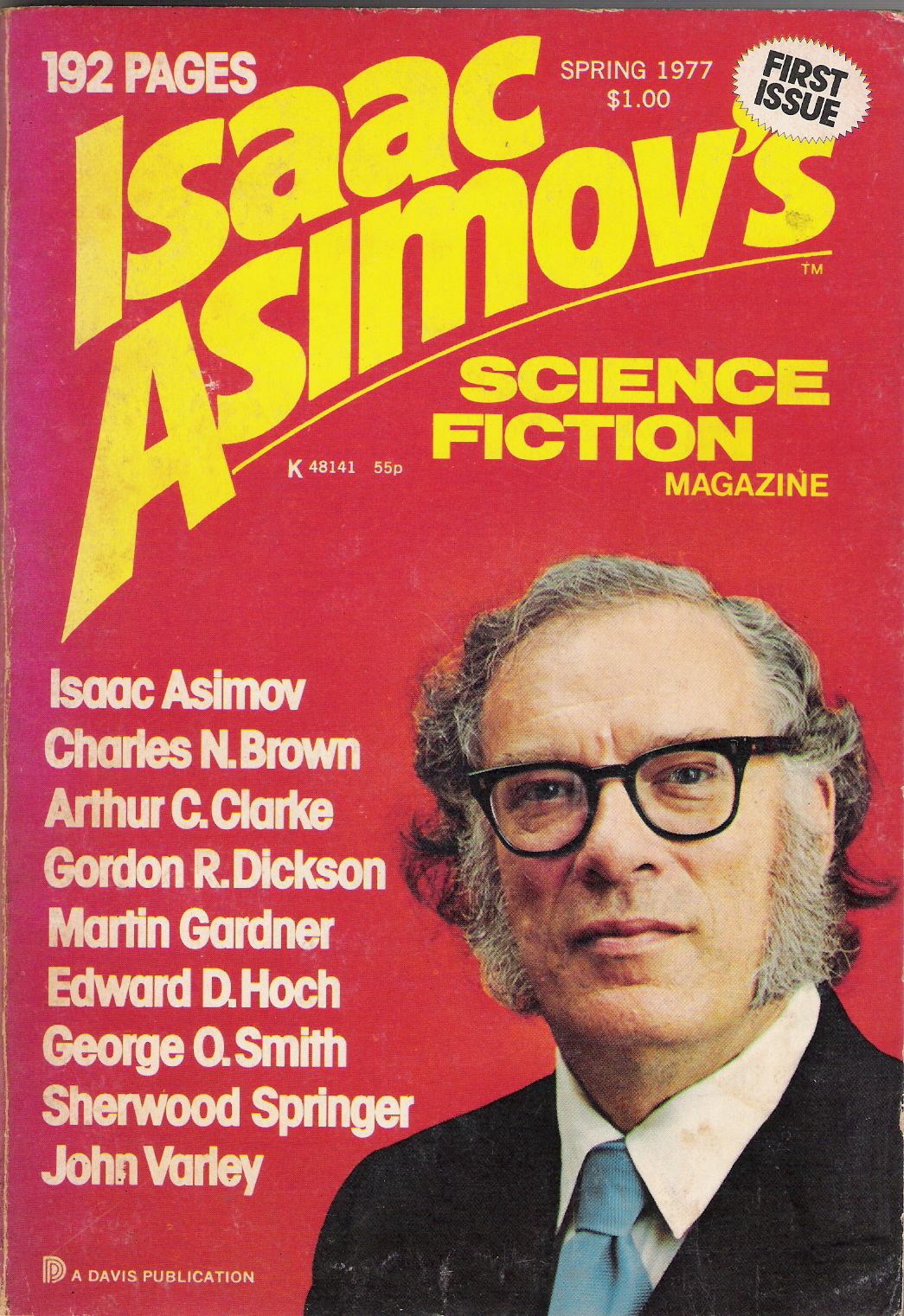
first issue ia science fiction

Special Connection
I’ve always felt  a special connection to the Good Doctor. While he was the editorial director of a publication named after him … Isaac Asimov’s Science Fiction Magazine … he penned a hand-written index card to accompany the form-letter rejection I received from editor George H. Scithers for a story submission.

The note said simply “Too much talk-talk in the ending.” It was signed “I.A.”

The Scithers rejection letter was soon lost, but that card became one of my most treasured objects (but that’s another story).

Correct Predictions
Fifty years ago, Asimov published a story called “Visit to the World’s Fair of 2014” in The New York Times. It listed his predictions for what the world would be like in 2014. Now that 2014 has arrived, several of those eerily correct predictions are worth talking about.

1.) Asimov predicted, by 2014, electroluminescent panels would be in common use.

Rogers Shine billboard manufactured by FlashTech Canada.
First Electroluminescent Billboard – Canada 2005

Electroluminescent panels are those thin, bright panels we see everywhere today in retail displays, billboards, signs, lighting and flat panel TVs. Score one for the Good Doctor.

2.) Communications will become sight-sound and you will see as well as hear the person you telephone.

apple_face_time-464x500

The first commercial cell phone call was still almost twenty years away when Asimov made that prediction. Think about how quickly communication devices have changed since then. Even my seven-year-old grandson can use FaceTime on the i-Phone.

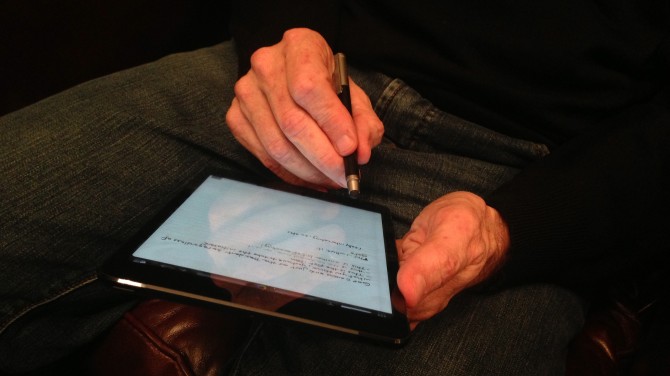
3.) The luminescent screen can also be used for studying documents and photographs, and reading passages from books.

holding-his-ipad-mini

With computers, tablets, iPads and smartphones, all of this is true.

4.) Robots will neither be common, nor very good in 2014, but they will be in existence.

robot image   arc-welding-robot-162232

If you define “robot” as a computer that looks and acts like a human, then this prediction is definitely true. We don’t have robot servants, robot friends, or robots that we absolutely cannot tell from human, but we do have robots.

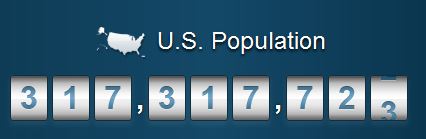
5.) In 2014, there is every likelihood the world population will be 6.5 billion and the U.S. population will hit 350 million.

us pop    world pop

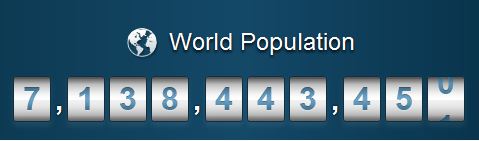
Asimov slightly overestimated the U.S. population (317 million) and underestimated the world population (7.1 billion) but, considering the vast majority of the year 2014 is still in front of us, his guesses surrounding population are mighty close.

6.) Mankind will have become largely a race of machine tenders. Schools will have to be oriented in this direction.

123775556_iPads_398926c

We’ve hardly become “a race of machine tenders” … unless you consider how a lot of us are never far from a machine (i-Pads and Smartphones) that we “tend” pretty much constantly.

Hmmm … maybe this is what the Good Doctor saw.

7.) All high-school students will be taught the fundamentals of computer technology, become proficient in binary arithmetic and be trained to perfection in the use of the computer languages that will have developed.

This is one I wish was true. Asimov was correct insofar as high school kids, and younger, can certainly use computer technology, but American education lags far behind some countries in the world when it comes to computer science.

Unfortunately, coding classes are still relatively uncommon in American high schools, and just 1.4 percent of our high school students took the computer science exam in 2012.

Perhaps the problem doesn’t lie in what the Good Doctor realized we need to do, as much as it does in what we, as a society, don’t want to do.

8.) We will live in a “society of enforced leisure.”
Not yet, Dr. Asimov, not yet … and unless we get busy and catch up to the world’s countries that are so far ahead of us in educational matters … we may never get there.

Right now, I have to interrupt my “enforced leisure” to get dressed, go out and tackle the beginning of the 10-12 inches of snow we’re expecting today.

Sigh.

What are your predictions for the things we’ll be doing fifty years from now?