Posts Tagged ‘award-winning writing’

Do You Let Your Dialogue Do The Talking?

July 19, 2015

writing-828911_1280

Bring Your Story to Life
I’ve never met a fiction author who hasn’t wanted the reader to get completely lost in the words he put on the page (for a writer there’s no better feeling). You want the reader to suspend his disbelief.

As every writer knows (or soon learns), it’s important for readers to know who’s actually talking in any given scene. Obviously, it’s dialogue that tells us what people say and hints at what they do not. It actually goes a step further … and encourages readers to supply their own take on how the spoken words are exchanged.

In other words, dialogue brings a story to life. A writer who cannot make characters talk, and have their conversations require us to listen, has a story that is less than perfect.

In the ever-present writer’s world of “oh shit, did I just screw that up?” every good fiction writer quickly learns there’s nothing as terrible as stiff, unrealistic dialogue to pull a reader right out of the story.

You never want that to happen … but it isn’t always the words your characters speak that create the difficulty. Often it’s the way you describe them.

Dialogue Tags are Often the Problem
When dialogue happens in your story, you want the focus to be on the conversation. You don’t want readers to get distracted by the tag. Dialogue tags are not the place to get creative. You want the reader to pass right over them, as if they’re not there.

If you’re smart, that is.

That’s because dialogue tags exist for only one purpose: to identify for the reader who is speaking at any given time in your manuscript.

That’s it.

Yet, this is one of the most common mistakes new writers make. First, they overuse them. It’s almost as if they think every statement has to have an attribution … as if who was speaking in some of them wasn’t totally obvious.

Worse, some newbies think simple words like asked or said are boring or repetitive, so they will wrack their brains trying to come up with more interesting alternatives.

C’mon … it’s OK to smile … you know you’ve done it. I have, too.

But dialogue tags are not the place to get fancy. Dialogue tags should melt into the background. “Said” and “asked” are usually all you need.

However, repeating those tags after every portion of every verbal exchange gets a bit tiresome.

Worse, by doing so you run the very real risk of driving readers right out of your story … a cardinal sin … since it may even make them decide not to finish reading at all.

The Whole Truth
Unfortunately, there’s a tendency for the new writer to use adverbs in their dialogue tags, too. Which is sad, because that’s guaranteed to take the reader out of the story. Stephen King, a writer who knows how to tell a story, is famously quoted as saying “The road to Hell is paved with adverbs.” So is the road to a clunky story.

When you’re telling them what happens, rather than letting them see it for themselves, they’re never really in the story.

If you think you need an adverb to convey emotion, your scene probably needs to be re-written so the character’s dialogue and actions more clearly express it.

It’s the difference between telling and showing.

An Example
“I’ve had enough,” Richard said angrily.

That tells us Richard is angry … but that emotion isn’t demonstrated at all through his actions or the dialogue itself. Adding the adverb angrily doesn’t do it, either.

If you want the reader to feel Richard’s anger, you have to show them through the dialogue itself. Here’s how you might do it:

“You disgust me. This conversation is over,” Richard said.

Here, Richard’s words themselves are angry, so you don’t need to rely on the adverb to convey it. The dialogue is stronger and the emotion is clear. You could also include some brief actions or descriptions to eliminate the adverb and better convey the character’s emotion.

Richard shoved back his chair and slammed his fist on the table. “I’ve had enough,” he said, clenching his jaw. “This discussion is over.”

The actions and description here show how Richard feels, so you can easily eliminate the adverb and stop telling the action.

Let the reader into your story by showing it to him.

Make sense? Try it.

 
The Official Book Trailer for “Street Light” 

**********

I’ll be at a book-signing event at the Sterling Heights (Michigan) Public Library on Saturday, July 25. Stop on by. Click here for a map.

By the way, a couple of new reviews just came in for my latest novel, “Street Light.” One is from Top Book Reviewers and the other is posted on both Goodreads and Readers Favorite. I’ll let them speak for themselves.
 

**********

My books have garnered some terrific reviews. You can see the stories I have available by using the Amazon link below.

buy now amazon

You’re also invited to visit my web site, BROKEN GLASS, or like my Book of Face page. You can also follow my shorter ramblings on The Twitter.

**********

Comments posted below will be read, greatly appreciated and perhaps even answered.
Why Book Trailers?

July 3, 2015

 
The Official Book Trailer for “Street Light”

They say every indie author needs to have a book trailer to promote his/her work (do you ever wonder who “they” are?)

Well, I’ve made one for each of my books. Yep … each one.

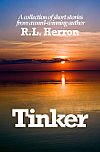
So, whoever “they” are should be deliriously happy with me. Reichold Street. Zebulon. Tinker. One Way Street. All of them have trailers.

Now there’s one for my new book, Street Light (you saw it above).

Why?

Well, to my way of thinking there’s only so much marketing copy you can write about a book before you’ve saturated your audience (not to mention your own overworked brain).

But in three minutes or less you can tap into the visual, auditory and emotional senses of your potential reader. Like its cousin the movie trailer, a book trailer is designed to get the buzz going and, at the very least, generate more interest.

What makes a good book trailer?
Make sure your message is authentic. The tone and feel of the video should accurately reflect the content of your book. Getting and keeping a viewer is essential, so it’s important to respect their time (not to mention their attention span) and keep it under two minutes.

Most television commercials only last for 30 seconds. However, as a viewer I’m sure you’ve seen some where even that brief span can seem far too long.

If you have strong, recognizable endorsements, don’t be shy about dropping the testimonial into your trailer … but you don’t have to think box-office smash to get results. With the right images and editing, you can produce a quality trailer that doesn’t look like it came out of your garage.

Finally, as simple as it may seem, you’d be surprised at how many people forget the (rather major) detail of ending with an image of the book and convenient purchase instructions.

Will a book trailer broaden your audience?
I don’t know the answer to that. However, I do know we live in an age where fewer people are reading, and more people are watching. There are those (“they” again) who might argue these trailers simply contribute to our increasingly short attention spans.

My hope is just the opposite. I hope that book trailers help draw more people to the beauty, substance, and power of books.


**********

My books have garnered some terrific reviews. You can see the stories I have available by using the Amazon link below.

buy now amazon

You’re also invited to visit my web site, BROKEN GLASS, or like my Book of Face page. You can also follow my shorter ramblings on The Twitter.

**********

Comments posted below will be read, greatly appreciated and perhaps even answered.

What is the Science of Writing?

June 30, 2015

old bike
Flowers in the Basket

I’ve said it before. Good writing is part science and part gift. The gift part is something only a lucky few are born with.

There are only so many Stephen King’s, J.K. Rowling’s, Brad Meltzer’s or James Patterson’s, after all.

The science part is something everyone can do. It’s called reading.

This bears repeating. Good writers have to read. Have to. Because reading the works of other people is studying the craft.

Without that study, a writer will never possess more than a small piece of the puzzle.

So, if you want to be an author (a good one anyway), you have to read everything you can. No way around it.

Some people think it’s easy. After all, everyone writes.

We’ve all been doing it since our earliest school days. Right after learning the symbols of the alphabet and the sounds those curious scribbles stood for, we began to create words.

Most of us at least wrote stories and essays in school.

A few people write or comment on a blog (the Journal of today), and most exchange emails with friends and neighbors, even if they don’t write letters anymore.

At the very least, a lot of us have scribbled 140 characters or less into a thought of some sort on The Twitter.

Real authors, however, create wings for their thoughts. Writers … good ones anyway … create worlds, shape ideas and make us think.

Words are never more alive than this.

I love working with words.

I try to sculpt ordinary words until they shine, putting something out into the universe that never existed in quite that way before. I’m not quite vain enough to think I have a natural ability for the craft.

I know success only comes with practice, so I work hard at it … every single day.

Even while I was vacationing last week with some dear friends, I was reading … and imagining how I could describe the things around me. The clouds. The sea. New people and places.

I was also thinking about that podcast I promised to make, answering your questions about writing. Hang in there. It’s coming.


**********

My books have garnered some terrific reviews. You can see the stories I have available by using the Amazon link below.

buy now amazon

You’re also invited to visit my web site, BROKEN GLASS, or like my Book of Face page. You can also follow my shorter ramblings on The Twitter.

**********

Comments posted below will be read, greatly appreciated and perhaps even answered.