Author Interview

April 23, 2019

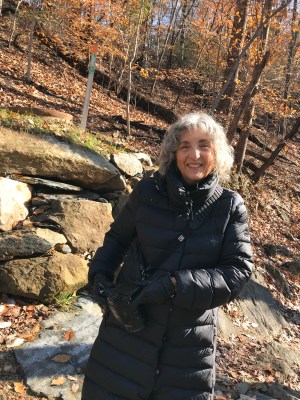
Author, Anca Vlasopolos

Today I’m not posting about my own books or commenting on the ins-and-outs of indie publishing. I’m interviewing the fascinating former Michigan author, Anca Vlasopolos.

Welcome to “Painting With Light,” Anca.
Thank you. Glad to be here!

You have a fascinating but somewhat frightening background. Can you tell us a little bit about it?
I was born in Bucharest, Romania, in 1948, about two months before the Communists were “elected.”

My father was of Greek origin, my mother was Jewish and newly returned from Auschwitz and three slave-labor camps. My father became a political prisoner of the Communists because he was a professor of Economics and criticized the Stalinist five-year plan. He died three years after his release.

My mother applied for a passport to leave the country permanently when the government decreed, in 1958, that the country needed to be cleansed of Jews.

We left in February, 1962, and when we tried to come to the U.S. we came up against the Immigration Act of 1927. It had such strict quotas for “inferior” people from South and Eastern Europe that the quota for 1962 was already filled.

We finally came to the U.S. in 1963, as U.N. refugees. We ended up in Detroit, where my mother had two aunts who’d immigrated in the 1920s. They had to sponsor us for us to be allowed in.

With all that turmoil in your life, what were you like in school?
I was extremely shy, and having to change countries, languages, and schools several times in my teens didn’t make me any less shy. But I decided by taking drama and joining the debate team I’d overcome my shyness.

Did it help?
It didn’t, though I learned to speak for myself and for others. I was also impatient when school was boring, so I could be somewhat of a hoodlum, throwing spitballs and otherwise disrupting classes.

When you weren’t disrupting things, you must have read a lot. Tell me, who are your favorite authors?
Ursula Le Guin, Virginia Woolf, Coleridge, Shelley, Keats, Blake, Baudelaire, Verlaine, Rimbaud, W.S. Merwin, Jane Austen … among many others.

Do you have any funny or peculiar writing habits?
I work on poems or passages of prose in my head long before I commit them to paper. My husband finds that strange.

For your fiction, do you work from a plot outline, or just see where an idea takes you?
I have a general notion of where I’m going, but I do let the book and characters take over. In my historical novel, I ended up with chapters about the Pacific theater in World War II, which I never anticipated when I started writing about a Japanese boy lost at sea in 1841.

Where do most of your ideas come from?
That’s tough. With a poem, it’s usually an image, an analogy I see in nature. With prose it very much depends on the piece—novel, short story, essay.

For my historical novel, two stories generated the book: one in National Wildlife about the near-extinction of the short-tailed albatross, brought about by a Japanese who’d traveled to the U.S. in the nineteenth century.

The other was a story told to me by a friend, who said that the public library in Fairhaven, MA, had Japanese effects sent by a man who’d grown up there in the 1840s, informally adopted by a whale-ship’s captain. The stories clicked … the man was the same in both!

Is a memoir more difficult than writing fiction or poetry?
I didn’t find it so.

What’s your favorite quotation?
The one that kills me is from King Lear, when Gloucester tells Lear, “Let me kiss your hand,” and Lear replies, “Let me wipe it first. It smells of mortality.”

When do you do most of your writing?
Whenever I please, now that I’m retired. The trick was finding time when I was working.

How have you evolved creatively since your first book?
I think others would have to decide. As I think all writers do, I write who I am at the time.

You taught English and Comparative Writing at Wayne State University in Detoit. What do you consider your proudest teaching moments?
My students getting jobs after earning their PhD’s.

How have you been promoting your work?
Not well. I am on some social media, and I have a website. It takes a lot of money to promote oneself effectively, or a lot of schmoozing, which I detest.

Do you have anything else in the works right now?
More poetry and either a long short story or a novel about a dying young painter.

Good luck, Anca … and thanks for doing the interview.
Thanks for having me, Ron. It was a pleasure.

**********

Please take a moment to visit Anca’s website and take a look at her interesting books. Her new book of poetry “Often Fanged Light” is available April 2019.


You can also visit Anca’s listings on Amazon, and try her work for yourself. You’ll be glad you did.

**********

I’ll be joining other authors signing books at Detroit Festival of Books at Eastern Market on July 21 and at SterlingFest in Sterling Heights, Michigan on July 27.

**********

Gentle Readers, my books have all garnered some terrific reviews. You can see all of them by using the Amazon link below. Check them out. Better yet, buy one and read it. You just might like it.

buy now;

**********

You’re invited to visit my author’s website, BROKEN GLASS to hear the remarkable radio interview about my novel “Blood Lake” on The Authors Show. You can also like my Book of Face page, find me on Goodreads, or follow my shorter ramblings on The Twitter.

**********

Comments posted below will be read, greatly appreciated and perhaps even answered.
Writing Your Own Life Story

April 14, 2019

Photo Courtesy of Pexels

I believe the wisdom and power to create real change lives not only in the experiences of leaders and community builders … but in the things that happen to everyday people all over the world. Each one of us has a story born from our life experience.

We often forget, by offering up our stories we can help others understand their own. We build a structure with our truth so other people can shelter there. In this way, a memoir is not self-indulgent but a road map for the human experience.

Your story also deserves to be told but, unless you’re someone really famous, it’s probably your own responsibility to tell it. Are you ready to share your life story with the world?

Develop a Concept
A memoir captures a period of time or a set of events in your life, rather than cataloging your experience from cradle to grave (that’s an autobiography or biography).

In order to appeal to an audience beyond your friends and family, you must bridge the gap between your life and that of your reader.

Most aspiring authors feel overwhelmed before they even begin. Below are some tips to help you on your way to sharing your story.

You need a solid concept that invites the reader’s concerns into the experience. To get them reading, it has to be more than something saying, “Let me tell you all about wonderful me.”

Consider the elements of your story that are universal and find ways to write them so your reader can imagine their own life through the lens of your circumstances.

Make It Memorable
You can make your nonfiction book as memorable as its fictional counterparts by using sensory language. By that, I mean language that conveys how you felt, what you saw, heard, smelled, and tasted during the scenes you present.

Before you write a pivotal scene, take yourself back to the place, time, and emotion of the moment. Once you’ve transported yourself back to that moment, write your scene.

When you’ve gotten it down on the page, go back and look for ways to vary your language to make it richer and more interesting.

Break out your thesaurus if that helps!

Include Details
Writing in detail takes time to develop, but not as much as you might think. It has helped me in my own writing. View the world in small sections. That limited focus can help you really hone-in on detail.

Construct your book scene-by-scene, moment-by-moment. See the minutiae … the crack etched in the sidewalk cement, the one green pea that rolled under the table, the rim of grease under the thumbnail of your father as he cuts the Thanksgiving turkey. When you add detail to your writing, you are painting with words, and you can use all the colors!

Details like that make the difference, so show them to your readers!

Your Story is Exceptional
You’ve lived through, learned, discovered, or developed something, and you’re still busy living your life. You’re out accomplishing things. What better time is there to write a book about your own life story than now? Don’t keep it to yourself!

Believe it or not, someone out there may need your message. When you share what you know and what you’ve learned, you may become part of the solution for someone.

You may not think of yourself as a writer, but you can do anything you want to do. What do you have to lose? When will there ever be a better moment than now? You don’t need to learn the publishing industry or take writing classes to write your book. You simply need to get your message out into the world.

Writing a book about yourself is definitely a big hurdle, perhaps comparable to running a marathon. But, just like that epic race, once you do it, you may look back and want to do it again.

What are you waiting for?

**********

I’ll be joining other authors signing books at Detroit Festival of Books at Eastern Market on July 21 and at SterlingFest in Sterling Heights, Michigan on July 27.

**********

Gentle Readers, my books have all garnered some terrific reviews. You can see all of them by using the Amazon link below. Check them out. Better yet, buy one and read it. You just might like it.

buy now;

**********

You’re invited to visit my author’s website, BROKEN GLASS to hear the remarkable radio interview about my novel “Blood Lake” on The Authors Show. You can also like my Book of Face page, find me on Goodreads, or follow my shorter ramblings on The Twitter.

**********

Comments posted below will be read, greatly appreciated and perhaps even answered.

What’s Your Writing Voice?

April 1, 2019


I spent all day last Saturday at Michael Dwyer’s Rochester Writers’ Conference … the best one-day writing conference in the state (at least, to me it is). I’ve been to almost all of them … going back years.

It was another day well spent (and it kept me out of the rain).

Saw some good presentations, listened to some good speakers, made new friends and saw several old ones.

Reflecting on it, I realized one of the telling comments of the day actually came from people not associated with the presentations.

In one of our table discussions, we were all talking about how we came to the avocation of storytelling. One of the speakers said she actually started because her friends told her she wrote well.

The gentleman across the table started to discuss what she wrote about and the content of her sentences, and he eventually asked how well she thought she connected ideas in her sentences to one another.

It made her pause.

Writing Voice
It made me realize that, in the end, the task of writing a story boils down simply to writing sentences within scenes. By themselves, they may not be amazing sentences. They might not be poetic. They might not display dazzling alliteration.

But a good writing voice … at least a consistent, clear one … can produce glowing strings of intricate beauty. Voice is the outcome elicited by the words you choose and the sentences you assemble using them. Voice is the effect on the reader.

Voice is your style.

The highest goal of voice is clarity … not to write sentences that call undue attention to themselves.

Creating (or fixing) a writing voice won’t be found in a manual. It involves an investment of time. In other words: read, read, read.

The best strategy is to begin noticing how your writing voice compares to the voice of successful authors you admire. Try to categorize their voices and observe how they use language. Compare their sentences to yours. If you can see the difference, then three more words apply:

Practice. Practice. Practice.

This is an ear thing, a sensibility thing. It is something that can be learned over time, but be sure to get feedback from someone qualified who cares enough to be honest. It may be the best opportunity you ever have to experience a writing epiphany.

* * * * *

I’ll be joining a host of other authors signing books at SterlingFest in Sterling Heights, Michigan on July 27.

**********

Gentle Readers, my books have all garnered some terrific reviews. You can see all of them by using the Amazon link below. Check them out. Better yet, buy one and read it. You just might like it.

buy now;

**********

You’re invited to visit my author’s website, BROKEN GLASS to hear the remarkable radio interview about my novel “Blood Lake” on The Authors Show. You can also like my Book of Face page, find me on Goodreads, or follow my shorter ramblings on The Twitter.

**********

Comments posted below will be read, greatly appreciated and perhaps even answered.