How Do You Get Your Book Noticed?

November 27, 2014

Man walking in gorge
As an Indie Author, Marketing Can Seem Daunting

Whatever you find yourself doing this Thanksgiving, I hope you have a chance to be with people you care about, even if it’s just for a little while. It’s a very family time of year and I’m extremely grateful to have good people with whom to share it. I hope you, Gentle Reader, are just as fortunate.

**********
Note: I’ve been invited to participate in “The Giving Season: Orion Township Public Library’s Author & Illustrator Fair.” The fair will take place at the library on Saturday, December 6, between 1:00 and 4:00 p.m.

**********

Get Noticed With Earned Media
As an indie author, marketing my own work sometimes feels like walking alone in a dark, rocky canyon, even though I understand the principle of earned media very well. If you’ve been following me for a while, you know I’ve talked about this before, and it’s not as expensive and esoteric as it sounds.

It’s actually free (or mostly so), highly credible and likely to be a viral resource that amplifies your efforts to create interest about your work. It’s also known as word-of-mouth.

It sounds simple, and it is … but it’s not necessarily easy.

First, you need to write a book worthy of sharing, which is hard enough. Then comes the really hard part: finding a way to get it into the hands of people who will spread the word.

Although the concept is simple and the dollar cost is low (often non-existent), implementing it requires time and effort.

How to Get Started?
What you’re doing at the earliest stages is building relationships and, just as you might expect, that takes time. Your focus at first should be more on discoverability than selling. Find out who your book appeals to and get to know where those people are.

By that, I mean create a marketing plan that uses the same social media sites as your fan base. Now, screaming “buy my book!” all the time is certain to turn people off, but it won’t hurt one bit to be helpful to other indie authors.

Why? You never know when that helping hand you offer will get another reader pointed in your direction.

Make Yourself a Brand
I’ve mentioned before that you need to have an author bio available … ideally several different-length versions of it … on a media page specifically for bloggers and journalists.

Be creative. It should be more than a description of your education and work history. It should show some personality and give your readers something special to remember.

Make it Easy to Buy
Your author website should also include links that are clear, easy to find, and go directly to a retailer where your work is available.

Promote Free Giveaways
Believe it or not, giving away a copy or two of your work, if done correctly, is a good way to draw attention to it. You can arrange book giveaways on Goodreads … or try joining and make a member giveaway at LibraryThing.

Why do it at those sites? That’s where the readers are!

Get Media Savvy
Try listening to AM radio stations, particularly on weekend mornings or Saturdays. Many will host a segment highlighting a local author. However, they’re not going to discover you in a dream.

If you’ve ever wondered why local media interviewed “the other guy” instead of you, I’m willing to bet it’s probably not your qualifications, knowledge or ability. It’s your approach. You have to make more than a little effort to find out who they are and develop a relationship with them.

Connect with your local media folks on the Twitter, LinkedIn, the Book of Face, or … dare I say it? … in real life. Respond to comments they make on social media, but don’t try to sell your books or overtly ask for an interview.

Just be friendly and helpful. Sooner or later, they’re going to recognize you, become curious and ask about you. That’s when you tell them about your book.

If, like me, you have far more time than advertising money, you can also find regional or national reporters by combing through the site Muck Rack.

“Consign” Your Book
It’s hard for an indie author to get shelf space in any store. Consider trying a consignment-style approach in little boutiques and galleries. Stop by the gift shop in most hospitals. Store owners may not want to purchase your books outright, but they might display them in their store for a cut of the profits.

An indie can even get into big-box booksellers like Barnes & Noble. Such sellers usually demand a 40% discount from retail and they also expect the publisher (you, if you’re an indie) to buy back books that are unsold after a certain period of time.

If you approach them with your books and they accept, be sure to immediately spread the word that your books are on the store’s shelves. A sudden rush of interested buyers may make them order more of your work.

Be Friendly
Introduce yourself and get to know owners, managers and staff at local independent bookstores. Talk to schools or your community college. Mention your books to friends and neighbors. I use my lovely bride as a gauge. When she starts rolling her eyes, I know I’ve said enough.

Donate
Build goodwill (and good Karma) by getting your book into the hands of people who might not normally have access to your work. Consider donating a copy of your book to places like hospital libraries, shelters, military personnel deployed overseas, senior centers, local civic organizations or clubs.

If you’re fortunate enough to have your work mentioned in places like Kirkus Reviews, Publishers Weekly, or Library Journal you can donate copies of your book to your local library. At the very least a donation should be good for some free press coverage.

The key is getting people to know your name and your work.

For instance, I donated two of my books (favorably reviewed by Kirkus Reviews) to the permanent collection of my local library and got the press release for it accepted in a local paper (Sunday circulation 81,935).

I’ve since been invited to attend a book signing at that same library (in Orion Township, Michigan) on December 6, 2014, from 1:00–4:00pm … and it was perseverance (along with a good Kirkus Review) that opened the door.

Does that kind of exposure help? Subscribe to the blog. I’ll let you know how it goes.

———-
Note: One of the “paid” things you should consider is inexpensive promotional material. Bookmarks are an ideal, inexpensive way to introduce your books and tell folks where to purchase them.

Even if a prospect isn’t interested in buying your book, offer them a signed bookmark, and ask them to pass it along to someone who enjoys the genre.

Hint: If someone does buy your book at a signing, make certain to ask them the spelling of their name before writing anything. I’ve run across odd spellings of supposedly common names like Jym, Leesa and Maari.
———-

Most of All … Have Fun … Keep Writing … and Dream Big!
Remember what Salvador Dali said: “Intelligence without ambition is a bird without wings.”

Happy Thanksgiving!

 
====================
You can find my books as eBooks or paperback on Amazon, or at Barnes & Noble. You’re also invited to visit my web site, BROKEN GLASS, or like my Book of Face page. You can also follow my shorter ramblings on The Twitter.
====================

Comments posted below will be read, greatly appreciated and perhaps even answered.
 

Author Interview – T.W. Dittmer

November 20, 2014

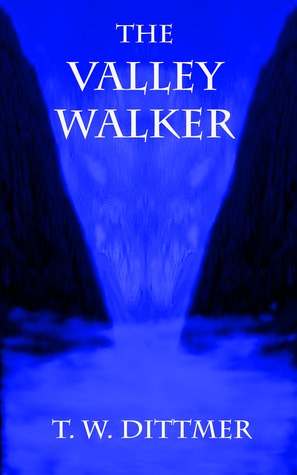
Today I’m interviewing Michigan writer, T.W. Dittmer, the author of the interesting novel, “The Valley Walker.”

tw dittmer
T.W. Dittmer, Indie Author

John Walker Michaels, a man known to the Hmong of Laos as the Valley Walker, a man the army has classified as a deserter … an openly emotional man who draws her out of her shell and into the world of Hmong mysticism. At the end of this time … even after talking to him, learning his history and meeting his family … Special Investigator Teri Altro can only shake her head when asked about him.

She had touched him and felt his warmth. She knew he was real.

Or was he?

~ from The Valley Walker


Welcome to “Painting With Light,” Tim.
Thank you, Ron.

I’m fascinated with your novel. Can you tell us a little about yourself and your background?
I grew up in Gary, Indiana. My father worked in the steel mills, then turned to preaching the Gospel. My mother was a legal secretary. After graduating from high school, I joined the Army and volunteered for Vietnam.

When my military service was complete I studied music, but ended up working in an automobile engine testing laboratory.

An interesting background. What were you like at school?
I was a dreamer in high school. Not a bad kid, but not very motivated, so my grades were poor. I did better in college.

Were you good in English?
Not really, but I liked reading, which got me pushed into the advanced English and Composition courses.

Who are your favorite authors?
Stephen King, Thomas Harris and John Steinbeck.

Where do your ideas come from?
They can come from anywhere. An idea occurs to me, then works at me until I spend a lot of time pacing the floor and imagining it coming to life.

the valley walker lg
The Valley Walker

Do you have an “elevator speech” for your novel?
No. I’m no good at that sort of thing, and I prefer the stairs. To me, The Valley Walker is a soldier’s story.

There’s a lot of that in my work, too. Do you work to an outline or do you prefer to just see where an idea takes you?
I can’t work to an outline. More power to those who can, but it’s just not me.

How have you evolved creatively since you started writing?
My writing started as an outlet … a purely selfish indulgence, I guess. Once I put my work out there and started getting feedback, I realized I wasn’t being clear about the thoughts I was trying to convey. Now I try to write in a way that makes more sense to the reader.

What’s the hardest thing about writing?
None of it is “hard” but it’s definitely a growing process. The Valley Walker is my first novel, and it’s a long road ahead of me. It’s been an interesting journey, so far. I’ve met some great people and learned more than I thought possible. I imagine the journey will become even more interesting.

For your own reading, do you prefer eBooks or traditional printed books?
It depends. Some books I like on my eReader, others I prefer in print form.

What’s your favorite book?
That changes as I change, but Steinbeck’s East of Eden is my favorite right now.

What is your favorite quote?
I don’t have a favorite quote. I don’t like to align my life with another person’s idea of achievement or inner peace.

Do you have anything else in the works right now?
I am currently working on the second draft of my next novel, in the same genre.

I’m looking forward to it. Good luck, Tim … and thanks for doing the interview.
Thanks, Ron. It is truly an honor to be associated with a serious writer like you.

**********

I’m just about finished reading Tim’s remarkable book, and I already know what I’m going to say in my review:

“The Valley Walker” is one of those rare stories that will stay with you long after you finish reading. Most of the characters are totally believable, and the lead character, John Walker Michaels, was superb. This unusual story of a young soldier who turns into so much more will keep readers turning the pages. Well done!

“The Valley Walker” is available as an eBook on Amazon, and you can discover more about the author at these locations:

Facebook
Twitter
Website
LinkedIn
Goodreads

====================

My readers know there is a lot of realistic Vietnam War reference in my novels “Reichold Street” and “One Way Street.” I think the books are a perfect way to remember, and express my gratitude to, friends who served or perished over there.

As always, you can find my books as eBooks or paperback on Amazon, or at Barnes & Noble. You’re also invited to visit my web site, BROKEN GLASS, or like my Book of Face page. You can also follow my shorter ramblings on The Twitter.

====================

Comments posted below will be read, greatly appreciated and perhaps even answered.
 

Author Interview – Laura Lee

November 11, 2014

Today I’m not posting about my own books, or talking about any of the ins-and-outs of indie publishing. I’m returning a favor by interviewing another Michigan author who was kind enough to tell her own blog followers about my writing adventures.

Today’s author, Laura Lee, not only plans to publish her next book as an indie, but already has quite a few traditionally published books to her credit.

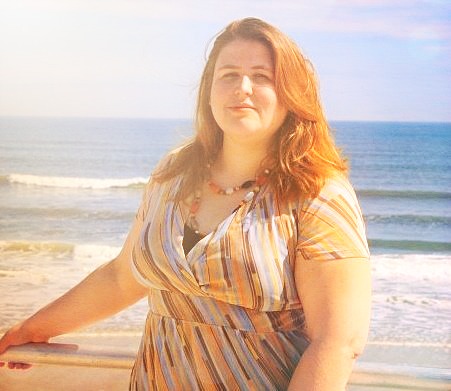
Laura Lee, Author
Laura Lee, Traditional and Indie Author

Welcome to “Painting With Light,” Laura.
Thank you, Ron.

Laura, I’m embarrassed to admit I haven’t read any of your work. Can you tell us a little about yourself?
I’m mostly known for non-fiction in the humorous reference category. My best seller was “The Pocket Encyclopedia of Aggravation.” Last year I did a book with Reader’s Digest called “Don’t Screw It Up.”

Lately, I’m more focused on fiction and other projects. My first novel “Angel” was published in 2011 and was released in audio format for the first time a couple of weeks ago. (I’ve found it is hard to find reviewers for audiobooks.)

I’ve decided to try the indie route for my next novel, “Identity Theft.” This is a new experience for me. I raised the initial funds on Pubslush, the literary crowd-funding site.

My campaign was both more successful and exciting than I had expected and also a little bit disappointing because I think I might have had more success reaching people outside my normal circle of friends on another, more popular, crowd-funding site. Live and learn.

Where do your ideas come from?
My non-fiction books have been a combination of ideas I generated and some generated by publishers. I like having books assigned to me and just writing them because I enjoy the process of writing much more than I like the process of marketing and selling the concept of a book.

I can’t say that I have a source of ideas for fiction. My novel “Angel” was initially sparked by a trip to Washington. I took a bus tour of Mt. Rainier and the entertaining tour guide kept talking about burning out on his old job. At some point someone asked him what his old job had been and he said “a minister.”

I kept coming back to the question of what would attract someone to both the mountain and the ministry and what kind of conflict might put him out of step with his congregation. When the idea that the character might become attracted to another man hit me the rest of the story followed naturally.

Early on, I wrote terrible fiction that was highly autobiographical. I’ve found I get much better results when I put some distance between myself and my story. I need some overarching concept to guide the story.

With “Angel” it was the metaphor of the mountain. With “Identity Theft” it’s the notion of personal identity.

I think it is a common misconception that a big problem for writers is coming up with ideas. For me, the more pressing problem is finding the time and energy to develop the ideas I have into finished products.

Do you work to an outline or plot, or do you prefer to just see where an idea takes you?
I’ve never been able to write from an outline. When I was in school, when you had to turn in an outline first, I always had to write the whole paper then go back and create an outline from what I had written.

For me the natural progression of writing comes from the writing itself. Of course, with non-fiction book proposals you have to create an outline. Then you write the book and it is always different from the proposal.

In terms of fiction, I generally do not start with a plot and write from beginning to end. I have ideas, I write scenes, bits of dialogue. At some point I have enough critical mass that I see how they fit together and I finish the whole book. I write in layers and the novels I have written have all taken shape over a period of years.

When do you do most of your writing?
Writing for me is a multi-stage process. So there is a period when you are writing down concepts and ideas. Then you realize that you have hit a roadblock and you go and do something else.

I will often pose the question to myself: What is missing here? Then I will go and take a shower or watch TV or read a book. At some point my subconscious will come back with the answer to the question and then I will go and write it down as quickly as I can before it escapes.

So I am constantly writing little things in notebooks and on scrap paper. A lot of times I will write down the rough notes and then polish it in the morning. I am a full time writer, so I write fairly constantly. I don’t find that a “morning pages” or “time for writing now” approach works for me.

Who (or what) inspires your writing?
My novels tend to be made up of various attempts at writing other novels. I will write something and put it aside and later get a new idea and suddenly something from the past will seem to fit in with it.

A number of years ago I worked in the office of the folk singer Arlo Guthrie, sitting under a gold record with a spider caught under the glass, and I was handed a stack of fan letters to answer. I tend to file away details like a framed gold record with a spider caught under the glass.

I thought that the idea of someone who was tasked with answering fan correspondence online, who decided to take on the rock star’s identity was an interesting concept for fiction.

The idea languished for a while, but I recently saw Adam Ant in concert. He was the iconic rock star for me … my junior high school idol … and the experience of seeing him years later got me thinking about the story again. This time I had the momentum to finish it. “Identity Theft” deals with a lot of the things I have been thinking about and reading about in the past few years.

Do you have any funny or peculiar writing habits?
Ideas seem to come to me like magic in the shower. I don’t know why that is.

What’s your favorite quote?
I like this quote by Philip Schultz, the Pulitzer Prize-winning poet:

    “To pay for my father’s funeral I borrowed money from people he already owed money to. One called him a nobody. No, I said, he was a failure. You can’t remember a nobody’s name, that’s why they’re called nobodies. Failures are unforgettable.”

What would you change about yourself, if you could?
I would have been born with a small fortune.

What do you find the hardest thing about writing?
I enjoy writing. What I find hardest is maintaining a career as a writer.

What are your plans for future projects?
My novel “Angel” just came out in audio and “Identity Theft” is coming soon. Beyond that, it will depend on what I am able to sell. I have a proposal for a biography that I am quite invested in circulating. I’ve written a stage play, a comedy, which has gotten some good feedback, but it has a relatively large cast which is a challenge in terms of getting it staged.

I have another novel, which is complete and has come close to being sold a couple of times, which I may put out after “Identity Theft.” I’ve also been having some conversations about more non-fiction. So, whatever someone will pay me to do next will be the next thing.

Thank you for talking with us, Laura.

You can find out more about Laura Lee on her web site, check her out on Goodreads or follow her on Twitter.

====================

My readers know there is a lot of realistic Vietnam War reference in my novels “Reichold Street” and “One Way Street.” I think today is the perfect day to express my gratitude to all my friends who served or perished over there.

In fact, I’d like to thank all our military personnel, everywhere, including my father-in-law and my late father, for their service and sacrifice. We’re extremely proud of you.

As always, you can find my books as eBooks or paperback on Amazon, or at Barnes & Noble. You’re also invited to visit my web site, BROKEN GLASS, or like my Book of Face page. You can also follow my shorter ramblings on The Twitter.

====================

Comments posted below will be read, greatly appreciated and perhaps even answered.