Archive for the ‘Traditional Publishing’ Category

What Should Writers Do With Rejections?

October 28, 2014

Young man sitting at table and using laptop
Dealing With the Burning of Your Dreams

Because I attend a lot of writers’ group meetings, I frequently meet other people who tell me they’ve also written a book.

It happened again recently. This particular man went on to say he had been disappointed in his search for an agent to represent him.

Obviously trying to go the traditional publishing route, he had queried a respectable agent, who told him his writing was actually quite sound … but he wouldn’t represent the book.

The agent said there wasn’t a large enough market for it.

I got to read his first chapter and it wasn’t bad at all. Being the indie-author advocate that I am, we got into a discussion about self-publishing and I suggested he give it a try. He said he wasn’t sure now about any of it any more … he was reconsidering whether his work was worth publishing at all.

I left feeling very sorry for his disappointed state of mind, because it was all based on that single rejection.

Agents and editors often act as if they can predict the future, but their job is to sell books, not write them. They make judgments, not always about whether the work is good or not, but on whether they think they can sell it.

If they’re not supremely confident in their ability to do that, for whatever reason, they’ll tell you it’s not marketable and send you on your way.

And quite often they’re wrong.

Consider This
One of my favorite books, William Golding’s Lord of the Flies was rejected twenty-one times. One publisher actually called it “absurd and uninteresting fantasy which was rubbish and dull.”

I have to wonder what that publisher said when Golding won the Pulitzer Prize in literature.

J.K. Rowling’s first Harry Potter and the Philosopher’s Stone story was rejected twelve times before being bought by Bloomsbury in London … and then only because the CEOs daughter loved it!

Margaret Mitchell’s classic Gone with the Wind was rejected thirty-eight times before she finally got an acceptance. It became a best seller by the time the first reviews appeared in the newspaper.

A young lady many folks still haven’t heard of, by the name of Amanda Hocking, wrote a whole series of vampire romances that were flatly rejected by publishing houses.

So, the 27-year-old writer published them herself. She sells them online as eBooks, most for 99-cents.

Now, vampire romance is not a genre that interests me but, before you walk away laughing, consider that she sells about 100,000 per month and keeps a significant percentage of the sale price. She’s now a multi-millionaire.

Ray Bradbury, another of my favorite authors, also faced numerous rejections in his career. His sales increased slowly until he finally sold a story entitled “The Lake” that actually made him cry himself when he read it. It was then he realized what so many good writers discover.

He wasn’t writing for others, he was writing for himself.

Even Stephen King, who today could sell virtually anything he writes, once collected rejection letters. He’s quoted as saying he “pounded a nail into the wall” in his room to collect them.

He also went on to say eventually “the nail in my wall would no longer support the weight of the rejections impaled upon it. So I replaced the nail with a spike and went on writing.”

Whether you’re still trying to go the traditional route, or finally planning to immerse yourself in self-publishing, those are comments well worth remembering: Write for yourself.

Impale the rejections on a spike and keep writing.

====================

You can find my books as eBooks or paperback on Amazon, or at Barnes & Noble. You’re also invited to visit my web site, BROKEN GLASS, or like my Book of Face page. You can also follow my shorter ramblings on The Twitter.

====================

Comments posted below will be read, greatly appreciated and perhaps even answered.

Remarkable Isaac …

January 5, 2014

isaac-asimov painting
Isaac Yudovich Asimov (1920-1992)

While I was researching something to post about indie publishing, I came across several articles about one of my favorite authors, who was traditionally published … a lot.

The Good Doctor
There were an abundance of articles because Thursday, January 2, in addition to being my little sister’s birthday, was also the birthday of one of the most prolific authors of all time … Isaac Asimov, and a lot of people remembered.

Asimov wrote more than 500 books, and is arguably the author most responsible for taking science fiction from the pulp magazines and making it a respectable genre.

That might have been enough for some writers, but Asimov was equally at home writing mysteries, fantasy and scholarly non-fiction; excellent books explaining physics, chemistry, biology, astronomy and ancient history to the layman.

He also published well-researched volumes on themes ranging from the Bible to Shakespeare. He even wrote humorous books of limericks. His books were published in an amazing nine-out-of-ten major categories of the Dewey Decimal Classification System.

Asimov’s best known work includes the story “Nightfall,” acclaimed as the best science fiction short story ever written, and the various installments of his Foundation and Robot series.

Awards and Acclamations
During his lifetime Asimov was the recipient of at least eight Hugo awards and two Nebulas for his fiction. For his non-fiction he was also awarded at least five major awards, including the Howard W. Blakeslee Award from the American Heart Association.

A remarkable intellect, Asimov taught biochemistry at Boston University’s School of Medicine, before he turned to writing full-time, but not many people realize just how precocious he was.

He graduated from high school at fifteen … and earned a Bachelor of Science degree from Columbia University by nineteen, where he also earned a Ph.D. in chemistry.

Asimov’s personal papers, archived at Boston University’s Mugar Memorial Library, consume 464 boxes on 232 feet of shelf space.

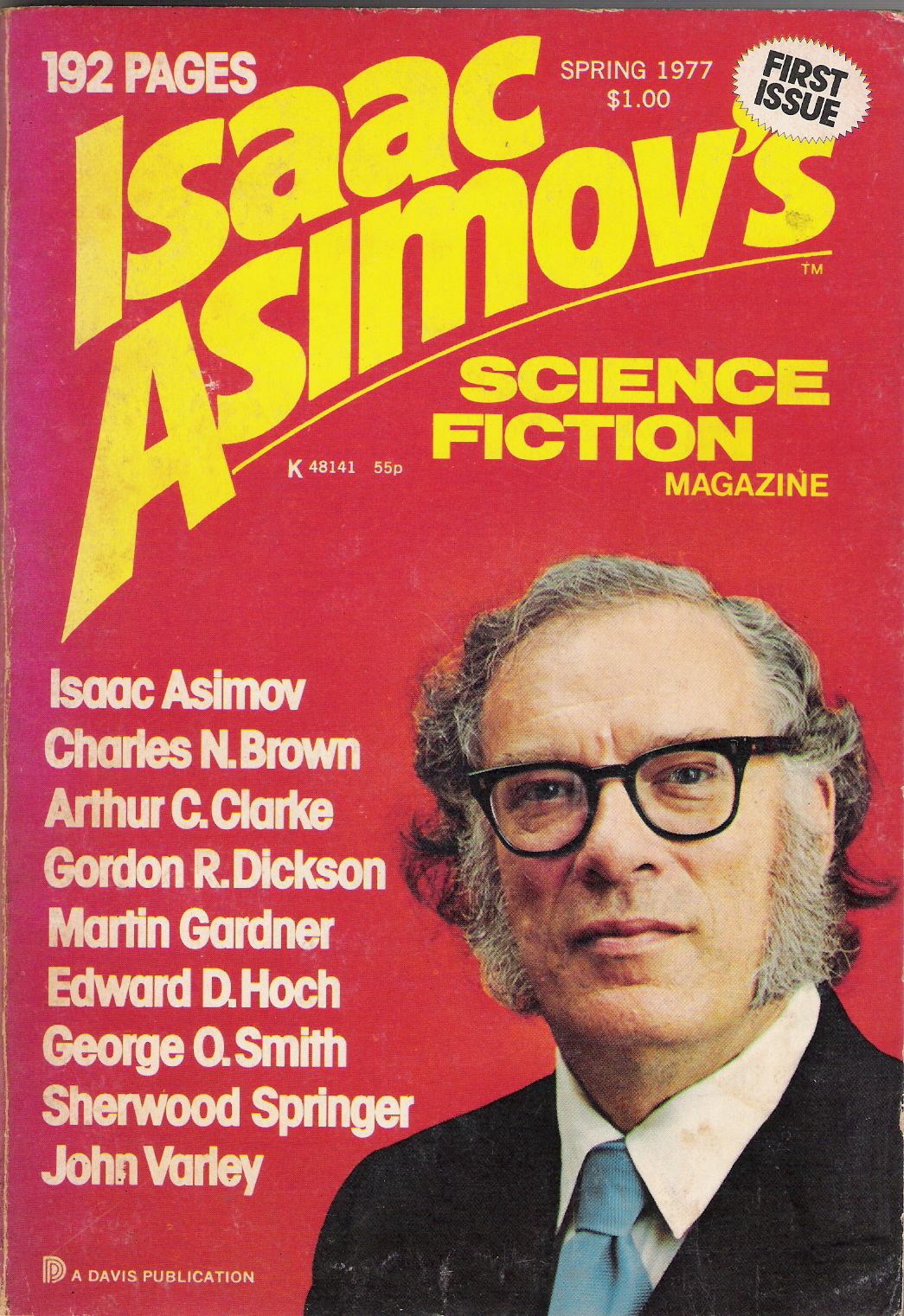
first issue ia science fiction

Special Connection
I’ve always felt  a special connection to the Good Doctor. While he was the editorial director of a publication named after him … Isaac Asimov’s Science Fiction Magazine … he penned a hand-written index card to accompany the form-letter rejection I received from editor George H. Scithers for a story submission.

The note said simply “Too much talk-talk in the ending.” It was signed “I.A.”

The Scithers rejection letter was soon lost, but that card became one of my most treasured objects (but that’s another story).

Correct Predictions
Fifty years ago, Asimov published a story called “Visit to the World’s Fair of 2014” in The New York Times. It listed his predictions for what the world would be like in 2014. Now that 2014 has arrived, several of those eerily correct predictions are worth talking about.

1.) Asimov predicted, by 2014, electroluminescent panels would be in common use.

Rogers Shine billboard manufactured by FlashTech Canada.
First Electroluminescent Billboard – Canada 2005

Electroluminescent panels are those thin, bright panels we see everywhere today in retail displays, billboards, signs, lighting and flat panel TVs. Score one for the Good Doctor.

2.) Communications will become sight-sound and you will see as well as hear the person you telephone.

apple_face_time-464x500

The first commercial cell phone call was still almost twenty years away when Asimov made that prediction. Think about how quickly communication devices have changed since then. Even my seven-year-old grandson can use FaceTime on the i-Phone.

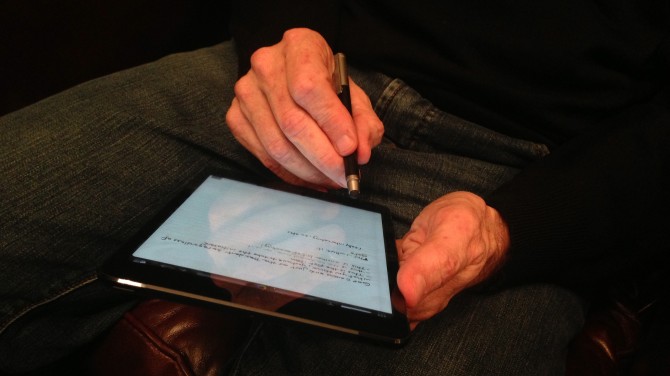
3.) The luminescent screen can also be used for studying documents and photographs, and reading passages from books.

holding-his-ipad-mini

With computers, tablets, iPads and smartphones, all of this is true.

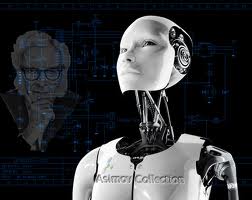
4.) Robots will neither be common, nor very good in 2014, but they will be in existence.

robot image   arc-welding-robot-162232

If you define “robot” as a computer that looks and acts like a human, then this prediction is definitely true. We don’t have robot servants, robot friends, or robots that we absolutely cannot tell from human, but we do have robots.

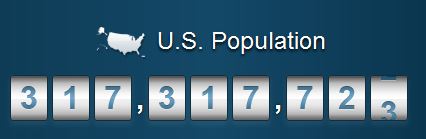
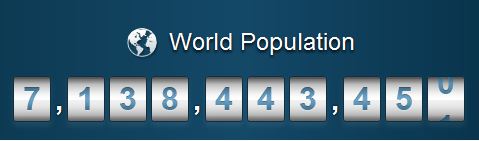
5.) In 2014, there is every likelihood the world population will be 6.5 billion and the U.S. population will hit 350 million.

us pop    world pop

Asimov slightly overestimated the U.S. population (317 million) and underestimated the world population (7.1 billion) but, considering the vast majority of the year 2014 is still in front of us, his guesses surrounding population are mighty close.

6.) Mankind will have become largely a race of machine tenders. Schools will have to be oriented in this direction.

123775556_iPads_398926c

We’ve hardly become “a race of machine tenders” … unless you consider how a lot of us are never far from a machine (i-Pads and Smartphones) that we “tend” pretty much constantly.

Hmmm … maybe this is what the Good Doctor saw.

7.) All high-school students will be taught the fundamentals of computer technology, become proficient in binary arithmetic and be trained to perfection in the use of the computer languages that will have developed.

This is one I wish was true. Asimov was correct insofar as high school kids, and younger, can certainly use computer technology, but American education lags far behind some countries in the world when it comes to computer science.

Unfortunately, coding classes are still relatively uncommon in American high schools, and just 1.4 percent of our high school students took the computer science exam in 2012.

Perhaps the problem doesn’t lie in what the Good Doctor realized we need to do, as much as it does in what we, as a society, don’t want to do.

8.) We will live in a “society of enforced leisure.”
Not yet, Dr. Asimov, not yet … and unless we get busy and catch up to the world’s countries that are so far ahead of us in educational matters … we may never get there.

Right now, I have to interrupt my “enforced leisure” to get dressed, go out and tackle the beginning of the 10-12 inches of snow we’re expecting today.

Sigh.

What are your predictions for the things we’ll be doing fifty years from now?