Archive for the ‘Book Trailer’ Category

Market Sense

February 24, 2013

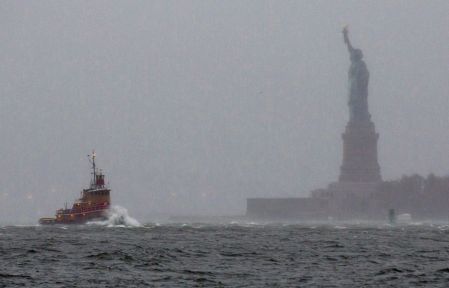
Statue in Fog
Marketing your own work is often compared to trying to sail in thick fog. It’s hard to know where you’re going. / AP photo

How Do You Market a Book by Yourself?
I went to the monthly meeting of The Freelance Marketplace Writers’ Group last Tuesday.

It’s a local group that meets the third Tuesday of every month (except December) to discuss the business of writing.

I look forward to it, because I learn something about the business every time I go … even if it’s something eye-opening about myself.

This month we talked quite a bit about self-publishing, and I mentioned the difficulty of marketing your own work.

I truly believe the best marketing is still word-of-mouth … but how do you get people started talking? It often feels like sailing around in a dense fog.

When I had finished my novel, Reichold Street, I thought it was good, but then, why wouldn’t I? It was my creation, after all. Sort of like having a literary child.

And, although it’s not really her kind of book, my wife thought it was pretty good, too. While that did wonders for my ego, it doesn’t sell books.

The Traditional or Indie Way?
I knew most traditional publishers today won’t accept unsolicited manuscripts, so an agent is a requirement for entry; but I think most new writers have heard the tales about finding a reputable agent. It’s a chore unto itself.

It can take months or years and, even if you’re fortunate enough to find one willing to take a chance on you, there’s no guarantee of finding a publisher equally willing.

I’m not a total newbie. I’ve written articles for a major international company (although I’m not sure a literary agent would care). I even had a few fiction credits over the years. But the bylines for my fiction were dated and few … and not exactly awe-inspiring.

Then there’s my age. I’m no spring chicken. Not even a late summer one. I’m fast becoming a gristled old rooster. I had retired from the nine-to-five routine and was writing because … well, because I had to.

I’ve been writing since I was a kid because there’s something in me that demands it. I sent my first story off to collect a rejection letter when I was a teenager and I still have stories in my head that I need to write.

Need to.

So, I took the indie leap.

Ernest Hemingway’s famous quote about writing a book tells it pretty much like it is: There’s nothing to it. All you do is sit down at a typewriter and bleed.

But I discovered going indie is a mini MBA program unto itself. You’ll never learn more about the publishing business than doing it yourself.

Writing can be difficult, but being your own editor is chore I don’t recommend to the faint of heart. Neither is converting it to the proper electronic formats. It’s boring and tedious … and you miss a lot when you try to polish your own work.

It took me several iterations to get it right.

The Really Hard Part
But as hard as all of that seemed, it (pardon the cliche) pales in comparison to trying to market your own book.

I had very little social media experience before publishing my own novel. I had built a web site for collecting old cameras, and started a little-used blog about photography that has morphed into the one you’re reading now.

I’ve discovered trying to build a presence on Facebook, Twitter (you can follow me there @ronherron) and Goodreads has a steep learning curve. I often feel like a hamster on a wheel, running to keep up with things that don’t always seem to be taking me anywhere.

I put a couple of books … my short-story collections Zebulon and Tinker … into Kindle Select the other day. They’re exclusive to Amazon for 90 days. I also used the Amazon free promotion program for each of them.

Zebulon had 125 free downloads in three days, and I’m waiting to find out if the Select program helps with sales (I’ll let you know what happens).

One of the new visitors to the writing group suggested I try to schedule school and library visits; perhaps even do a reading. It makes sense. I’d have to do it even if I wasn’t an indie author.

It will take some effort on my part to get the word out. I already know I can’t depend on social media to do it for me, but I need something to stimulate sales or I’ll be turning out more blogs than books.

So I’ve decided to get off my duff and do the legwork (although I may wait for Spring, when there isn’t so much snow).

I’d welcome any comments you have.

Oh, I did manage to write six-thousand more words on my next novel since my last post. That’s why I feel OK about blogging again so soon. I’m an indie author … and proud of it.

All things considered, it’s a great time to be a writer.

The Official Book Trailer for the Award-Winning “Reichold Street” –

 

Inspiration or Willpower?

February 13, 2013

snow monkey“Finding Inspiration is Really a Matter of Willpower”

Intentions
I had originally intended to write this update about some of the various new sites available to help you self-publish your books. I was quite far along in the draft when it occurred to me.

This sounds very familiar.

So, I checked and, sure enough, I had covered this ground before in the post More Confessions of an Indie Writer, not that long ago. That was a resonably good post. I see no reason to belabor it again now. Nothing has changed all that much … yet.

Once that was scratched off the list, I went to my second topic choice, inspiration. More specifically, where do you find it? Is it found in stimulating conversation, deep research or – like my furry friend above – while relaxing alone in a hot tub?

You guessed, didn’t you?

I’ve written about that already, too.

Now what was I to do? Seems I’ve been to all these topics before. The sense of déjà vu was suddenly strong. And that reminded me of one of own personal favorite posts … Déjà Vu.

Problems
This was becoming a problem. I couldn’t come up with an idea. Could I really be suffering again from writers block?

Yes … I said to myself … you can.

When I think about it long and hard, I suppose I’ve had writers block ever since that first story I wrote as a teenager (at least the first one I remember writing). Not continuously, of course.

But there have been some really long stretches when the muse simply wouldn’t come. Most of the time, that wasn’t a problem. I didn’t make my living by writing, after all.

You still don’t, I told myself.

You’re not helping, I answered.

Whoa! Talking to myself was bad enough. My wife always thinks I’m muttering at her under my breath, when all I’m really doing is thinking out loud. But answering those mutterings? This could be serious.

Cold Hard Truth
Then the harsh reality dawned on me (I hate that cliche, but that’s exactly how it felt … like a the sudden intrusion of the sun into a long night). I don’t have writers block. I have blog writer’s block.

I have it because I should be diligently writing the sequel to my novel REICHOLD STREET right now, instead of trying to create a blog post; or Tweeting and Facebooking (is that even a word?) things that don’t really seem to be adding anything, that I can see, to my book sales.

At the same time all this is going on, to compound the problem, I’m researching other ideas on producing book covers that hook a reader, writing effective book descriptions, converting copy into ePub and mobi formats, and generally getting the word out on my marketing.

All this instead of writing my next book.

The funny thing is (or maybe it’s really a sad thing … I haven’t quite decided yet), I actually don’t need to wait for my muse where my next book is concerned. I have lots of ideas for that novel. I’m on Chapter Four right now.

At least I would be … if I was writing.

The Answer
There are two parts to our brain: the reactive part and the creative part (and I’ll just skip the whole left brain-right brain discussion).

Creating words takes concentration, and I’ve trained myself not to react to anything that makes ‘noise.’ These days I’ve abandoned the office upstairs in favor of the laptop on the kitchen table.

Everyday distractions have become part of my default setting for ‘normal.’ But sometimes, and this seems to be one of those times, the reactive part and the creative part get a little mixed up.

I’ve been so concerned with writing a blog that’s helpful to other indie-writers that I forgot something important: I’m an indie writer … and I’m in the process of creating something I hope will be spectacular.

My next novel.

Not only that, I set myself a pretty tight deadline: to be finished with it by later this summer.

Now What?
I realize I’ve allowed my creative brain to be distracted by my reactive brain and I now need to exercise more than a little willpower to get things back on track.

So this is it, reactive brain. I’m putting a limit on your activities, right now. I will allow you some control when I’m paying bills, or chauffeuring my bride around for shopping, or running necessary household errands. But when it comes to writing … I’m going back to my tried-and-true 1000 words a day minimum.

But I’m also going to limit the time I allow my creative brain, too.

My wife needs some attention. Other parts of the family might like to hear something from me other than a grunt once-in-a-while, too. It’s wet and cold and snowy outside, but our friends are not bears and don’t hibernate in the winter, so I need to see a few of them.

They’re all part of my inspiration, after all … and I really need to get back to writing.

What do you think? Leave a comment. I’d really like to know.

Do me a favor, if you don’t mind: Watch this short book trailer. Thanks!


The One Best Storytelling Tip

February 7, 2013

“Encourage Everyone You Know to Read”

The very best tip I’ve ever seen for good storytelling is something I wholeheartedly believe to be true. If you want to be a good writer and storyteller … read.

I saw that admonition again most recently in my fourth time through “On Writing” by Stephen King.

Read.

Such a simple, profound thing. Don’t limit yourself. Open up your world. Read everything you can lay your hands on. Whether you want to write thrillers, fantasy, science fiction, suspense, romance or action/adventure; before you do anything else … read.

I believe in that advice. I’ve always been an avid reader. I encouraged my sons with it and, now that they’re grown, I’m delighted to see it passed on to my grandchildren. Read.

When they’re too young to read for themselves, read stories to them. The small effort it takes will pay enormous dividends.

Write Like You Read
When it comes to writing, we’ve all seen structural articles galore where professors, “experts” and pundits tell you to outline your plot. Introduce your main characters and themes in the first third of the story. Develop those themes and characters in the second; then resolve it all in the rest.

Really? Those writers had to get advanced degrees to tell us to write a story that people would actually want to read?

Michael Moorcock is one of the more dazzling science fiction writers of our time, having written dozens of novels and short stories since the very early 1960s.

He claims to have followed such a scripted approach and, as I said, he’s a phenomenal story teller. I’ve enjoyed his work immensely.

But when I read his idea of how to go about writing is very like that rigid structure mentioned above, it was a letdown (sorry, Michael).

As his wide audience of fans will attest (and I am one), the man knows how to tell a good story.

That approach to writing, however, if you will pardon me for a moment of brutally honest opinion … is academic bullshit.

I’m much more a follower of Stephen King’s method (see my earlier post). I start with an intriguing what-if? question, then try to visualize what happens. I let the story come to me, then translate what I see and hear in my mind into words on the page.

I suppose, by doing that, I’m ignoring all the proferred rules, regulations, templates and I-told-you-so guidelines and creating my own, suitable for what I want to say.

I’d encourage you to try it, too. At least once.

Of course, if you’re more comfortable with notes and outlines and rigid structure; go for it. It seemed to work for Michael Moorcock, and my own Mrs. Bliss, bless her, if she were still around, would give you bonus points on your report card.

Perhaps the real method is to read good stories, absorb … and repeat. Create your own storytelling process, and judge by the rapt attention of your readers and listeners how it’s working.

Like I mentioned before, it’s the final story that counts … not how you got there.

If you have a moment, please watch the book trailer for REICHOLD STREET.