The headline of today’s entry is somewhat misleading. I’ve actually written fiction (and poetry) since I was seventeen. Most of it, with the exception of a couple of short stories and some poems, never saw the light of day in any publication.
In fact, most of it never even garnered a rejection slip.
Just like with today’s wannabe authors, rejections were not acknowledged … they were ignored. Somewhere, in a dusty brown cardboard box in the dim recesses of the basement, I’m sure I still have copies of most of the ones I did get. Sad, yellow-brown pages brittle now with age.
There were a few mimeographed (read xeroxed, for those too young to remember mimeos) and unsigned rejection letters, but those were infrequent and have long since been tossed into the same abyss my original submissions went into.
However, I did write and publish:
The cold darkness was broken only by the sound of cargo boats being poled across an icy river. Desperation was written plainly in the faces of the men sitting in the boats. A young general stood in the lead boat staring ahead into darkness.
Suddenly, there was a flash from shore. The entire group slumped. Instantly the shoreline came alive, not with cannon fire, but with conversation and activity.
“Cut! Let’s do it again; and tell those people not to use flashbulbs again while we’re filming!”
The date was November 21, 1983. The scene was the re-creation of George Washington and 2,400 of his troops crossing the Delaware River on Christmas Eve 1777 on their way to attack the Hessian garrison at Trenton.
The original action was one of the first important victories for the Continental Army during the American Revolution. The re-creation is also a first for General Motors.
I found this example of one of my articles, published in the December 1983 issue of “GM Today” … an internal monthly newsletter distributed to all GM employees. The print run, at the time, was over 800,000, quite a respectable distribution. I remember this article very well.
The editor didn’t like it at all.
He’d sent me to cover a portion of the filming of the GM-sponsored made-for-television mini-series about the life of the young George Washington, starring Barry Bostwick and Patty Duke. I met and interviewed them both … and the director, Richard Fielder, on location at the filming of the re-creation of Washington’s historic crossing.
From his comments when I returned, my editor thought the article was too story-like and not the nuts-and-bolts information he wanted. Thankfully, the PR Vice President had seen … and liked … my article or it would have found its way into the waste receptacle, too.
Is the world today better simply because the article ran almost exactly as I wrote it?
Lots of Questions
One of the things I’ve noticed since I won that pesky Gold Medal for my debut novel, Reichold Street: I’m now asked (usually by other writers, when they find out about the award) how I went about creating the book.
Did you do anything unique or special when you wrote? How, exactly, did you go about it? Did you create extensive review notes for all your characters? Did you make an outline? Did you follow any particular plot style?
The answer to all these questions is … no.
Oh, for a long time I tried to follow all the language rigors most teachers (who, by the way, were quite often not writers themselves) tried so hard to drum into me while I was in school all those years ago. Start with notes. Decide on a plot line. Make an outline.
The trouble is, it didn’t work (sorry, Mrs. Bliss).
My prose was always stilted and quite unbelievable. For a while, I tried making extensive Excel spreadsheets for each character. I would make detailed lists of their traits, physical descriptions, even notes about siblings and significant others.
I was doing this for every character in every story. It was far too tedious and the result was awful.
I finally found a Word-compatible piece of software called Scrivener – which, as recently as a few months ago I touted at the meeting of a local writers group I attend.
In truth, it was just another form of boring spreadsheet.
In Miami a few weeks ago I was asked once again by other writers: “Your characters are very well-developed … how do you go about writing?” and it occurred to me I had actually employed none of those approaches in crafting Reichold Street.
Oh, I admit I toyed with them … sort of. I plugged information into spreadsheets and also tried to coax software to help develop my storyline, instead of just letting the story happen.
But it was (as it has always seemed to be) a tedious, cumbersome and unwieldy process – one that always left me with, as you might imagine, predictably shitty results.
I realized it wasn’t until I let all that go and started relying on my intuition to tell me what was working in the story that Reichold Street started to come together.
Creative Spontaneity
Stephen King mentions in his fabulous book “On Writing” that “plotting and the spontaneity of real creation aren’t compatible.” I’ve come to believe that’s true.
My writing style is really quite simple. I start with what I think is an intriguing (at least to me)what-if? question. Then I try to visualize what begins to happen.
Rather than going to the story, I let the story come to me. I see the surroundings; I hear the characters.
Then I try to translate what I see and hear in my mind into words on the page, and go forward from there.
Does it work? Some people seem to think so, but I guess reviews are one thing and people making purchases are quite another. From the proceeds so far I can afford lunch out once in a while. Not exactly world changing.
The months spent writing the book have started to seem like a breeze. Even the hard part of editing now seems easier in hindsight. I’ve discovered getting the word out is the hard part.
If you have the time, please check out the book trailer for “Reichold Street”
I’m sitting in Lake Worth, Florida tonight, getting ready to attend the Readers Favorite Awards in Miami this weekend. At the risk of sounding like I’m tooting my own horn (I am), I’m here because I won a Gold Medal for my novel Reichold Street.
I’m a little nervous, so I thought I’d try to calm my nerves by updating my blog … but I wasn’t sure what to write about. I was thinking about it late this afternoon when I took the picture above. Then it hit me.
I’ll blog about blogging.
Every writer seems to be blogging these days, from unknown authors to literary legends. If you’re a writer or want to be, you should be, too. But since blogging has become ubiquitous as a book-promotion tool, it’s important to do things right.
Here are ways to make sure your blog has a positive impact on your writing career.
1. Look Professional
The design of your blog is really important. It’s how you lure visitors and direct them to the places you’d like them to go, no matter how good your content. Remember business-speak about an elevator pitch? Consider your blog the same way.
If you’re not certain about that term, think of it this way: Does your site pass the “Three-Second Test”? We constantly pass judgment on people and things; often, in less time than it takes to take a deep breath. It’s how most human beings are wired.
The elevator door opens, a stranger enters and your brain instantly starts gathering data: Age:50-ish. Build:Athletic. Tan:Real. Clothes:Expensive. Demeanor:Confident. Briefcase:Leather. Occupation:Trial Lawyer?
Of course, first impressions are sometimes wrong. Perhaps this fellow isn’t a lawyer at all, but a rich tennis player who also sits on the Board of a large sports equipment conglomerate. Regardless, your first impression of him was formed in those first seconds.
The same is true for websites and blogs. It’s important your site makes the right impression, because within those crucial seconds your visitors will know whether they’re going to dive deeper into your content, or hit the back button and forget about you.
Don’t let readers fall off the pier. At a glance, your website should instill confidence.
How many followers do you already have? What are your credentials? If you’re blogging about writing, why should the visitor trust you? Is your content well written, believable and relevant?
Visitors will often judge your quality and trustworthiness based on that first brief visual impression, so make sure your site sings in perfect pitch right from the start.
2. Convey an Emotion
Beyond simple quality and trust, visitors are looking for something more … something they might not even be able to put their fingers on, but will know immediately when it’s there. It’s an emotion; a feeling; an intangible resonance that gives them faith in their connection with you. Make sure your website conveys your personality, your aesthetic and your reason for writing.
3. Imagine the Whole World is Reading
Before you post anything on your blog, ask yourself two questions: (1) would I be embarrassed if anyone I know reads this, and (2) is this content WORTH sharing? In other words, you should be sure that your blog posts will interest your readers, that they’re share-worthy and, most importantly, that you won’t regret them later.
4. Keep It Simple, Stupid
There’s a lot out there in the blogosphere competing for those few moments of your readers’ time. People have short attention spans. Feed them tiny meals. The shorter and punchier your posts, the better they’ll perform in terms of engagement and sharing. Plus, shorter posts are easier to create.
5. Let Your Personality Shine
If someone is visiting your site, they’re there for YOU – so give them what they want. Make sure your personality is on display. You don’t have to be an authority all the time, and you certainly don’t want to come across as pompous or arrogant, but be sure readers can tell from the content you post why you’re unique, or at least worth listening to.
6. Post Photos and Videos
Social media thrives on the sharing of photos and videos. So post your own. Post others, if you need to. Create a book trailer for your books, or link to one for a book you like. The three most important rules are: Post, post and post. You can even try an on-camera interview.
When Stephen King released Full Dark, No Stars he also did a live UStream video interview. King sat in front of the camera for 25 minutes and answered questions as they popped up in real-time. If you’re so inclined you can watch it here.
But you don’t have to do it live. Put it on Facebook and Twitter you’re going to be recording a video interview and you’re soliciting questions. Then, when people have responded to you in those places, compile your favorites and tape yourself responding. Record your answers off-the-cuff so they don’t sound stiff and contrived.
Once you like what you see and what you hear, upload the video to YouTube, embed it on your blog and link to your blog from Twitter and Facebook. Your readers will be excited to get a glimpse into your creative mind. The good thing about this kind of interview is you can always do it over, if it doesn’t come out great the first time.
7. Be Part of a Blogging Community
Be sure to network with other authors through their blogs and social media profiles. Share content and introduce your readers to other peoples’ works that you admire. Let other writers introduce your work to their fans. Remember, there is strength in numbers.
8. Tag, Tag, Tag
Finally, tag every post with relevant names and keywords that people might use in a search engine (think Google) to find your post. Tagging posts is one way to ensure that search engines (and more importantly, readers) find the content they’re looking for.
————— If you have a moment to spare, please check out the book trailer below for my novel, “Reichold Street.” It’s the book for which I’ll be accepting the award on Saturday.
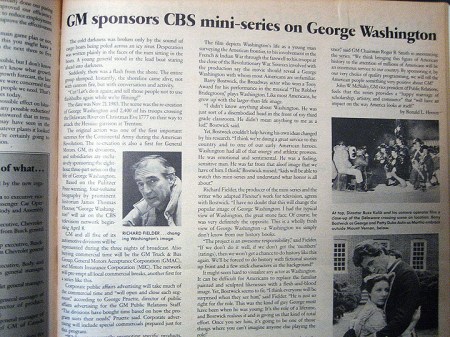 An Article Written for the December 1983 Issue of “GM Today” © R.L. Herron







 Painting With Light