
Archive for the ‘Award-Winning Fiction’ Category

Why Do You Pick Up a Book in the First Place?

May 30, 2017


If you’re like most people, you pick up a book because the cover or title looks interesting. The next thing you do is read the back blurb, or if you’re online, the excerpt.

What is it? Or, better yet, what should it be?

Basically, the back blurb is a sales pitch. There are a lot of tools in the publishing tool belt, and each has its own unique purpose and strength. Few, though, have more sway over a would-be reader than the book description.

It should be the summation of your story, enticing the reader to buy.

How do you write good back blurb?
The principles hold true for any genre, although the details may change a bit for each. This is a list of things featured most often from a number of bestsellers …

A hint of the plot.

Use of words that evoke images and resonate with readers.

Main characters are named and characterized.

Idea of setting.

A question to be answered, or a hint of mystery to be solved that draws the reader in.

Quotes about the book or previous books by the author.

TAKE THE READER ON A JOURNEY
Most good book descriptions have less to do with the story of the book, and more to do with the story of the reader. Tell the reader about the journey they’re going to take, rather than try to create a shorthand or synopsis of your book.

**********

Take the back cover blurb for my newest novel, DEAD END STREET, coming out on Amazon this week:
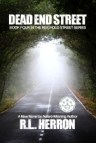
THE TIME TO BE MOST AFRAID
IS WHEN THINGS START GOING WELL.

Paul Barrett is a successful author. So are Randy and Donnie Camron. Along with the rest of the gang from Reichold Street, they all think their lives have finally settled down. In this provocative thriller, however, they learn there are new disasters waiting, determined to find them, wherever they go.

REICHOLD STREET, the lead novel in the series, was selected a 2012 Readers’ Favorite Gold Medal Winner.
“Skillfully written and emotionally charged.”
~ Kirkus Reviews for “Reichold Street”

ONE WAY STREET and STREET LIGHT, the second and third books in the series, were also reviewed as intense, 5-Star thrillers…

“A mesmerizing thriller that can haunt you long after you put the book down…”
~ Maria Beltran, of Readers’ Favorite, for “One Way Street”

“R.L. Herron is a master craftsman…grabbing the reader and transporting them into the story…”
~ Brian MacLearn, award-winning author, for “Street Light”

In DEAD END STREET, the characters already know very well that life is not perfect, but discover the past is not always as far behind them as they think.

**********

DON’T IGNORE IT
You may call it a ‘blurb’ or ‘back cover copy’ or lament it simply as ‘all that text I have to paste into my book page.’

Whatever your name for it, you can’t afford to ignore it. After your cover, the product description of your book is the first experience the reader has with you as an author.

The book blurb is one of your most important communication aids when promoting your book, so invest plenty of time and dedication to ensure you get it right.

Getting it right is the proverbial ‘big deal.’

Do you think I succeeded?

**********

My books have all garnered some terrific reviews and you can see the ones I have available by using the Amazon link below. Look for them. Better yet, buy one and read it. You just might like it.

buy now amazon

You’re invited to visit my web site, BROKEN GLASS, or
like my Book of Face page. You can find me on Goodreads, or follow some of my shorter ramblings on The Twitter.

**********

Visit my web site to hear the remarkable radio interview about my novel “Blood Lake” by The Authors Show.

**********

I plan to attend the next Rochester Writers’ Fall Conference at Oakland University on Saturday, October 21, 2017.

**********

Comments posted below will be read, greatly appreciated and perhaps even answered.

When Are You Too Old to Write?

February 6, 2017

overgrown-truckPhoto Courtesy of Pixabay

Ask anyone if they’d like to go back to their youth and there are some who would jump at the chance. However, I think most would emphatically decline … and a few might actually shudder.

Why?

Despite our glorification of it, youth is often a time full of worries: school; career; relationships, money, kids. A period with no idea of who we are, or what we really want in life. Most of the time we’re out there on our own, winging it, doing our best to cope.

I’ve been thinking about it lately because, Heaven willing, I’ll soon reach an age I used to think of as old.

I’ve lived through the Korean War, the development of the hydrogen bomb, the USSR launch of Sputnik, the assassinations of President John Kennedy, Robert Kennedy and Martin Luther King.

I was as excited as every other American when we landed men on the moon. I worried about the draft during the Vietnam War (drew anti-war cartoons for several publications) and watched the news coverage of the Berlin wall coming down.

I saw the beginning of the Internet, and participated in developing web sites for it. I witnessed the horror of 9/11; worried about our troops during our country’s invasion of Afghanistan and wondered at the nonsensical Iraq War (remember the missing “weapons of mass destruction” no one ever found?).

I suffered, along with my friends, in the Recession that began in 2007 and lately have worried about the chaotic coming of Donald Trump.

When I stop and think about it like that, it seems like I’ve witnessed an awful lot already. I had a mini career in advertising, and a major one in public relations and marketing.

Still, I sometimes feel like a kid.

For me, age is not a disability. Every day is another chance to do the things I want to do. Time, after all, comes in one large bundle that includes the good, the bad and the disappointing.

We have to accept the whole bundle, even the tragedies, sad as they are. We don’t so much choose life. It chooses us, and age can be an enormous help to an author.

I can hear you asking again … why?

For one thing, it makes us freer, calmer, better friends with ourselves. My personal likes and dislikes are crisper.

I can recall my first experience with the green of spring, special holidays with family, my unique friends and (unfortunately) all my mistakes. I understand more deeply the people I love.

How can you fail to find something to write about in that?

I’ve written stories my whole life, but I didn’t begin to do it full-time until I retired from the 9-to-5 business routine. I thought at the time I might already be too old. However, I’ve discovered the creative richness and energy of the mind doesn’t care how old you are.

I write every day because I understand really well, perhaps for the first time, the cliché that each moment that passes is gone forever … never, ever, to return … but, as authors, we can be as young or as old as the characters we make up.

I’m working every day on my next novel (Dead End Street). Although I’ve published six books in the last four years, I have a lot of stories rattling around in my head.

So, what exactly does that mean?

I still have writing to do.

**********

My books have all garnered some terrific reviews and you can see the ones I have available by using the Amazon link below. Look for them. Better yet, buy one and read it. You just might like it.

buy now amazon

You’re invited to visit my web site, BROKEN GLASS, or
like my Book of Face page. You can find me on Goodreads, or follow
some of my shorter ramblings on The Twitter.
 

**********

Visit my web site’s home page to hear the remarkable interview about my novel “Blood Lake” by The Authors Show.

**********

If you’ve written an interesting book too, consider submitting it to the Readers Favorite annual contest by using the banner link below.
What do you have to lose?

**********

Comments posted below will be read, greatly appreciated and perhaps even answered.

Do You Make Your Characters Believable?

January 17, 2017

old woman in underpass
Characterization is something I’ve talked about before. I think strong characters are absolutely essential to good stories. If you want readers to believe in your stories, it’s important for each Gentle Reader to believe in your characters.

Why?

Think of it this way: the characters in your stories don’t exist at all until you describe them. You start to breathe life into them once you’ve written those first words of description. How well you do that determines whether they are seen as stick figures or real people.

I’ve been told the characters in my stories are well described and believable. I’m proud of that.

Take this excerpt from my Gold Medal winning novel, Reichold Street.

      I was already sitting on the curb under a big oak tree, trying to find relief in occasional humid puffs of air. A battered gray panel truck pulled up across the street, and signaled its stop with a tortuous squeal. An angular middle-aged man slowly unwound from the driver’s seat. Garish sunlight lit the edges of his hair. It made halos of his tight, graying curls and gleamed brightly from the center of his balding crown.

      Standing there in the street, he put his hands firmly on his hips and stared past the collection of mismatched dents and rust on his beat-up Chevy. He didn’t acknowledge my presence. He merely perched his sunglasses on top of his head and methodically chewed a toothpick as he stared at the sole object of his attention: the old white clapboard house across the street.

      I smiled and thought: “Hello, Toothpick Man.”

Appeal to All of Your Reader’s Senses
When you describe your characters, factual information alone is not sufficient, no matter how accurate it might be. The details you provide must appeal to our senses.

Phrases that merely label (like middle-aged) bring no clear image to our minds, since most people form their first impression of someone through visual clues. That’s why I wrote the line:

An angular middle-aged man slowly unwound from the driver’s seat.

While angular is a good beginning description, it doesn’t go far enough. By adding … slowly unwound from the driver’s seat … the reader begins to make associations as you enable their mind’s eye to actually visualize the character doing something.

The character already seems like he might be tall, thin (angular, not heavy) and moves deliberately.

The image your reader has might not be exactly the same one you have as the author, but it doesn’t have to be. That’s the beauty of writing. Each reader brings his own interpretation to each character.

A good author strengthens his physical descriptions by making details specific, selecting those that create the most revealing impression.

Garish sunlight lit the edges of his hair. It made halos of his tight, graying curls and gleamed brightly from the center of his balding crown. That kind of description paints a much stronger picture than the bland phrase … balding guy with gray hair.

As you describe your characters, if you want them to become real to each Gentle Reader, zero in on distinguishing characteristics that reveal personality.

A character’s immediate surroundings can also provide the backdrop for sensory and other significant details that shape the description of the character himself. One well-chosen physical trait or idiosyncratic mannerism can reveal character more effectively than a dozen random images.

Standing there in the street, he put his hands firmly on his hips and stared past the collection of mismatched dents and rust on his beat-up Chevy. He didn’t acknowledge my presence. He merely perched his sunglasses on top of his head …

Characters can also reveal their inner lives … their preoccupations, values, lifestyles, likes and dislikes, fears and aspirations … by the objects they choose or carry.

… and methodically chewed a toothpick as he stared at the sole object of his attention: the old white clapboard house across the street.

It’s also true that description doesn’t have to be direct to be effective.

I smiled and thought: “Hello, Toothpick Man.”

Techniques such as this abound for describing a character indirectly through the reflections of other characters.

Actions Are Also Important Elements
In some cases, actions, along with pertinent environmental clues, are even more important to character development than the words your characters might speak.

Writers of effective dialogue often include pauses, voice inflections and repetitions to suggest the psychological and emotional subtext of a scene. They can also include gestures.

For instance, in paragraphs not far after those you just read:

    … an ancient brown Hudson, the ‘51 or ’52 sedan model that looked like a giant metal cockroach, pulled up behind Toothpick Man.

      It rattled and spat dark, oily-smelling smoke all over the street, then wheezed, almost in relief, when the ignition was turned off and it could finally shudder to a stop.

      Toothpick Man walked over to it. He strutted, really, with a broad grin on his face. Leaning into the open driver’s window, he held the woman driver by the back of her bleached-blonde head and softly kissed her. After the kiss, he opened the driver’s door like a gentleman but, as the driver was attempting to get out of the car, he reached down and fondled her ample behind.

      She jumped at his touch, her brow an angry furrow.

Not a word is spoken … but including details such as these will deepen your character description.

**********

My books have all garnered some terrific reviews and you can see the ones I have available by using the Amazon link below. Look for them. Better yet, buy one and read it. You just might like it.

buy now amazon

You’re invited to visit my web site, BROKEN GLASS, or
like my Book of Face page. You can find me on Goodreads, or follow
some of my shorter ramblings on The Twitter.

**********

Comments posted below will be read, greatly appreciated and perhaps even answered.