About this time every year I start getting nostalgic.
Usually, it’s just a reaction to exhaustion after trying to get all the holiday things done around the house.
It’s tough getting ready for company, while keeping my lovely bride from throwing things in my direction when I’m late doing my share of the housecleaning.
Sometimes it’s just a nod to my own mortality, the specter of which raises its head more frequently the older I get.
Often, being the morbid sentimentalist I am, my nostalgia segues into thinking about folks I’ve lost … or people the world stage is simply less vibrant without.
One of the latter this year is Maya Angelou, an author and poet who was considered one of the most important writers of her generation. She died in May 2014.
I was a great admirer of her writing, having read her first powerful novel, I Know Why the Caged Bird Sings while I was still in college.
I also sat in rapt attention while she read her poem On the Pulse of Morning, at Bill Clinton’s first inauguration in January 1993.
I didn’t write about her before, which isn’t that surprising. While I’ve mentioned authors here before, there are a lot of folks I appreciated whom I’ve never mentioned.
You might remember an author I did write about … one of my favorites, Ray Bradbury, who passed away in 2012. I actually wrote several blogs about him.
I’ve lamented with friends about others I didn’t blog about, and who weren’t necessarily famous, including my friend John Kolmetz, who died last November at the age of 85.
Yet, John was an interesting man.
He began running marathons when he was 43. I doubt he could have explained it. It was just something he wanted to do. I met him several years after that so, for me, he was always running.
He ran in every Detroit Free Press Marathon (and quite a few others, including Boston) for 37 years. He finished his last marathon in 2009 at the age of 80. The man had heart.
I regret I didn’t keep in touch as well as I should have. He was definitely worth it. I’ve seldom met such a gentle soul, with the possible exception of my dear father-in-law, who turns 98 in January … or my own late father.
I don’t know why I get this way every year.
I suppose such nostalgia is a normal thing. As humans, we spend time thinking about the things we’ve done … or neglected to do. We reminisce and we lament our own shortcomings.
We’re all guilty of wishing things could be back again to simpler times, or that things we’ve done wrong could be done over.
Sometimes we just wish we could talk again to a favorite person.
Each of you Gentle Readers … each and every one of you … have had such moments yourselves. If you’re also a writer, that’s a good thing … those moments are something you can use.
I can tell you about fabulous authors or interesting people and give you pointers about showing, not telling, when you write. I can do that and more all day long, but I can’t put heart into your stories.
It’s easy to look up references to put facts into the things you talk about, but emotion comes from within.
If you fancy yourself to be a writer, my advice to you … use your memories. Embrace them. Talk about them often. Write about them. Your memories are a significant part of who you are, and what you have to say.
To write what you know, write what you feel.
It works.
Happy Holidays!
**********
My books have garnered some terrific reviews. You can see the ones I have available by using the Amazon link below.
You’re also invited to visit my web site, BROKEN GLASS, or like my Book of Face page. You can also follow my shorter ramblings on The Twitter.
**********
Comments posted below will be read, greatly appreciated and perhaps even answered.
************ “The thing under my bed waiting to grab my ankle isn’t real. I know that, and I also know that if I’m careful to keep my foot under the covers, it will never be able to grab my ankle.”
~ Stephen King, Night Shift
************
In the Beginning
This past weekend I was reminded of things that happened to me a long, long time ago. When I was a kid (back when dinosaurs still freely roamed the planet), my family would visit my grandparents in Tennessee every summer.
They lived a hard and simple life on a small farm in the middle of the state, about 20 miles from the nearest town. The road in front of their farmhouse was unpaved and I vividly remember cars passing by – usually far too fast – kicking up clouds of red dust that took a long time to settle.
The house itself was built of corrugated tin over a spindly wood frame, with an unpainted porch across the front of the whole place that we kids were admonished not to play on, because it had fallen into disrepair on one side.
They had electrical service, but it was only for the few bare light bulbs that hung down from the center of the low ceilings of the three rooms inside. There was no television, and it was long before the advent of video games.
I seem to recall an old AM radio about the size of a small suitcase that shared one wall of the side room where two old featherbeds awaited visitors, but I don’t actually remember it ever working. I’m not sure there was even a plug for it.
As I discovered, the few times I was there in the winter, the house was somewhat heated by a small pile of coal burning in the front room fireplace … but it was the old wood stove my grandmother cooked upon in the kitchen all day that was the main heat source. There was no central furnace.
There was no running water or a bathroom, either. We did our business in the outhouse that sat at the end of a mowed path through tall weeds way out back (which was a scary trip at night), and my grandmother drew her water from a well that had been dug just outside the back door.
A Place of Magic
However, although the house looked like something I would later see in stories of the Appalachian poor, when I was small I thought it was a magical place.
All of my relatives would converge there when we arrived, and on Sunday after church my grandmother and aunts would cook up a proverbial storm, so there was always lots of fried chicken, mashed potatoes and pies … especially pies … for a young appetite.
In spite of the condition of their homestead, I clearly remember sitting with my cousins on the good side of the porch, after filling our bellies with comfort food, listening to the myriad sounds of the warm summer nights.
In enthralled wonder, we would eagerly await the beginning of the real delight of the evening … the moment when my grandfather, father and uncles would begin to swap stories.
Most of the men smoked. It was long before the Surgeon General admonished the country how dangerous it could be and some of the men rolled their own cigarettes while they sat there on the porch (my grandfather grew and dried his own tobacco).
I thought there was something fascinating and mysterious in watching my grandfather be the first to measure out that dried weed into a thin white rectangle of paper and roll it into a vague cylindrical shape … all with one hand. With that patriarchal ceremony complete, many of the other men followed suit.
Then, almost in unison, they either leaned backward with their chairs against the porch; or sat backwards in their chair, resting an arm heavily on the high back as they leaned forward to begin weaving their tales.
Oh, the Stories
The stories they told were usually about some strange event during a previous year’s planting season … plowing up a nest of hornets, or halting the plowing altogether to chase down a fox.
The younger uncles would brag about how fast their cars were, and they would all quickly segue into tales of hunting and fishing, and “the big one that got away” got bigger with every telling.
Then, sometime well after dark, when all you could see was the soft outline of faces lit by the glowing end of a cigarette, one of my uncles would remember a ghost story and try to frighten all the kids with it.
When he finished, each of the others would try, one-by-one, to top the previous yarn. The stories got more outlandish and more eerie as the night progressed.
On cloudless nights, while the bats would chase mosquitoes, the Milky Way seemed to dance and weave its way across the heavens in step with the stories, in a way I never saw so clearly in the city. It was almost surreal wandering up there in that inky sky.
The kids would gradually huddle together and, more than once, I saw a few of my uncles bunch a little tighter together, too.
The final ghost story of the night would usually scare me half to death, but thrill me at the same time. I can remember how my skin crawled as every strange nighttime noise in that unbroken country darkness seemed amplified into something sinister.
The older I get, the more I realize the debt I undoubtedly owe to my family. I think my love of good storytelling had its genesis there on that porch.
====================
If you can’t make it to the Author’s Fair next Saturday, you can find my books as eBooks or paperback on Amazon, or at Barnes & Noble. You’re also invited to visit my web site, BROKEN GLASS, or like my Book of Face page. You can also follow my shorter ramblings on The Twitter. ====================
Comments posted below will be read, greatly appreciated and perhaps even answered.
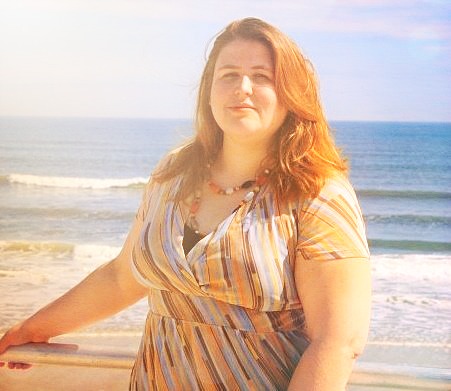
Today I’m not posting about my own books, or talking about any of the ins-and-outs of indie publishing. I’m returning a favor by interviewing another Michigan author who was kind enough to tell her own blog followers about my writing adventures.
Today’s author, Laura Lee, not only plans to publish her next book as an indie, but already has quite a few traditionally published books to her credit.
Laura Lee, Traditional and Indie Author
Welcome to “Painting With Light,” Laura.
Thank you, Ron.
Laura, I’m embarrassed to admit I haven’t read any of your work. Can you tell us a little about yourself?
I’m mostly known for non-fiction in the humorous reference category. My best seller was “The Pocket Encyclopedia of Aggravation.” Last year I did a book with Reader’s Digest called “Don’t Screw It Up.”
Lately, I’m more focused on fiction and other projects. My first novel “Angel” was published in 2011 and was released in audio format for the first time a couple of weeks ago. (I’ve found it is hard to find reviewers for audiobooks.)
I’ve decided to try the indie route for my next novel, “Identity Theft.” This is a new experience for me. I raised the initial funds on Pubslush, the literary crowd-funding site.
My campaign was both more successful and exciting than I had expected and also a little bit disappointing because I think I might have had more success reaching people outside my normal circle of friends on another, more popular, crowd-funding site. Live and learn.
Where do your ideas come from?
My non-fiction books have been a combination of ideas I generated and some generated by publishers. I like having books assigned to me and just writing them because I enjoy the process of writing much more than I like the process of marketing and selling the concept of a book.
I can’t say that I have a source of ideas for fiction. My novel “Angel” was initially sparked by a trip to Washington. I took a bus tour of Mt. Rainier and the entertaining tour guide kept talking about burning out on his old job. At some point someone asked him what his old job had been and he said “a minister.”
I kept coming back to the question of what would attract someone to both the mountain and the ministry and what kind of conflict might put him out of step with his congregation. When the idea that the character might become attracted to another man hit me the rest of the story followed naturally.
Early on, I wrote terrible fiction that was highly autobiographical. I’ve found I get much better results when I put some distance between myself and my story. I need some overarching concept to guide the story.
With “Angel” it was the metaphor of the mountain. With “Identity Theft” it’s the notion of personal identity.
I think it is a common misconception that a big problem for writers is coming up with ideas. For me, the more pressing problem is finding the time and energy to develop the ideas I have into finished products.
Do you work to an outline or plot, or do you prefer to just see where an idea takes you?
I’ve never been able to write from an outline. When I was in school, when you had to turn in an outline first, I always had to write the whole paper then go back and create an outline from what I had written.
For me the natural progression of writing comes from the writing itself. Of course, with non-fiction book proposals you have to create an outline. Then you write the book and it is always different from the proposal.
In terms of fiction, I generally do not start with a plot and write from beginning to end. I have ideas, I write scenes, bits of dialogue. At some point I have enough critical mass that I see how they fit together and I finish the whole book. I write in layers and the novels I have written have all taken shape over a period of years.
When do you do most of your writing?
Writing for me is a multi-stage process. So there is a period when you are writing down concepts and ideas. Then you realize that you have hit a roadblock and you go and do something else.
I will often pose the question to myself: What is missing here? Then I will go and take a shower or watch TV or read a book. At some point my subconscious will come back with the answer to the question and then I will go and write it down as quickly as I can before it escapes.
So I am constantly writing little things in notebooks and on scrap paper. A lot of times I will write down the rough notes and then polish it in the morning. I am a full time writer, so I write fairly constantly. I don’t find that a “morning pages” or “time for writing now” approach works for me.
Who (or what) inspires your writing?
My novels tend to be made up of various attempts at writing other novels. I will write something and put it aside and later get a new idea and suddenly something from the past will seem to fit in with it.
A number of years ago I worked in the office of the folk singer Arlo Guthrie, sitting under a gold record with a spider caught under the glass, and I was handed a stack of fan letters to answer. I tend to file away details like a framed gold record with a spider caught under the glass.
I thought that the idea of someone who was tasked with answering fan correspondence online, who decided to take on the rock star’s identity was an interesting concept for fiction.
The idea languished for a while, but I recently saw Adam Ant in concert. He was the iconic rock star for me … my junior high school idol … and the experience of seeing him years later got me thinking about the story again. This time I had the momentum to finish it. “Identity Theft” deals with a lot of the things I have been thinking about and reading about in the past few years.
Do you have any funny or peculiar writing habits?
Ideas seem to come to me like magic in the shower. I don’t know why that is.
What’s your favorite quote?
I like this quote by Philip Schultz, the Pulitzer Prize-winning poet:
“To pay for my father’s funeral I borrowed money from people he already owed money to. One called him a nobody. No, I said, he was a failure. You can’t remember a nobody’s name, that’s why they’re called nobodies. Failures are unforgettable.”
What would you change about yourself, if you could?
I would have been born with a small fortune.
What do you find the hardest thing about writing?
I enjoy writing. What I find hardest is maintaining a career as a writer.
What are your plans for future projects?
My novel “Angel” just came out in audio and “Identity Theft” is coming soon. Beyond that, it will depend on what I am able to sell. I have a proposal for a biography that I am quite invested in circulating. I’ve written a stage play, a comedy, which has gotten some good feedback, but it has a relatively large cast which is a challenge in terms of getting it staged.
I have another novel, which is complete and has come close to being sold a couple of times, which I may put out after “Identity Theft.” I’ve also been having some conversations about more non-fiction. So, whatever someone will pay me to do next will be the next thing.
My readers know there is a lot of realistic Vietnam War reference in my novels “Reichold Street” and “One Way Street.” I think today is the perfect day to express my gratitude to all my friends who served or perished over there.
In fact, I’d like to thank all our military personnel, everywhere, including my father-in-law and my late father, for their service and sacrifice. We’re extremely proud of you.
As always, you can find my books as eBooks or paperback on Amazon, or at Barnes & Noble. You’re also invited to visit my web site, BROKEN GLASS, or like my Book of Face page. You can also follow my shorter ramblings on The Twitter.
====================
Comments posted below will be read, greatly appreciated and perhaps even answered.








 Painting With Light