Posts Tagged ‘award-winning writing’

Author Interview

April 1, 2018

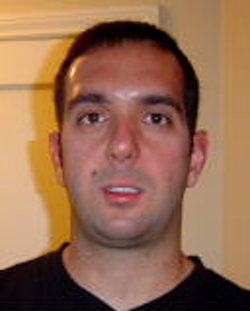
Michigan Author, Ryan Ennis

Today I’m not posting about my own books or the ins-and-outs of indie publishing. At the recommendation of a friend, I’m interviewing another Michigan author, Ryan Ennis.

Welcome to “Painting With Light,” Ryan.
Thank you. Glad to be here!

Can you tell us a little about yourself?
I’m a teacher, librarian, and writer who lives in Livonia, Michigan. I grew up in Canton Township. After graduating from Eastern Michigan, I went on to get two master’s degrees from Wayne State in Detroit.

My first two books were actually children’s book—THE THURSDAY SURPRISE and THE SEPTEMBER SURPRISE. Both are stories about kids and autism.

What led you to write children’s books about autism?
I’m a special education teacher who works with kids with autism. The idea for my first book came from the children. As a progressive educator, I saw the benefits of typical kids having interactions with the kids enrolled in the special education classrooms.

I’m impressed…but I understand it’s not all you like to write.
Besides writing children’s books, I love to write short stories. I’m the author of a recent short story collection called THE UNEXPECTED.

What would you like to tell us about your new book?
THE UNEXPECTED is a collection of nineteen tales with themes that have preoccupied me since I began writing stories in my teens: the nature of love; the consequences of acting on impulses; and the need or longing inside of us to be fulfilled.

Perhaps of interest to metro Detroit readers are the local suburban settings featured in my stories: Ferndale, Livonia, Royal Oak, Garden City, Hazel Park, etc. To appeal to a wide audience the collection strives for a balance with male and female main characters in overlapping settings and plots.

I enjoy exploring the psychology of my characters. Consequently, I spend time (in the form of detailed prose) getting into my characters’ heads, providing clear motivations for their actions, so that they are relatable and empathetic.

Yet, I also like to reserve a certain amount of mystery about them, so the final part of their tales brings about a denouement or resolution the reader never expected. Writing stories that leave a reader with a last impression has always been my goal.

That’s a wide range of subjects. It makes me wonder…what were you like at school?
Depending on the subject, I could be two different people. In certain math and science classes (neither of them my forte), I was the quiet one sitting off to the side or in the back.

But I was quite the opposite in English, foreign language, and social studies. In those classes, I’d sit front-and-center, always prepared with homework, and frequently volunteered to answer questions. I enjoyed having good relationships with my instructors.

I still have the awards I received from my ninth-grade English and German teachers in a file box. I also have a professor’s note, written on the back of an essay, encouraging me to apply for the Honor’s Program and become her research assistant.

Every so often, I’ll pull out old notes and messages and reread them. I’m sentimental that way. Thanks to Facebook, e-mails, and blogs, I’ve been able to stay in touch with some of my wonderful instructors from back in the day.

Readers often ask…where do your ideas come from?
My fiction comes mainly from two places: my heart and my eyes. When I say my heart, I mean my emotions and personal experiences that I feel need to be conveyed to the world with a voice other than my own—through my fictional characters.

As a writer, I’m also a keen observer of people—society. By analyzing and writing about the challenges and problems I see others facing, I find I’m a deeper thinker, a more compassionate and caring person, and hope my work inspires my readers to become the same.

What’s the hardest thing for you about writing?
The time factor is a major issue. When you’re a home and dog owner, teacher, and have a part-time job on the side, it can be difficult to find writing opportunities.

OK – so what’s the easiest thing?
I’ve always had a vivid imagination. When I walk my dog at night, I reflect a great deal on situations in my own life or in others, and envision a story unfolding from them. If only I had a transcriber who could read my thoughts and turn them into polished sentences and paragraphs…then the writing part would be a breeze.

Who (or what) inspires your writing?
Since all good stories must have conflicts, my writing stems from either personal challenges or the challenges of others I read about or experience in everyday life.

I also enjoy looking at portraits or scenes in a painting and creating a story about the people depicted in them, based on what I observe in their facial expressions. In my opinion, there’s nothing more exciting than dwelling in a world inspired by great art!

Do you work to an outline or prefer to just see where an idea takes you?
As a writer of mostly shorter works, I don’t find it necessary to write from an outline. Before I begin typing my story, I’ve already spent a considerable amount of time pondering how it all will play out.

When do you do most of your writing?
With my busy schedule, I try to set aside time in the evenings and on weekends to write, even if it means just enough to write a few paragraphs before bed. I try to keep myself in what I call “writing shape”—able to write productively.

Do you have any funny or peculiar writing habits?
I once read that Jackie Collins carried a notebook around with her everywhere and would write whenever she had moments free, even if it meant when she was stopped in her car waiting for the traffic light to change. I never attempted that one.

In my early twenties, I read several Victorian novels whose author introductions described how they would take their desks out onto their lawns in the summer, and produce flowery prose from sun-up until sundown. I tried it a few times, but I couldn’t concentrate outdoors—not sure why.

Oddly, I do my best writing sitting on my sofa with my laptop resting on a small stand in front of me. I usually have the TV or my stereo turned on low, though I don’t pay much attention to either. It seems I need some soft noise in the background to help me concentrate.

How have you evolved creatively since you started writing?
Over the years, my writing has naturally gotten better, the plot lines and character development of my stories more engaging. I enjoy getting into the mindset of my characters, the narrative of my stories driven by their thoughts, providing motivation for their actions.

I’ve never cared for stories in which the characters seemed vague or underdeveloped. I want my readers to be engrossed in the actions and the thoughts of my characters. I still have the first short story I ever wrote. I keep it around as a reminder of the importance of determination. My writing skills have come a long way since then.

For your own reading, do you prefer eBooks or traditional printed books?
I generally prefer reading printed books. Holding a book in my hand and turning the pages are experiences I still treasure. When it comes to newspaper and magazine articles, I’d rather read those online.

Who are your favorite authors?
My all-time favorite is Joyce Carol Oates. Her short stories are masterpieces. Even when one is only a few pages long, I feel as though I’ve inhabited a vast landscape after reading it. She manages to engage readers with her descriptions and her character’s emotional states. I also enjoy short stories by Truman Capote and Raymond Carver. Like them, I try to compose works that delve into the psychology of my characters.

Most writers I’ve met have a favorite quote. What’s yours?
My quote speaks to connection between reading and writing: “If you don’t have time to read, you don’t have the time (or the tools) to write. Simple as that.” ― Stephen King (editor’s note: Good choice!)

Reading everyday has so many benefits—improving your memory, increasing your vocabulary, and relieving stress. It can even help you to become a better writer. Most writers started out as voracious readers. I can say that my appetite for stories and books is what made me want to be a writer.

If there was something you could change about yourself, what would it be?
Watching how environmental problems have impacted our world, especially how they’ve destroyed crucial habitat for animals, I would like to get more involved in active conservation efforts. Endangered species are disappearing from our world at an alarming rate and may be gone completely in the not-too-distant future.

I would like to do something to stop that. After I retire from teaching, being an animal conservationist might be my next chapter—along with writing about this new adventure.

Reviews for “The Unexpected” have been very positive. How do you think you’d react to a negative review?
Always seeking to improve, I welcome constructive feedback.

What are your plans for future projects?
I’m currently in the initial phase of drafting a novel set in the ’80s. There’s many things about the ’80s—the music, the TV shows, the presence of bookstores everywhere—that I love.

Fascinating. Good luck with your writing, Ryan, and thank you for your time.

**********
You can find out more about Ryan at these links:

Twitter
Goodreads
LinkedIn
Pinterest

RYAN’S BOOK LINKS:
Amazon US
Amazon UK
Barnes & Noble
Smashwords

**********

Gentle Readers, my own books have garnered some terrific reviews, and you can see them by using the Amazon link below. Check them out. Better yet, buy one and read it. You just might like it.

buy now;

**********

You’re invited to visit my author’s website, BROKEN GLASS to hear the remarkable radio interview about my novel “Blood Lake” on The Authors Show. You can also like my Book of Face page, find me on Goodreads, or follow some of my shorter ramblings on The Twitter.

**********

On March 1, 2018, Rochester Media started publishing my articles about writing. The column will update twice a month. Come on over, take a look, leave a comment and let me know what you think.

**********

On Sunday, April 29, 2018, from 11:00am to 5:00pm, I will participate with a host of other local area writers in the Books & Authors book-signing event at the eclectic Leon & Lulu store on Fourteen Mile Road in Clawson, Michigan. Drop in and buy a book…there will be lots to choose from.

**********

Comments posted below will be read, greatly appreciated and perhaps even answered.

Why Call Yourself a Writer?

March 11, 2018


Photo Courtesy of Shutterstock.

There are two types of writers. Those who write because they have something to say, and those who write merely for the sake of saying they’re a writer.

It doesn’t seem to matter if they’re young or old, but a lot of people are solidly in the second camp. Most of the advice they get about writing only compounds this direction.

“Write all the time. Write for your college newspaper. Get an MFA. Go to writer’s group meetings. Attend writing conferences. Send query letters to agents. Build your social media platform.”

Don’t get me wrong, it’s all good, sound advice. I’ve mentioned much of it here. But do you notice what most advice-givers never say?

“Go do interesting things.”

If you really want to be a writer, that’s probably the most important thing anyone can tell you. Think about it. Take any good piece of writing, something that matters to you.

Why is it good?

No one ever reads something for the very first time and says, “I got absolutely nothing out of this, and have no idea what any of it means but, wow, technically it sure is beautiful!”

But they will say “Damn, that was really good” all the time to things with questionable grammar and simple diction.

Why?

Because of what it says. More to the point, because of what the writer’s words manage to communicate. It’s because the story, technically perfect or not, is so good it speaks to you.

Stories to Tell
I’ve written fiction, off-and-on, my whole life. I earned a degree and an MBA. I spent decades working in advertising and public relations, but not much of it was focused on writing. If there is anything that’s good in my writing it came from things I did outside of school, outside of work, outside of the “craft.”

My technique developed from my life experiences, varied interactions with people and reading dozens of books a month. It was living through an explosive civil rights movement, and a city riot in Detroit. It was observing a war-torn America during the contentious Vietnam conflict, where several of my friends didn’t come home.

These experiences, among a lifetime of others, gave me a unique perspective and voice. I have been able to write about both the bright and dark side of life, because I was in a position to see some of it firsthand. It gave me something to say.

To quote Schopenhauer, the nineteenth century philosopher who contended that, at its core, the universe is not a rational place: “The first rule, indeed by itself virtually a sufficient condition for good style, is to have something to say.”

What Does That Mean?
If you want to be a writer, my advice of the moment is to put the fact you’re “writing” on hold for a while … and look around you.

It doesn’t have to take a long time. When you find something you can’t wait to share with the world, and I’m sure you will, you’ll have your chance to dazzle us.

I’m not advocating bailing out of your writing groups or composition classes. Practice and conversation among peers will always be worthwhile. I still try to attend a local Freelance Marketplace Writers’ Group meeting every month. I’ve been doing it for years.

Like always, a lot of what I’ve said here is opinion and you can take it or leave it. My voice (to paraphrase a corny cliche) is just another in the wind. After all, there are many ways to become a writer.

But another part of writing today, that is an absolute truth, is an undeniable change in the economics of the business.

It used to be just getting “published” was the hard part. You had to impress some gatekeeper and that gatekeeper was an agent, or an editor at magazine, a newspaper or a book publisher. Today, with the explosion of indie publishing, there are seemingly infinite outlets for your writing (at least it sometimes feels that way).

But remember this, if you remember nothing else. With almost all of them, no matter how you ultimately do publish, traditional or indie, you’ll have to bring your own audience with you.

Getting published today is easy. Getting anyone to care …

That’s the hard part.

So, What Do You Do?
What matters more than any other single thing is that what you’re saying is interesting; that it provokes some response from people. You’ll only accomplish this if what you’re writing, particularly in fiction, is a compulsion rather than a vehicle to display how smart and well-trained you are.

So, think about it one more time. Are you writing because you want to be called an author? Or do you have things inside you feel compelled to communicate?

Do you have a story to tell?

Getting the answer to that single question right is the day you really become a writer.

**********

My books have all garnered some terrific reviews, and you can see the ones I have available by using the Amazon link below. Look for them. Better yet, buy one and read it. You just might like it.

buy now;

**********

You’re invited to visit my website, BROKEN GLASS to hear the remarkable radio interview about my novel “Blood Lake” on The Authors Show, or like my Book of Face page.

You can also find me on Goodreads, or follow some of my shorter ramblings on The Twitter.

**********

On March 1, 2018, Rochester Media started publishing my articles about writing. They will update twice a month. Come on over, take a look, and let me know what you think.

**********

Comments posted below will be read, greatly appreciated and perhaps even answered.

Is This the Year of the Writer?

January 1, 2018


New Year’s Day is the time most of us reflect on the past year, while thinking about the goals and hopes for the new year ahead.

I had a fabulous 2017.

My books are still getting great reviews and winning awards.

I reconnected with some dear, old friends, had several successful book-signings and attended two writing conferences. I visited my grandkids in south Florida, and vacationed on the island birthplace of Alexander Hamilton (Nevis).

I ended the year with friends watching my beloved Detroit Red Wings pull off a shoot-out win in their new downtown facility … which we followed with a much-coveted locker room tour.

I’m making my usual resolutions: Lose weight, exercise more and eat more sensibly. As I get older, these become more important to getting healthier, which will, hopefully, let me get a LOT older (although, sadly, I often forget them by February).

But what does it mean as a writer?

For me, that part of my resolution is the same as it’s been for many years now … I’m hoping 2018 is the year I finish another novel.

For you, your resolution may be to make this the year you commit to a sustainable writing habit … or, maybe, make this the year you finally get published.

Here are four resolutions you can make to improve your writing to start the New Year. Pick one to start, or dive in with all of them. The result may be the best writing you’ve done yet.

Make Time for Writing
If you seriously want results as an author, you have to put your butt in the chair and write.

Wanna-be writers hear this all the time but, if you’re like most of them, you’ll come back with the fact you have jobs, kids, chores and other outside interests that take away from your writing time.

Most of you will add there are only 24 hours in the day to attend to these many responsibilities … and you also need to sleep.

But I say excuses are easy to make. There’s always time to write.

Think about it this way: If you’re only able to write for one hour a day, accomplishing only 500 words in that hour, you’ll have written about 15,000 words in a month. Even if only half of those words are usable, if you keep it up for a year, you’ll have written 90,000 words.

And that, my friend, is a novel.

Most, if not all of us, have at least one hour of quiet time a day to devote to our writing. And don’t think that writing time means just typing words into a blank Word document. Reading, research and writing exercises are also great ways to spend your time, because they move you toward your writing goals.

Embrace Your Personal Writing Style
I’ve talked about this before, too. You either outline everything first, or you fly by the seat of your pants.

Outliners are often much more organized, but their rigid structures sometimes get in the way of lightning-rod flashes of creativity.

Pantsers are much freer in their writing methodology, preferring to “make it up as they go” rather than adhere to a strict outline they write ahead of time. They often find surprises as they write, and they also tend to feel less inclined to “stick to a plan” … because they don’t necessarily have one.

But I’ll say it again: There’s nothing wrong with being either a Pantser or an Outliner. Both will get the job done if you work at it.

Step Outside Your Comfort Zone
Some of us are fiction writers and aspiring novelists. Some of us are memoirists. Some of us are a combination of all of these, in varying degrees. But all of us have a comfort zone, and if we stay within it too long, we risk stagnation.

So, resolve to step outside of your comfort zone. Experiment with styles and voices you’re not used to. Emulate authors you don’t normally read. Read books you wouldn’t normally pick up off the shelf.

If you’re strictly a fiction writer, branch out into the world of freelance articles, where science and special interest articles provide great fodder for new stories.

If you write nonfiction, study plot, structure, voice and pacing, all of which will help you write tightly wound, concise pieces with distinct tones.

My point is, we all get stuck in a rut from time-to-time. Actively finding ways to get unstuck is the mark of a great writer.

Call Yourself a Writer
This may be the most important resolution you make for 2018. It is for me every year.

You may think you can just dabble in this stuff and it might work out in the end. But being a writer isn’t a short journey. It’s a lifetime of work that takes a tremendous amount of effort to reap rewards.

Acknowledging your writerly status is one thing; living it is another.

2018 can be what you’re waiting for … your year for writing. Start calling yourself a writer.

Then make the most of it.

**********

My books have all garnered some terrific reviews, and you can see the ones I have available by using the Amazon link below. Look for them. Better yet, buy one and read it. You just might like it.

buy now;

**********

You’re invited to visit my website, BROKEN GLASS, or
like my Book of Face page. You can find me on Goodreads, or follow some of my shorter ramblings on The Twitter.

**********

Visit my web site to hear the remarkable radio interview about my novel “Blood Lake” by The Authors Show.

**********

Comments posted below will be read, greatly appreciated and perhaps even answered.