Archive for the ‘Storytelling’ Category

What is the Science of Writing?

June 30, 2015

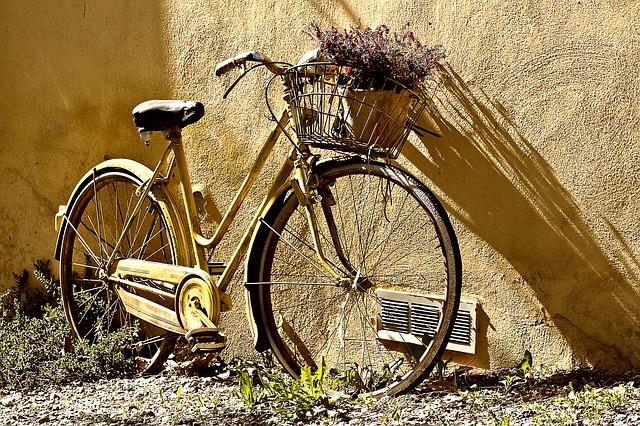
old bike
Flowers in the Basket

I’ve said it before. Good writing is part science and part gift. The gift part is something only a lucky few are born with.

There are only so many Stephen King’s, J.K. Rowling’s, Brad Meltzer’s or James Patterson’s, after all.

The science part is something everyone can do. It’s called reading.

This bears repeating. Good writers have to read. Have to. Because reading the works of other people is studying the craft.

Without that study, a writer will never possess more than a small piece of the puzzle.

So, if you want to be an author (a good one anyway), you have to read everything you can. No way around it.

Some people think it’s easy. After all, everyone writes.

We’ve all been doing it since our earliest school days. Right after learning the symbols of the alphabet and the sounds those curious scribbles stood for, we began to create words.

Most of us at least wrote stories and essays in school.

A few people write or comment on a blog (the Journal of today), and most exchange emails with friends and neighbors, even if they don’t write letters anymore.

At the very least, a lot of us have scribbled 140 characters or less into a thought of some sort on The Twitter.

Real authors, however, create wings for their thoughts. Writers … good ones anyway … create worlds, shape ideas and make us think.

Words are never more alive than this.

I love working with words.

I try to sculpt ordinary words until they shine, putting something out into the universe that never existed in quite that way before. I’m not quite vain enough to think I have a natural ability for the craft.

I know success only comes with practice, so I work hard at it … every single day.

Even while I was vacationing last week with some dear friends, I was reading … and imagining how I could describe the things around me. The clouds. The sea. New people and places.

I was also thinking about that podcast I promised to make, answering your questions about writing. Hang in there. It’s coming.


**********

My books have garnered some terrific reviews. You can see the stories I have available by using the Amazon link below.

buy now amazon

You’re also invited to visit my web site, BROKEN GLASS, or like my Book of Face page. You can also follow my shorter ramblings on The Twitter.

**********

Comments posted below will be read, greatly appreciated and perhaps even answered.

What’s the Main Task of a Storyteller?

March 27, 2015

punta canaTHE RESERVE BEACH IN PUNTA CANA © R.L. Herron

I recently came back from Punta Cana, in the Dominican Republic (I know … tough duty, but someone’s got to do it).

My bride and I met our eldest son and his family there for a week. I enjoyed seeing them all and relished the opportunity it gave me to recharge my batteries. Now, back to business.

In my last post you heard me grouse again about my writer’s block. It’s safe to say most of that has passed. But I’m still struggling to get my latest novel written and edited by the end of May.

Why? Because I want to submit it to this year’s Readers Favorite contest for review.

Why Do I Bother?
I watched the movie “Birdman” here at home on Tuesday with my wife and youngest son.

Michael Keaton plays a former movie star/action-hero (Birdman) named Riggin Thomas, who opted out of the franchise and hasn’t had much movie success since.

The Thomas character has supposedly adapted the Raymond Carver story “What We Talk About When We Talk About Love,” for Broadway; writing and directing the play in the hopes it will revitalize his career.

One of my favorite scenes featured Edward Norton, who plays an actor named Michael Shiner, a not-so-very-likable-character. In this scene he defends Thomas to Tabitha Dickinsen (played by Lindsay Duncan), a smarmy theater critic he sees sitting in a bar.

“He’s taking a chance. He’s willing to lose everything for this. What are you willing to lose?”

I think Tabitha, a character name undoubtedly chosen for its witch-like associations, serves a twin narrative purpose.

The first is to serve as a convenient antagonist. Her character has apparently decided in advance to give the play a lousy review, so she embodies evil incarnate.

The second is to highlight the purpose real critics have served for as long as there has been a creative process: the need for validation. It’s something the Michael Keaton character desperately needs to preserve his own creative sanity.
Click to read more

What Storytelling Techniques Do You Use?

February 16, 2015

word magic

Storytelling is at the core of who we are as human beings. I’m convinced we’ve been doing it since our Neanderthal beginnings. Still, as ingrained as it may be to the human psyche, it takes a concerted effort to do it well.

There’s a difference between just relating a story, and telling an engrossing tale people will remember. It’s something every author, whether traditional or indie, needs to understand.

Sadly, many wannabes overlook some of the basic techniques.

Set the Stage
When you’re writing fiction, it’s important to set the stage. Tell your readers the place and time the story takes place. They need to know enough of the context so they can understand the story.

It was late August, 1962, when I first saw Albert Parker. After all this time I still remember the year quite distinctly. It was my second teenage summer and, like discovering I had a sexual identity, it was a part of life’s first great transition. I had been waiting months for something special to happen, something magical. Something like having Marilyn Monroe show up on my doorstep.

Show, Don’t Tell
One of the most important lessons to learn as a writer is how to show your story, instead of just telling it. Give us a visual example and make us see it and feel it.

All our senses contribute to a story and help make the experience realistic, as well as entertaining. Use that knowledge, and appeal to all of your readers’ senses.

The day started as a humid, hurt-your-lungs-on-a-deep-breath morning. A blistering sun was rising over the railroad switching yard at the far end of the street. Its red-orange glare filtered through exhausted-looking trees, while sinuous heat ribbons shimmered over motionless freight cars, their rusty shapes defined like so many slumbering beasts.

I was already sitting on the curb under a big oak tree, trying to find relief in occasional humid puffs of air. A battered gray panel truck pulled up across the street, and signaled its stop with a tortuous squeal. An angular middle-aged man slowly unwound from the driver’s seat. Garish sunlight lit the edges of his hair. It made halos of his tight, graying curls and gleamed brightly from the center of his balding crown.

Plot and Conflict
I won’t spend much time talking about plot, other than to say it’s important to construct one because it’s true, even if you want to break or bend the rules, that there should be a beginning, middle and an end to your story.

More importantly, what’s the conflict? What leads up to it? How will it be resolved? You need to make sure to keep the tension going and leave the audience wanting more with each chapter. However, readers should feel satisfied when the story ends, so don’t forget some sense of closure.

Point of View
Also consider point of view. Would the whole story, or even just a chapter, have a more emotional appeal if it was told through the eyes of a child? How would multiple points of view affect the telling of the story?

From my earliest memory all our neighbors said they were glad I wasn’t like my big brother. I never knew how to answer them when they said that. Albert was always there for me. What was wrong with that?

Use a dynamic character. This is a character that is changed by the conflict of the story. Readers love to see the reformed sinner find his way to something akin to success or redemption.
Click to read more