Archive for the ‘Storytelling’ Category

Where Do Creative Ideas Come From?

July 1, 2017


Okay, you say, I’ll bite … where do great ideas come from?

The answer might surprise you.

In Paul McCartney’s biography, he shared this secret: “… John often had just the first verse which was always enough. It was the direction … the signpost … the inspiration for the whole song. I hate the word, but it was the template.”

In other words, the most successful rock band in history, The Beatles, used a formula to create blockbuster songs. They’re not the only ones. Many artists, songwriters and authors … yes, authors, use templates of some form.

For instance, Agatha Christie, one of the best-selling authors ever, wrote over 60 novels by using a template to help structure her thinking in a way that made her more creative.

We tend to think of inventors like this as another species … geniuses … who have sudden flashes of insight.

I’ve written several award-winning books myself, but I can’t think of a single instance when a light bulb went off in my head, leading to some killer new idea.

Is that because creatively I’m a dud?

Perhaps. Alternatively, it might be because Eureka Moments are the stuff of legend, and innovation is often a slow and iterative process.

What, exactly, is involved in said process? One decades-old theory says that the crux of creativity lies in making analogies.

Analogies? Yes, just like those SAT questions you used to hate: Crumb is to bread as…splinter is to wood. That kind of thing.

Two Schools of Thought
Creative people, so the theory goes, are constantly connecting old knowledge and experiences to new situations. There are two schools of thought about where ideas come from.

One is the “artist-as-antenna” concept, in which ideas float in some barely perceptible ether waiting for someone to pick them up, the way a radio picks up a song when it’s tuned to just the right frequency. This is Keith Richards waking up in the middle of the night with the main riff from “Satisfaction” fully-formed in his head.

The second school holds that ideas are the product of hard work and thoughtful concentration. Sit down and think, and don’t get up until you have something! This school is the writer grinding out his four pages a day, or the mad poet storming up and down the street in search of the perfect word.

The reality is probably somewhere in the middle – we get ideas from within ourselves and from without – or more to the point, from the interaction of the two.

I believe it is in the active engagement of the artist with the world that ideas are born:

    Preparation: Ideas come to those who are prepared to receive them, whatever the origin. Scientists have ideas about science. Accomplished musicians have melody ideas that translate into beautiful songs, and skillful writers create daring novels that illuminate our lives … but those who haven’t prepared themselves to be creative rarely are.

    Attention: Paying attention to the world around us is one source of ideas. You’ve heard the saying that “necessity is the mother of invention” – but it also takes someone paying close enough attention to recognize that need in the first place.

    Curiosity: Creativity often comes from the drive to understand and take things apart, literally or figuratively. It stems from the desire to know “what if…” and to follow that question until it goes somewhere interesting.

    Effort: Creativity takes a commitment to work. “Ideas are cheap,” the saying goes. “Execution is hard.” Ideas need to be captured, followed up on, and committed to a plan of action, or they disappear back to wherever they came from … and they rarely come back.

    Serendipity: Serendipity is really two things. First, it’s what you might expect … the luck of being at the right place at the right time … to be Isaac Newton under the tree at exactly the moment the apple falls. The second, more important part, is the openness to make connections between unrelated events … to see in a bathtub a lesson about physics. How many millions of baths were taken before Archimedes had his “Eureka!” moment?

These aren’t God-given gifts reserved to the few. These are all things each of us, as writers, can cultivate. They apply to just about everyone who faces situations calling for creative responses.

Start making a conscious effort to develop these elements, and I bet you’ll soon start engaging with your world more creatively. In fact, I’m certain it will show up when you write.

**********

My books have all garnered some terrific reviews, and you can see the ones I have available by using the Amazon link below. Look for them. Better yet, buy one and read it. You just might like it.

buy now amazon

You’re invited to visit my web site, BROKEN GLASS, or
like my Book of Face page. You can find me on Goodreads, or follow some of my shorter ramblings on The Twitter.

**********

Visit my web site to hear the remarkable radio interview about my novel “Blood Lake” by The Authors Show.

**********

I plan to attend the next Rochester Writers’ Fall Conference at Oakland University on Saturday, October 21, 2017.

**********

A few days ago (June 27), my bride and I celebrated our 47th Wedding Anniversary. Thank you, Mary Lu. I love you.

**********

Comments posted below will be read, greatly appreciated and perhaps even answered.

What Do All Good Writers Have in Common?

June 15, 2017


All the best, most creative and colorful writers on the planet do two special things, every single day of their lives.

They Write
Growing and improving as a writer takes practice. Lots and lots of practice. The kind that only comes from writing daily.

It also involves soliciting and incorporating feedback you can trust, from people who can evaluate your words objectively and provide honest input … “This part confused me,” or “I found the unusual character names distracting.” (Thank you, Judy).

They Read
I’m not talking about a casual reading of the Sunday newspaper headlines, or picking up a magazine article once in great while. Reading is not something good writers only do on rare occasions. Quite the contrary. To be a really good writer requires lots of reading.

Tons of it.

Every. Single. Day.

I’m always surprised when I hear an author-wannabe make a comment like, “I’m not much of a reader.”

How can that possibly be?

How do you know what good writing looks like, if you don’t see it regularly? How can you possibly be creative or innovative, when you don’t know how others have structured their stories? Can you really find your way through a novel without studying plot resolution?

Frequent reading also teaches you, in the most pleasant way possible, correct spelling, sentence structure and grammar. You absorb what’s “right” … or at least what works … without instruction or lectures.

Repeat!
It’s important to repeat both steps frequently. It’s like anything else — the more you do it, the better you get, and the easier it becomes.

As a kid, when I first learned how to ride a bike, I wasn’t very good at it. Like most bike-riding newbies, I was the wobble all over, hope I don’t fall, kind of kid. As I got feedback … “Keep pedaling!” or “Look straight ahead!” … I improved. I became determined to master it.

The more I practiced, the better I got.

It works that way with writing, too.

Whether you write fiction or nonfiction, the more you read, the more you learn about how to present your information. The more you write, the better you should be.

Early on, I took this quote from one of my favorite authors, Ray Bradbury, to heart: “Write. Read. Repeat.”

If you do the same, I can guarantee one thing …

It’s a formula that will improve your writing.

**********

My books have all garnered some terrific reviews, and you can see the ones I have available by using the Amazon link below. Look for them. Better yet, buy one and read it. You just might like it.

buy now amazon

You’re invited to visit my web site, BROKEN GLASS, or
like my Book of Face page. You can find me on Goodreads, or follow some of my shorter ramblings on The Twitter.

**********

Visit my web site to hear the remarkable radio interview about my novel “Blood Lake” by The Authors Show.

**********

I plan to attend the next Rochester Writers’ Fall Conference at Oakland University on Saturday, October 21, 2017.

**********

Comments posted below will be read, greatly appreciated and perhaps even answered.

Why Do You Pick Up a Book in the First Place?

May 30, 2017


If you’re like most people, you pick up a book because the cover or title looks interesting. The next thing you do is read the back blurb, or if you’re online, the excerpt.

What is it? Or, better yet, what should it be?

Basically, the back blurb is a sales pitch. There are a lot of tools in the publishing tool belt, and each has its own unique purpose and strength. Few, though, have more sway over a would-be reader than the book description.

It should be the summation of your story, enticing the reader to buy.

How do you write good back blurb?
The principles hold true for any genre, although the details may change a bit for each. This is a list of things featured most often from a number of bestsellers …

A hint of the plot.

Use of words that evoke images and resonate with readers.

Main characters are named and characterized.

Idea of setting.

A question to be answered, or a hint of mystery to be solved that draws the reader in.

Quotes about the book or previous books by the author.

TAKE THE READER ON A JOURNEY
Most good book descriptions have less to do with the story of the book, and more to do with the story of the reader. Tell the reader about the journey they’re going to take, rather than try to create a shorthand or synopsis of your book.

**********

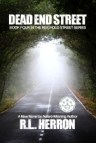
Take the back cover blurb for my newest novel, DEAD END STREET, coming out on Amazon this week:

THE TIME TO BE MOST AFRAID
IS WHEN THINGS START GOING WELL.

Paul Barrett is a successful author. So are Randy and Donnie Camron. Along with the rest of the gang from Reichold Street, they all think their lives have finally settled down. In this provocative thriller, however, they learn there are new disasters waiting, determined to find them, wherever they go.

REICHOLD STREET, the lead novel in the series, was selected a 2012 Readers’ Favorite Gold Medal Winner.
“Skillfully written and emotionally charged.”
~ Kirkus Reviews for “Reichold Street”

ONE WAY STREET and STREET LIGHT, the second and third books in the series, were also reviewed as intense, 5-Star thrillers…

“A mesmerizing thriller that can haunt you long after you put the book down…”
~ Maria Beltran, of Readers’ Favorite, for “One Way Street”

“R.L. Herron is a master craftsman…grabbing the reader and transporting them into the story…”
~ Brian MacLearn, award-winning author, for “Street Light”

In DEAD END STREET, the characters already know very well that life is not perfect, but discover the past is not always as far behind them as they think.

**********

DON’T IGNORE IT
You may call it a ‘blurb’ or ‘back cover copy’ or lament it simply as ‘all that text I have to paste into my book page.’

Whatever your name for it, you can’t afford to ignore it. After your cover, the product description of your book is the first experience the reader has with you as an author.

The book blurb is one of your most important communication aids when promoting your book, so invest plenty of time and dedication to ensure you get it right.

Getting it right is the proverbial ‘big deal.’

Do you think I succeeded?

**********

My books have all garnered some terrific reviews and you can see the ones I have available by using the Amazon link below. Look for them. Better yet, buy one and read it. You just might like it.

buy now amazon

You’re invited to visit my web site, BROKEN GLASS, or
like my Book of Face page. You can find me on Goodreads, or follow some of my shorter ramblings on The Twitter.

**********

Visit my web site to hear the remarkable radio interview about my novel “Blood Lake” by The Authors Show.

**********

I plan to attend the next Rochester Writers’ Fall Conference at Oakland University on Saturday, October 21, 2017.

**********

Comments posted below will be read, greatly appreciated and perhaps even answered.