Archive for the ‘Market Your Book’ Category

Dealing With Writers Block

January 14, 2013

The Dreaded Blank Page

Have you ever sat down to write one of those excellent story ideas you have in your head, only to have them somehow disappear the moment you pick up your pen/pencil or sit at the keyboard?

Writer’s Block
Every author’s been there. So have people who only wanted to send a holiday greeting to Aunt Bea. I can’t begin tell you how much time I’ve personally wasted, staring at a blank page.

There have been moments I couldn’t find enough energy to kick my muse into gear, no matter how many cups of coffee I put into my system.

But I’ve discovered a few ways that help me rediscover my creativity and build story ideas that will keep me writing for hours.

Junk Mail Inspiration
Sounds silly, I know; but take the next two pieces of junk mail you receive and use them to build a story. Everyone gets this kind of mail; I call it crap (sorry, but that’s what most of it is) from politicians, credit card and insurance companies. Spam e-mail works just as well. Pick any two and combine them.

No matter what your life situation or political leaning, they can lead your thoughts to many unusual situations. Plenty of writing fodder. Once your brain’s thinking again, shift to the work you really want to do.

Invent a History
We’ve all had friends, from grade school to college, that we knew quite well in that “once-upon-a-time” but haven’t seen since. The truth of their lives is quite often a mystery.

Well, pick one (change their names, of course) … and write about the life you imagine they could have been leading since you lost touch. The possibilities are endless.

Eavesdrop on a Conversation
OK, I admit it … I do this all the time, but not just for story ideas. I love to write dialogue; but to do it well takes practice.

I try to train my ear to the way people actually talk (sorry, Mrs. Bliss, all the grammar you tried to shove into my head all those years ago is worthless when it comes to catching the nuances of real conversation).

Try it sometime. When you’re in a writing funk, sit down (in a park, the mall, a restaurant) and observe the people around you. Listen to every conversation within earshot (try not to be obvious). Make a mental note of all the snippets you hear and imagine the stories they represent.

Pay close attention to the myriad ways people actually speak … then give one of the comments you overhear a twist to make it your own.

Request a Writing Prompt and Run With It
Sometimes the best cure for writer’s block is to let someone else start your story for you. You can search the web and find a number of sites that offer writing prompts, but I find it works just as well to simply ask someone to mention an idea to write about.

I belong to an online writer’s group that often has writing challenges. They create them for poetry, short stories or even flash fiction. My favorites are usually the ones for flash fiction, and they prompt you to use some object or group of objects (or even specific words) in a brief snippet of 500 words or less.

I find those challenges to be a great way to get started. For instance, consider this challenge:

In exactly 500 words (no more; no less), write a story about birth. Any style or genre and any loose interpretation of the word ‘birth’ is acceptable, but you must also include the words fire, coffee and javelin.

Admit it, as strange as the prompt might have seemed, you already have some rudimentary ideas. The neat thing about this kind of writing prompt is you can do it for yourself.

The idea you get from such an exercise may be just the inspiration you need to spark the next part of the story that has you stymied. It might even lead you to create a whole new story.

And there’s certainly nothing wrong with that.

If You’ve Got a Moment, Please Check Out My “Master Storyteller” Book Trailer


How to Write an Effective Book Description

January 4, 2013

The book description, one of the most crucial elements in selling a book, is often also the most difficult element for many self-published authors to create.

The main reason … they don’t want to leave anything out.

As the work’s creator, their natural instinct is to cram as much of it as possible into the synopsis. But too many details can render their description confusing and ineffective.

Here’s what I’ve learned through my personal trial-and-error efforts (and I’m by no means sure I have it right yet) … but these are the five main points to consider when writing a book description.

1. Don’t Include Subplots. When it comes to the book description, the only thing that matters is the main theme. That’s all you need to focus on. What is the primary action that drives your book?

2. Keep It Under 150 Words. Summarizing tens of thousands of words in less than 150 seems impossible, right? But here’s the rub … it isn’t (notice, however, I’m barely there yet with my own). Best advice: say in the simplest terms possible what your book is about and what will interest readers.

3. Write in Third Person, Present Tense. Describe your book as if you’re sitting face-to-face with the reader and they’ve just asked you what it’s about.

4. Use Emotional Power Words. You’re trying to portray the same emotions with your description that your book evokes. To convey these feelings, you need to use emotional power words like tormented, charismatic, passion, terrifying, etc.

5. You are Not the Author. Don’t write your book description as the author; write it as the publisher. Write with your head, not your heart. Remember, the book description is marketing material – not literature. It isn’t for you, it’s for your fans. Making a quick impact that will move the reader to want to buy your book is your principal concern.

Here’s an example of the latest iteration of the book description I’ve been kicking around for my award-winning self-published book “Reichold Street.” It has yet to appear on the book (or anywhere else for that matter), so consider this an exclusive:

“In 1964 Albert Parker, a distressed and troubled teen, arrives on Reichold Street. At fourteen, he has already endured the heartbreak of losing a parent and the anguish of living with a step-father tormented by mad visions. Responding in the only way he knows, Albert retreats ever deeper into himself, building a shell of aggression. On Reichold Street his only real friends are his step-sister Janice and Paul Barrett, the boy across the street. Coming-of-age in the turbulent Vietnam era of the 1960s, the story of how the neighborhood – and the rest of the world – reacts to him becomes a heart-pounding microcosm of life and death.”

I think this finally begins to get the description right. It is roughly 110 words. It’s told in third-person, present tense, and I count eight emotional power words (“distressed,” “troubled,” “heartbreak,” “mad,” “anguish,” “tormented,” “heart-pounding,” and “turbulent”).

It only tells you the main plot, but my hope is that people will open the book because of this description and want to own it.

What do you think?

———-
**01-05-2013 edit – version 2**
Based on some of the feedback I’ve already received, here’s a re-write of my “Reichold Street” book description. Is it stronger now?

“In 1964 Albert Parker, a distressed and troubled teen, arrives on Reichold Street. At fourteen, he has already endured the heartbreak of losing a parent and the anguish of living with a step-father tormented by mad visions. Albert retreats ever deeper into himself, building a shell of aggression. Coming-of-age in the turbulent Vietnam era, Albert’s only real friends are his step-sister Janice and Paul Barrett, the boy across the street. The story of how the gang of neighborhood kids, and the rest of the world, react to Albert … and adapt to each other … evolves into a heart-pounding microcosm of life and death.”

———-


A Writing Year in Review

December 28, 2012

book-pile1No writing advice today, just a few remembrances…

It’s been an interesting year.

In January 2012 we helped my remarkable father-in-law celebrate his 95th birthday. In a little more than a week, we’ll hopefully help him celebrate Number 96.

In June, my bride and I reached our 42nd Anniversary.

Last August, I drove in the annual Woodward Dream Cruise again. For aficionados of the muscle cars manufactured in the 1960s and 70s, it’s an event made in Heaven … or, at least in a Detroit that was a lot closer to one forty years ago.

Participating in my ’81 Corvette and with a brother-in-law who makes each new old-car sighting an event in itself (“Omigod, just look at that red Challenger, would ya!”), was as enjoyable as you can imagine.

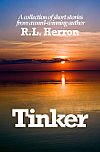
In 2012 I finished, and published, three books. Two … “Zebulon” and “Tinker” … were each well-received collections of short stories.

My debut novel, “Reichold Street” was finished in March 2012, and I was surprised (and pleased) when it was selected as a 2012 Readers Favorite Gold Medal Winner. My wife and I traveled to Miami during the International Book Fair to collect it.

Just knowing reviewers actually liked it was a prize unto itself.

In October, based on the positive results I enjoyed with my writing earlier in the year, I was both flattered and honored to be asked to make a presentation on self-publishing at the well-attended 2012 Rochester Writer’s Conference at Oakland University.

During 2012 I also entered the National Novel Writing Month (Nanowrimo) event for the first time, with the full intention of writing the required 50,000 words in the month of November.

The fact I only managed 16,000 … and about two-thirds of those are so bad they’ve already been edited away … made me realize writing to word-count bores me to death. I won’t join the Nanowrimo 30-day marathon again next year, but at least I can say I tried.

On the negative side, my pension and healthcare underwent a radical change in the past year and it still upsets me enough that I don’t want to talk about it more than I have to.

Suffice it to say, my former employer shouldn’t count too heavily on my ongoing support in the retail arena. Loyalty is, after all, a two-way street and they just made the road in my direction practically a dead end. I’m definitely going to shop for the best deal from now on.

Instead of enjoying sandals and shorts in the sunshine, which would make all sorts of sense, we instead welcomed eight inches of snow here in the North yesterday, just as we have for years (I think ‘welcomed’ is probably too kind a word).

On the plus side, I’m in good health; still have an adequate home, food on the table, successful children, wonderful grandchildren and a beautiful wife who loves me in spite of myself. That’s not too shabby. In fact, it’s pretty damn good.

That’s why, as I ponder resolutions for the New Year, I know I only need to make a few:

(1) Keep writing and finish my next book (two in 2013, if I’m lucky); (2) Love my wife as she deserves to be loved; (3) Love and enjoy my children and grandchildren; (4) Be kind to my family, neighbors and friends; ditto that to people in need; (5) Be considerate to everyone; and … most of all … enjoy life.

That is, after all, what it’s all about.

Please Watch the Book Trailer for Ron Herron’s Gold Medal-winning “Reichold Street”: